
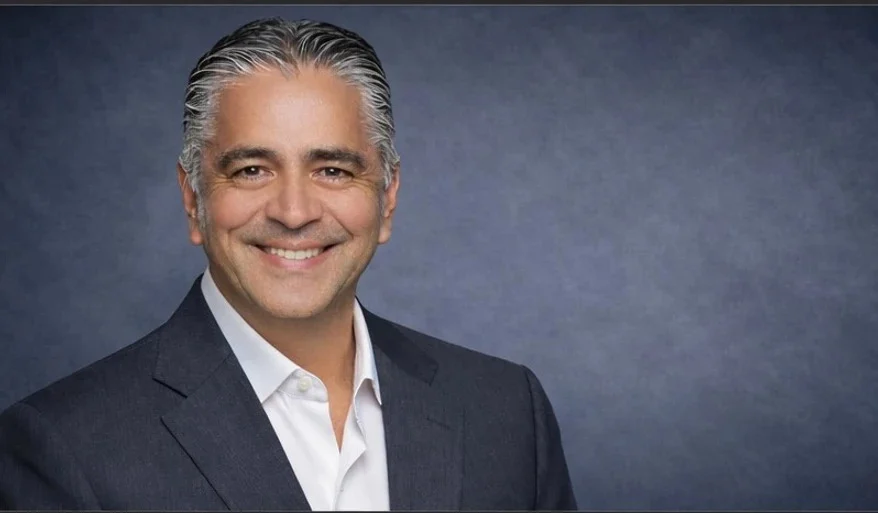
Alex W. Pariente emphasizes that a stable regulatory framework is essential for Brazil to restore investor confidence in the iGaming sector. He organizes his analysis around seven critical questions in light of the expiration of licenses and ongoing disputes related to Provisional Measure 1,394. Pariente asserts that legal certainty and effective enforcement hold more significance than advertising regulations or tax incentives that may fluctuate. He suggests that Brazil possesses the necessary legal and regulatory frameworks to revive the sector but faces the task of maintaining those structures to transform the current crisis into fresh investment opportunities.
Since October 25, Brazil has lacked an authorized betting market after the expiration of 85 licenses issued under Law 14.790, which generated BRL2.55 billion ($476.2 million) in revenue for the government, without any refunds available. Provisional Measure 1.394 remains active, and Congress has yet to form the joint committee needed to review it. A public hearing is scheduled for November 3, where Minister Luiz Fux of the Supreme Federal Court (STF) will listen to government officials, associations, and clubs before making a decision about the suspension requests.
As external observers evaluate Brazil's situation, Pariente outlines seven questions that investment committees typically consider:
1. **Will the liabilities stemming from Provisional Measure 1.394 be resolved?**
Investors typically avoid markets where legal disputes exist regarding previous license payments, which amounts to BRL2.55 billion. Any new gaming framework, whether online or land-based, will need to address these pressing licensing issues and the accompanying 19 lawsuits.
2. **Will the rules be established through legislation?**
Legally enacted structural changes, coupled with transitional measures and compensation provisions, carry more weight. For example, in Spain, the Supreme Court nullified advertising restrictions enacted by decree in 2024, ruling that such significant limitations require a law passed by Parliament.
3. **Will there be an independent regulator?**
The United Arab Emirates instituted a federal regulator in 2023, prior to licensing its first operators in 2024. Similarly, Singapore developed its regulatory framework before launching its resorts. Brazil already has its Secretariat for Prizes and Bets, which has implemented data and payment control systems within two years. The challenge remains to endow this secretariat with a solid technical mandate and consistent stability.
4. **Does the concession model align with timelines for investment?**
Macau’s 2022 concession renewals extended for ten years, while Italy has offered up to nine-year online licenses. In major integrated resorts, the time from decision to opening can vary from three to seven years. Therefore, clear renewal stipulations and rules must be established from the outset.
5. **Will the tax framework remain consistent?**
After a 19% VAT on online gambling was introduced in Colombia through emergency decree, the Constitutional Court later reversed it in 2026, requiring funds to be returned. Investors generally favor a stable tax regime over a low rate that might change unexpectedly.
6. **Will capital movement be secure?**
Brazil implemented a modern foreign exchange system at the end of 2022. Investors are concerned about whether this framework will apply uniformly to the gaming sector, including the remittance of dividends.
7. **Who will address the ongoing market demand?**
Forecasts from H2 Gambling Capital suggest that the unregulated market may expand from approximately BRL17 billion to BRL42 billion. The Philippines, after banning online gambling aimed at foreign markets in 2024, had to enact specific legislation and impose severe penalties in 2025 to maintain this ban. Any regulatory model must tackle how this demand will be met and the costs of regulation.
These inquiries are relevant for any regulatory approach Brazil adopts, whether more open or restrictive, all hinging on regulatory stability. Certain answers are already available: Brazil has a new law, an operational regulator with the necessary data systems, a modern exchange rate regime, and a pool of professionals trained in compliance and responsible gaming, many of whom are currently in search of opportunities within the country and beyond.
Pariente Advisory remains neutral regarding Brazil's gaming path. With the election concluded, the responsibility lies with the institutions. For international observers, the responses to these seven questions will carry more weight than surface-level announcements. If these responses are positive, the current crisis could herald the start of a viable market for Brazil by 2026.

