
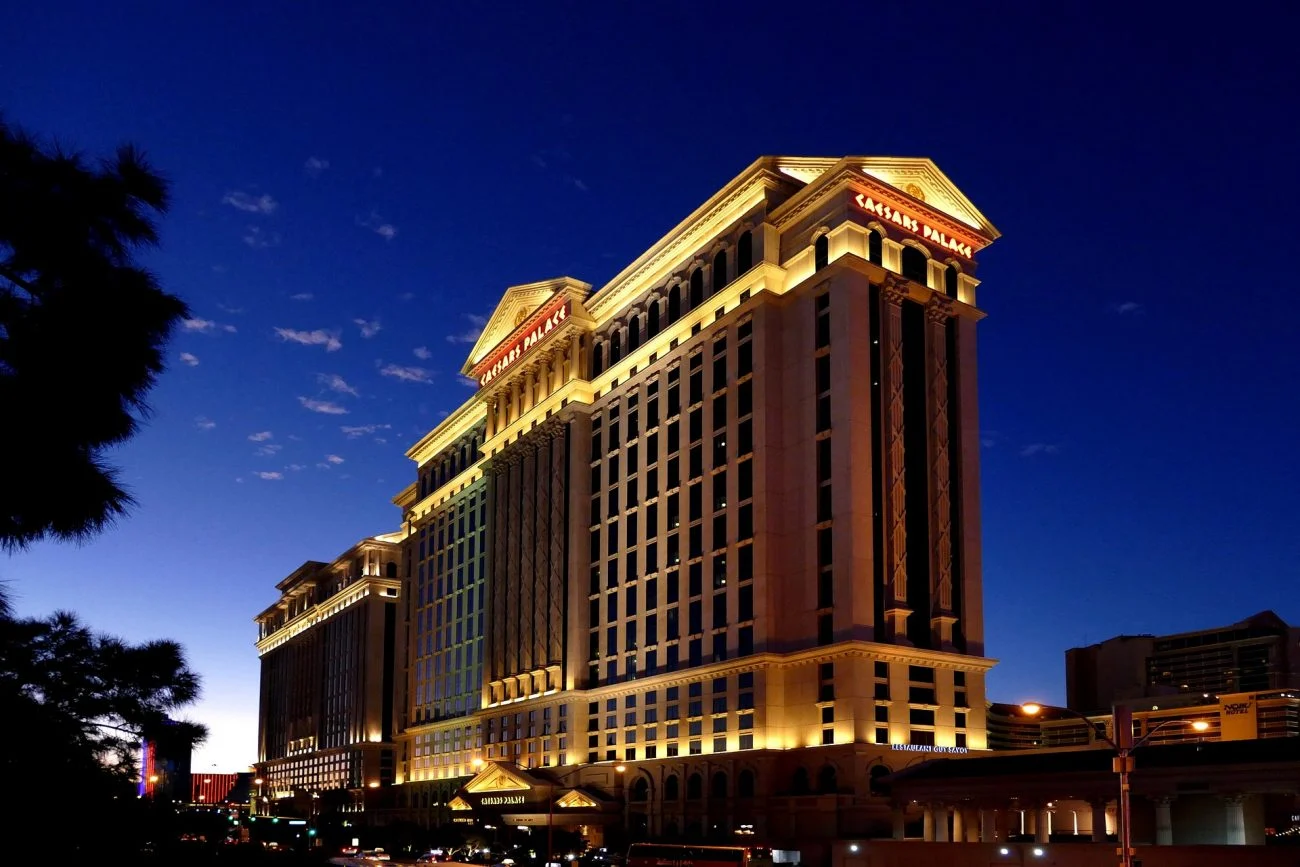
Caesars Entertainment's third-quarter financial results, made public on Tuesday, revealed a downturn in Las Vegas amidst modest growth in its regional and digital segments. As the company navigates its impending acquisition by Fertitta Entertainment, these shifts have become particularly notable.
The proposed acquisition, valued at $17.6 billion, was announced in May following a lengthy bidding process involving investor Carl Icahn. The deal is expected to complete by mid-2024. The Federal Trade Commission requested additional information about the merger on September 17, leading to a delay of at least 30 days in securing antitrust approval. Caesars shareholders supported the acquisition with a 65% majority vote on September 22.
In Q3, Caesars' Las Vegas revenue dropped 2% compared to the previous year, totaling $930 million. Meanwhile, adjusted EBITDA fell 10% to $343 million, and net income saw a 40% decrease, landing at $79 million. Year-to-date figures indicate a continued decline in Las Vegas revenue (-2%), adjusted EBITDA (-8%), and net income (-21%).
As the company prepares to transition to private ownership upon the completion of the Fertitta deal, its share price has decreased significantly, falling from over $100 in 2021 to approximately $29 currently. On Wall Street, Caesars' stock dipped slightly on Tuesday, dropping less than 1%. In light of the merger, no analyst call was conducted this quarter, although CEO Tom Reeg discussed anticipated changes last month.
During his keynote at the Global Gaming Expo (G2E) in Las Vegas, Reeg expressed concerns about the pressures of operating a publicly traded company. He remarked, "It's not healthy to operate a business in 90-day increments," emphasizing that such pressures do not align with effective business management. Reeg highlighted the exciting potential of bringing together a vast restaurant and hospitality network, claiming it will create a cohesive ecosystem with greater value.
The regional operations provided a positive contrast for Caesars, with revenues increasing by 6% to $1.6 billion and adjusted EBITDA up 3.5% to $524 million in Q3. For the year to date, regional adjusted EBITDA climbed 4.5% to $1.4 billion, and net income rose 6% to $69 million.
Currently, Caesars operates a total of 54 properties across 20 North American jurisdictions, with 46 of these classified as regional, meaning they are located outside of Las Vegas. Fertitta's Golden Nugget brand currently runs eight casinos in the U.S., seven of which are found outside of Las Vegas.
The two companies have overlapping operations in various regional markets, including Lake Tahoe, Laughlin, Atlantic City, Lake Charles, Danville, and Biloxi. Following Caesars' acquisition by Eldorado Resorts in 2020, several properties were sold to satisfy antitrust regulations. Reeg indicated at G2E that he would not be surprised if "a property or two ultimately gets divested" in this transaction.
As the quarter concluded, Caesars reported $864 million in cash and cash equivalents against total debt of $11.6 billion, which will be taken on by Fertitta as part of the acquisition.
In the digital sector, Caesars Digital achieved revenue of $326 million in Q3, marking a 5% increase year-over-year. Adjusted EBITDA soared by 57% to $44 million, while net income turned around from a $21 million loss to a $4 million gain compared to the previous year. Year-to-date digital revenue is up 6%, with adjusted EBITDA increasing by 20% and net income nearly tripling (+194%).
Digital has been a primary growth area for Caesars, amid speculation of a potential sell-off preceding the Fertitta acquisition. Currently, the company operates online sports betting in 28 North American jurisdictions and iGaming in six.
Interestingly, Caesars has refrained from engaging with prediction markets, viewing them as a potential threat to its retail casino licenses. This is in stark contrast to competitors like FanDuel, DraftKings, and Fanatics, which have invested heavily in prediction markets and customer acquisition. At G2E, Reeg criticized these markets, particularly when contracts regarding the potential acquisition of Caesars by Fertitta were listed on platforms like Kalshi. He noted, "There was nowhere in their rules that said I couldn’t place a bet," highlighting the unusual nature of prediction markets in this context.

