
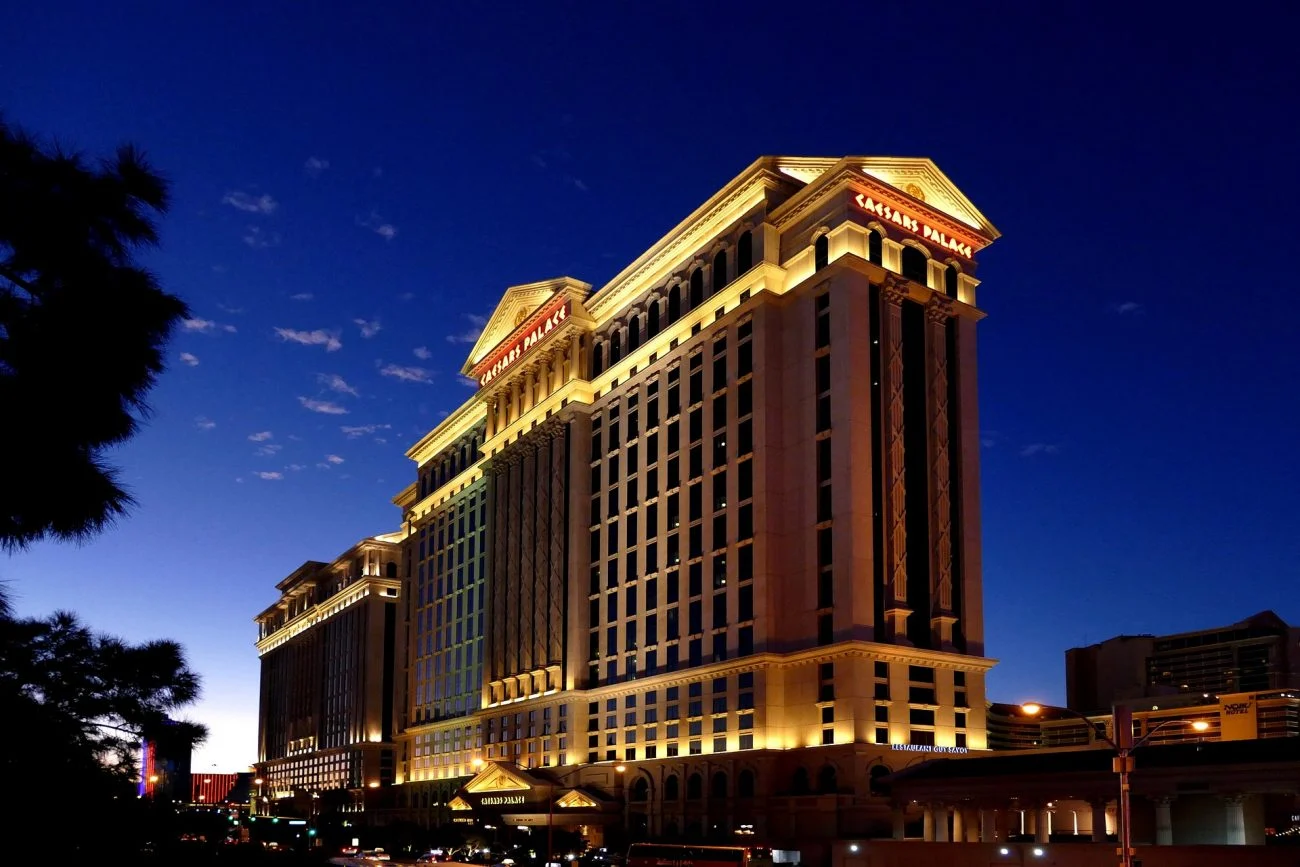
Caesars Entertainment's third-quarter results revealed a dip in Las Vegas revenues paired with growth in its regional and Caesars Digital segments. The company continues to focus on finalizing its $17.6 billion acquisition by Fertitta Entertainment, announced in May after extensive bidding from Fertitta and investor Carl Icahn. Shareholders approved the merger on September 22, with a 65% majority, while the Federal Trade Commission requested additional merger materials on September 17, delaying antitrust approval by at least 30 days.
In the third quarter, Caesars reported Las Vegas revenues of $930 million, down 2% year-over-year, with adjusted EBITDA falling 10% to $343 million and net income dropping 40% to $79 million. So far in 2026, Las Vegas revenue and adjusted EBITDA have both decreased, with net income down 21% as well.
Despite the upcoming privatization following the Fertitta deal, Caesars’ share price has declined significantly from over $100 in 2021 to approximately $29. The stock dropped less than 1% on Wall Street in Tuesday’s trading. During this quarter, no earnings call was held with analysts due to the merger, but CEO Tom Reeg addressed the changes last month at the Global Gaming Expo in Las Vegas. He expressed concerns about the unsustainability of operating under public company pressures, stating, "it's not healthy to operate a business in 90-day increments."
Reeg highlighted the potential of combining Caesars with Fertitta’s restaurant and hospitality networks, which encompass over 400 outlets nationwide, suggesting significant synergies.
Caesars’ regional segment, however, showed strong performance, with revenues increasing 6% to $1.6 billion and adjusted EBITDA rising 3.5% to $524 million. Year-to-date figures showed regional adjusted EBITDA growth of 4.5% at $1.4 billion, with net income up by 6% to $69 million.
Currently, Caesars operates 54 properties across 20 North American jurisdictions, with 46 being regional locations. Fertitta’s Golden Nugget operates eight casinos, predominantly outside Las Vegas. Both companies compete in multiple regional markets including Lake Tahoe and Laughlin in Nevada, Atlantic City in New Jersey, Lake Charles in Louisiana, Danville in Illinois, and Biloxi in Mississippi.
When Eldorado Resorts acquired Caesars in 2020, several properties were sold to meet antitrust regulations. Reeg suggested the possibility of further divestitures during the course of the Fertitta transaction. As of now, Caesars holds $864 million in cash while carrying $11.6 billion in debt, which will transfer as part of the merger.
Caesars Digital also delivered positive results with $326 million in revenue for the quarter, up 5% year-over-year, while its adjusted EBITDA surged 57% to $44 million. The digital segment's net income turned around from a $21 million loss the previous year to a $4 million gain this year. Thus far in 2023, digital revenue has risen 6%, adjusted EBITDA by 20%, and net income nearly tripled with a 194% increase.
Being one of the few gambling companies to avoid prediction markets, Caesars views them as a potential risk to retail casino licenses. Competitors like FanDuel and DraftKings have invested heavily in these markets. At G2E, Reeg criticized the existence of prediction markets, noting that contracts were listed on Kalshi about whether Caesars would be acquired, allowing him to speculate on them without any rule constraints against doing so.

