
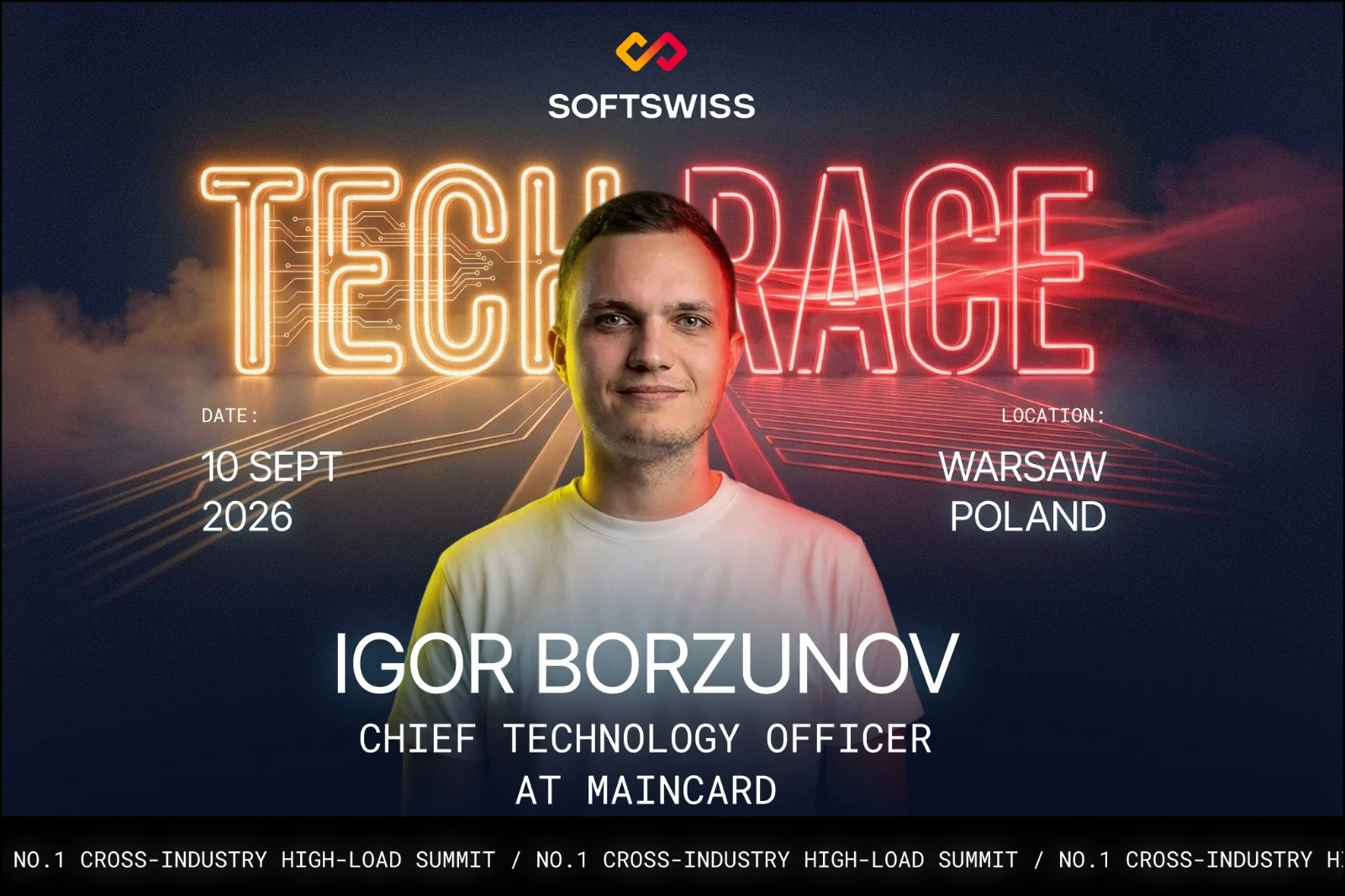
Igor Borzunov, Chief Technology Officer at Maincard, has spent more than a decade creating high-load enterprise systems. His firm specializes in a no-code platform that allows operators to launch customized iGaming sites in under 30 minutes. At the Tech Race Summit held on September 10 in Warsaw, Igor will present a session titled “From 3am pages to 30 seconds: Building an autonomous AI ops agent,” which focuses on the practicalities of enabling an AI agent to access live production environments.
In an interview, Igor discussed the implications of AI in production, the true costs associated with scaling operations, and emphasized that AI agent autonomy is a gradual process rather than an all-or-nothing scenario.
Addressing the current discussions among engineering leaders about AI's influence on software development, Igor expressed that we are both overestimating and underestimating AI's capabilities. “We overestimate what AI can do unsupervised. Every demo looks magical, but when you put it in front of real production, it confidently does the wrong thing,” he noted. Meanwhile, he acknowledged that the speed at which teams are changing due to AI is underestimated. A year prior, allowing AI access to production environments seemed risky; now, it assists in triaging incidents.
Igor elaborated on the scaling technology lessons relevant to the iGaming industry. He stated that the biggest challenge isn't merely scaling code but rather scaling operations. While creating a codebase that serves numerous brands is manageable, each additional brand increases operational complexity, such as additional payment pathways and provider integrations. He urges the industry to prioritize operations tooling as much as development features, which has enabled Maincard to operate over 40 brands with just a 20-person ops team.
Moreover, he highlighted a common misconception regarding operational excellence. Companies often aim to minimize incident counts to achieve perfection, but incidents are sometimes unavoidable due to external changes. He proposes that a more pertinent metric is the speed of diagnosis; resolving issues quickly can prevent crises.
Igor pointed out that although launching new brands is easier than ever, maintaining these brands has become the key competitive advantage. He explained, “When everyone can launch, launching stops being an advantage.” It is far more challenging to manage operations effectively and ensure reliability than to simply launch a product.
When asked about the challenges faced while giving AI limited authority in production, Igor cited trust as the primary hurdle. While the technical components involve integrating systems like MySQL and Kubernetes, fostering trust among team members was more complex. Maincard initiated AI’s role in a read-only capacity to build confidence. Over time, as engineers recognized the agent's capabilities in correctly diagnosing incidents, they became more receptive to its expanding role.
Looking to the future of online casinos, Igor anticipates that AI will transition from a support tool into a more integral operational component. “[AI will handle] monitoring payments, detecting AML anomalies, optimizing infrastructure, and managing operational demands,” he said. This shift is expected to distinguish operators in an industry characterized by similar offerings.
Regarding lessons the iGaming industry can learn, Igor recommends looking at the fintech sector, which similarly deals with real money and strict regulations. He admires how fintech has structured reliability into an engineering discipline rather than staffing large support teams.
As he prepares for the Tech Race Summit, Igor's key takeaway for attendees is that AI autonomy operates on a spectrum. Rather than debating whether to let AI into production, companies should be considering the levels of access to grant. He wishes for them to leave understanding that trust in AI is built progressively, emphasizing the importance of tiered access where oversight remains a priority.

