
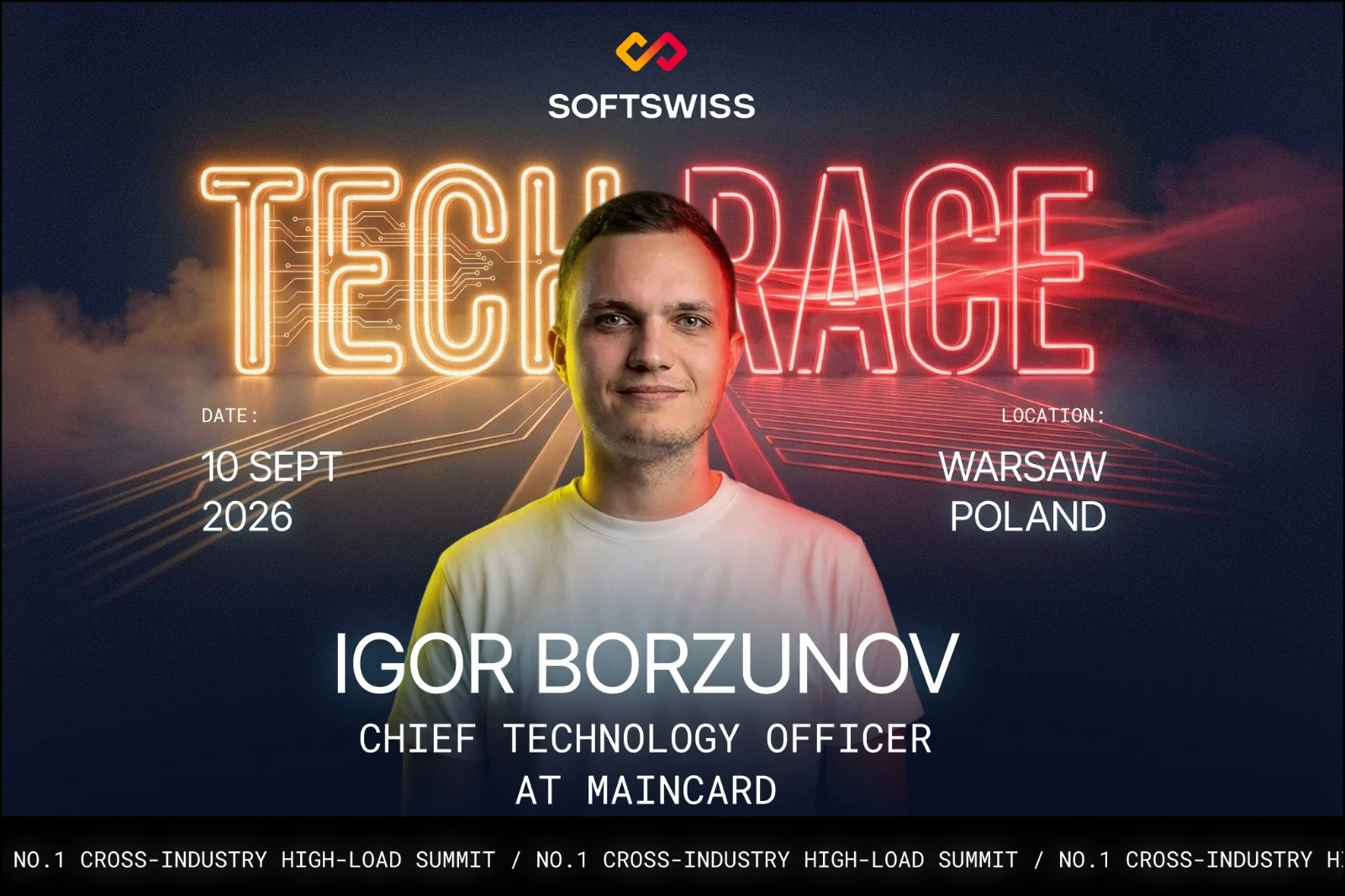
Igor Borzunov, the Chief Technology Officer at Maincard, has more than a decade of experience in developing high-load enterprise systems. He currently heads a no-code platform that enables operators to launch branded iGaming sites in less than half an hour.
At the Tech Race Summit in Warsaw on September 10, Igor will lead a session titled “From 3am pages to 30 seconds: Building an autonomous AI ops agent.” His talk will focus on what is required to provide an AI agent with access to live production environments.
In a recent discussion, Igor shared insights about the role of AI in production, the challenges of scaling operations, and the complexities of AI agent autonomy.
**A Shift in Perspectives on AI**
Igor noted that engineering leaders are currently split on their views regarding AI’s impact on software development. "Honestly, both at once," he stated. He believes that people often overestimate the capabilities of AI in unsupervised settings, as demonstrated by how these agents can perform poorly in real production scenarios. His team's focus has been on essential elements such as guardrails and knowing when to seek human intervention.
Conversely, he also believes that the speed at which teams adapt to using these systems is underestimated. He pointed out that just a year ago, the idea of giving AI access to production was considered reckless, yet it now plays a critical role in incident management during the night.
**Scaling Operations in iGaming**
Maincard currently supports over 40 casino brands with a single platform. Igor highlights that scaling operations is more challenging than scaling technology. While serving numerous brands from one codebase is a manageable engineering task, the operational complexities multiply significantly. With each new brand, challenges such as additional payment routes and provider integrations increase, leading to greater on-call burdens. His key takeaway is that investment in operational tools is just as crucial as development features.
**Misconceptions About Operational Excellence**
Igor challenges the notion that a high incidence of production issues reflects poor engineering. He explains that companies often focus on the number of incidents rather than the crucial aspect of time to diagnosis. For instance, resolving an issue in 30 seconds with the right tools is immensely more valuable than taking 25 minutes manually. Additionally, he emphasized that organizations fall into a blame culture when every incident leads to finger-pointing, which ultimately stifles problem-solving efforts.
**The Competitive Landscape in iGaming**
Despite advancements that have made launching new brands easier, Igor believes this has shifted the competitive landscape. With many operators able to launch quickly, the real challenge lies in maintaining those brands. Poor management leading to degraded payment systems and customer churn counteracts the gains from a fast launch. Therefore, Igor asserts that operational excellence has become a key differentiator in the iGaming market.
**Trusting AI Systems**
Introducing AI into live production environments has posed its own challenges, the greatest of which, according to Igor, is building trust. He described the technical aspects of integrating AI systems as swift, taking just weeks. However, establishing a trust relationship with team members required a more gradual approach. Maincard implemented a tiered approval model for the AI, where initial access was limited to read-only and notifications, in order to allow engineers to observe the system before granting it more authority.
**Future of AI in Online Casinos**
Igor sees the next significant technological shift in online casinos as AI moving beyond basic roles such as chatbots to operating within production environments. He anticipates that in three to five years, the gap between operators will hinge on how effectively they can utilize AI for monitoring and managing operational tasks, including compliance-related activities. In his view, companies that can maintain smooth operations with minimal personnel will lead the industry.
**Learning from Other Industries**
Igor believes the iGaming sector should take cues from fintech, where reliability and operational discipline are paramount. He noted that while other industries have evolved to prioritize operational excellence as a product, many within iGaming still tend to scale by increasing support personnel rather than improving systems and processes.
**Key Takeaway from Tech Race Summit**
At the summit, Igor aims to convey that autonomy in AI operation should not be viewed as an all-or-nothing approach. Instead, he advocates for a gradual increase in access and responsibility for AI agents, starting with diagnostic capabilities and building up from there. His hope is that attendees will shift their conversations from whether to trust AI in production to how to implement tiered access effectively.

