
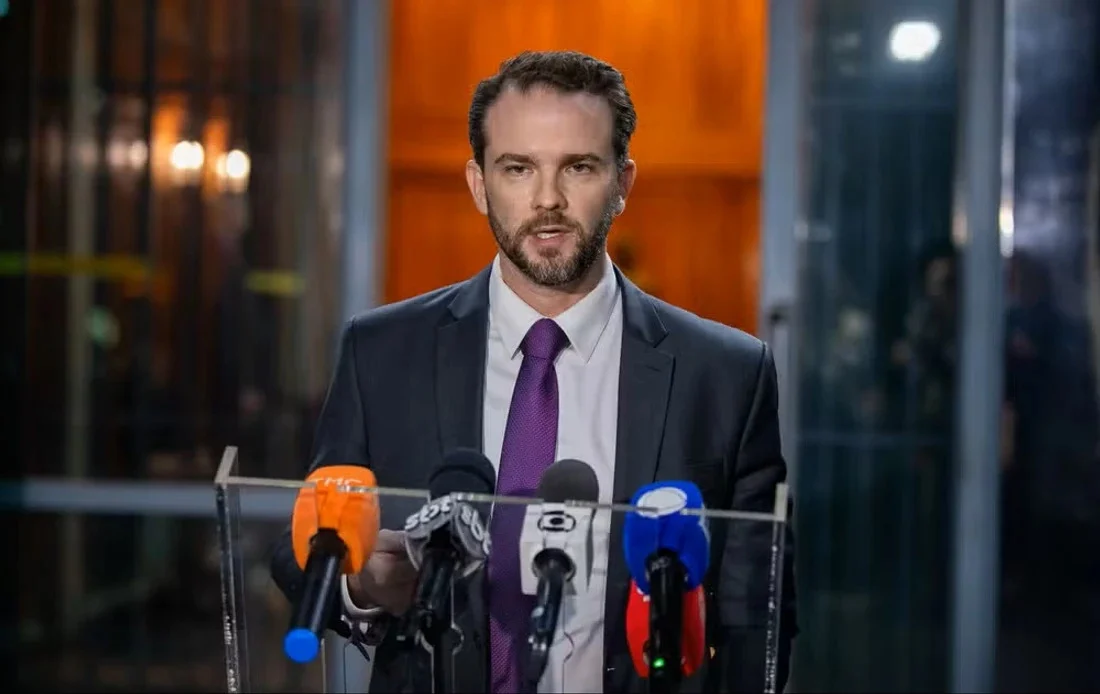
Dario Durigan, Brazil’s Minister of Finance, announced on Thursday that new regulations concerning advertising by betting companies are set to be released on Friday. The government initially revealed in late June its intentions to revise the advertising landscape for these companies.
One significant aspect of the upcoming regulations is the requirement for all betting advertisements to include warnings issued by the Ministry of Finance. These warnings will mirror those found on tobacco and alcohol ads, with statements such as:
– Betting makes you lose money.
– Betting can cause addiction.
– Betting is not an investment.
Additionally, according to g1, a joint ordinance with the Ministry of Justice will tackle the issue of illegal betting operations. Durigan emphasized the prohibition on media advertising for companies that are not licensed to operate in the Brazilian market.
"We are imposing restrictions on betting advertisements in the country," Durigan stated, underlining the government's stance of zero tolerance towards illegal operators. He firmly stated that illegal betting operations are not authorized in any capacity and that both advertisers and media outlets are barred from promoting any unlicensed companies.
Under the new guidelines, companies will be prohibited from creating a false sense of urgency, portraying betting as a viable investment or financial solution, and displaying winnings or past prize histories as incentive tools to attract customers. Misleading consumers in these ways will also be against the regulations.
The updated advertising rules will restrict commentators and experts from providing statements that could mislead potential bettors. Durigan noted, "[It is not permissible to mix] commentary from an expert or specialist — someone knowledgeable about a specific game or subject — with statements claiming that a particular bet is the best choice or that a specific path should be taken." He reiterated that such inducements under the guise of expert opinion are unacceptable.
Commentators, analysts, and play-by-play announcers must refrain from using their authority to promote betting, with Durigan stating: "No displaying winnings as bait, no selling betting as a way to make easy money, or as an investment or financial solution for families."
Non-compliance with the new regulations can lead to significant penalties, including fines reaching up to 20% of an operator's revenues. A serious violation may also result in a 180-day suspension or even a revocation of the operator's license to conduct business in the online betting space. National Consumer Secretary Ricardo Morishita noted that running illegal betting advertisements could incur fines as high as BRL 14 million (approximately $2.7 million).
Moreover, companies will be held accountable for any irregular advertisements posted by contracted influencers that contravene the newly established guidelines, with the possibility of having such content removed from circulation.
In a related update, Durigan revealed that Brazilian authorities have dismantled over 56,000 betting sites and nearly a thousand influencer profiles to combat illegal betting. Nearly one million bettors have also voluntarily excluded themselves due to breaches of legal prohibitions.
"There is a ban preventing beneficiaries of government programmes from accessing these sites — a Supreme Court ruling," Durigan noted, adding that this restriction also extends to individuals involved with Desenrola, a debt renegotiation programme introduced by the Lula administration.
The Minister acknowledged that licensed betting companies have been assisting in the effort by reporting illegal operators.
Durigan also provided clarity on the timeline of betting authorizations in Brazil:
– In 2018, authorization to operate was granted, but without established regulations.
– By 2023, Congress set general rules.
– In 2024, the Ministry of Finance will establish the Secretariat of Prizes and Bets to regulate the sector.
– In 2025, the government plans to begin collecting licensing fees and enforcing the new rules.

