
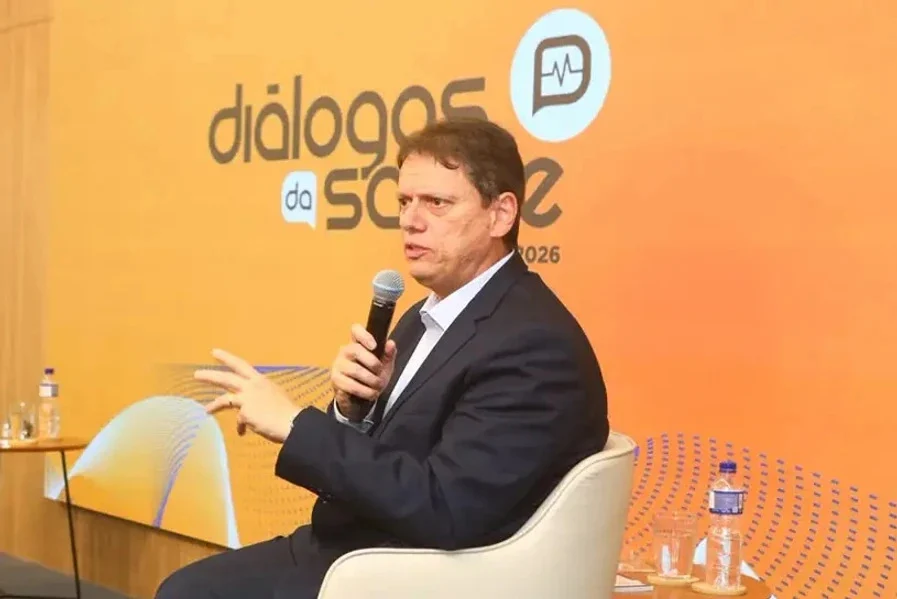
Tarcísio de Freitas, the governor of São Paulo who is currently running for re-election, has declared a need to ban gambling in Brazil during a recent debate. His remarks aimed at capturing conservative votes align him with a growing movement of national politicians criticizing sports betting.
During the "Health Dialogues" debate held at the Union of Hospitals, Clinics, and Laboratories of São Paulo (SindHosp), Tarcísio said, “Either Brazil ends betting, or betting ends Brazil. We have to understand that this is a health problem.”
He noted the rapid expansion of online betting platforms, which have made Brazil one of the largest gambling markets globally. However, the governor contends that this surge in gambling has transcended mere entertainment, transforming into a public health crisis that requires immediate intervention.
Tarcísio described the issue of online gambling addiction akin to past struggles against smoking, advocating for recognition of addiction as a disease needing specialized treatment. He suggested that the state should establish a comprehensive, easily-accessible, and digitized national program aimed at addressing gambling addiction.
He linked the rise in gambling to rising debt levels in Brazil, stating that "20% of Brazilians' income is committed to gambling,” although he did not specify the source of this statistic.
The governor cited past successes in reducing tobacco use and questioned whether society could achieve similar success in combatting drug addiction, highlighting the increasing challenges compared to previous anti-tobacco efforts.
The continuing growth of online betting is shaping not only an economic landscape but also a moral, social, and political discourse. Tarcísio’s views resonate with comments made by President Lula, who has also expressed concerns over betting.
Representatives of the gambling industry acknowledge they will face scrutiny as election campaigns progress. In a recent interview with iGaming Business, Plínio Lemos Jorge remarked, “The industry will have to remain resilient during this period.” The president of the National Association of Games and Lotteries (ANJL) expressed optimism that the market may face reduced criticism once the electoral turmoil subsides.

