
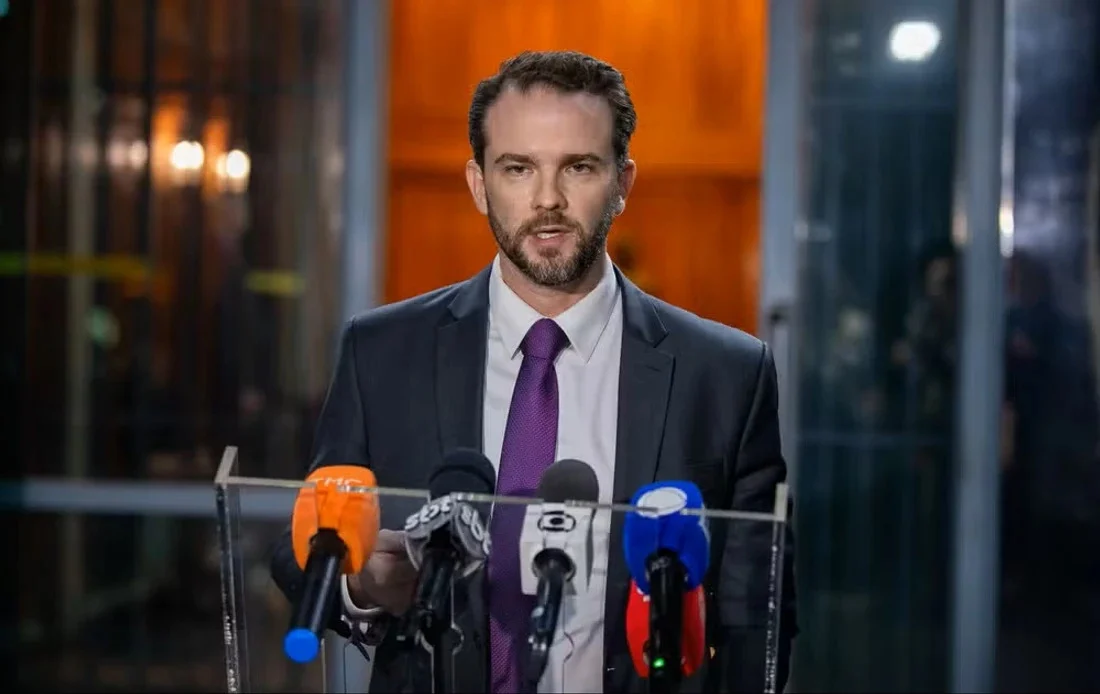
Brazil's Minister of Finance, Dario Durigan, announced Thursday that new regulations concerning advertising for betting companies will be released on Friday. Earlier in June, the government indicated plans to modify how these businesses promote themselves.
Durigan revealed that one of the key ordinances being published will require all betting ads to feature warnings from the Ministry of Finance, akin to those seen on tobacco and alcohol promotions. The notices will include statements such as:
– Betting makes you lose money.
– Betting can cause addiction.
– Betting is not an investment.
Further details from g1 indicate that a separate ordinance, crafted in collaboration with the Ministry of Justice, will introduce measures to combat illegal betting operators. Durigan stressed that media outlets must not advertise any companies that do not have authorization to function in the betting market.
"We are imposing restrictions on betting advertisements in the country," Durigan clarified. "I don’t need to state – as it goes without saying – that we have zero tolerance for illegal operators. Therefore, illegal betting operations are not authorized in any way, and neither advertisers nor media outlets are permitted to run any advertising involving a company not authorized to operate in the market."
Under the new rules, companies are barred from creating a sense of urgency, portraying betting as an investment or financial solution, promoting winnings or prize histories as incentives, or misleading consumers.
The minister noted that the regulations will also restrict commentators and experts from making statements that could mislead potential bettors.
"[It is not permissible to mix] commentary from an expert or specialist – someone knowledgeable about a specific game or subject – with statements claiming that a particular bet is the best choice or that a specific path should be taken, thereby inducing the consumer to adopt a certain practice under the guise of technical backing. That must not be done," he stated.
Additionally, Durigan emphasized that commentators and play-by-play announcers are prohibited from leveraging their authority to promote betting.
"No displaying winnings as bait," he insisted. "No selling betting as a way to make easy money, or as an investment or financial solution for families."
He outlined that failure to comply with these regulations could result in severe penalties, including fines of up to 20% of an operator's earnings and possible 180-day suspensions. For serious repeat offences, an operator's license could be revoked.
National Consumer Secretary Ricardo Morishita pointed out that the maximum penalty – roughly BRL 14 million ($2.7 million) – could be imposed on individuals responsible for illegal betting advertisements.
The government also stated that companies would face penalties if a contracted influencer violates the new ad rules, which could lead to the removal of the infringing content.
In a related development, Durigan mentioned that over 56,000 betting websites have already been taken down, along with nearly 1,000 influencer profiles.
The government has mandated the self-exclusion of almost a million bettors due to violations of statutory prohibitions.
"There is a ban preventing beneficiaries of government programmes from accessing these sites – a Supreme Court ruling," Durigan explained. "This also applies to people participating in Desenrola [a debt renegotiation programme launched by the Lula administration]."
He acknowledged cooperation from authorized betting companies in reporting illegal operators.
A timeline regarding betting authorizations in Brazil was also provided: 2018 marked the start of authorization to operate without established rules, in 2023 Congress established general rules, and by 2024 the Ministry of Finance will create the Secretariat of Prizes and Bets to oversee the industry. From 2025, the government will collect licensing fees and enforce regulations.

