
When Spain’s captain Rodri lifted the FIFA World Cup trophy at MetLife Stadium in New Jersey this past July, the nation rejoiced at its team’s return to the pinnacle of world football. Over five weeks and eight matches, Spain showcased its dominance, defeating formidable opponents to secure the title for the second time.
While Spain celebrated its victory, Kambi achieved a significant milestone of its own. For the sports betting technology provider, this tournament marked the first time that AI completely managed World Cup trading.
Throughout the event, which saw 104 matches and over 100 million bets, Kambi’s AI facilitated every part of the pricing lifecycle, from data ingestion to wager settlement. The system experienced zero downtime, delivered an 18% trading margin for operators, and processed over one million unique betting combinations during the final alone.
Kambi aimed high with its goal of fully utilizing AI for the tournament, and by the time Spain lifted the cup, it had made a convincing case that automated trading could manage the scale and stress of the world’s largest betting event while enhancing the experience for operators and their customers.
“The FIFA World Cup draws global attention in a way that no other sporting event can, and it was the best stress test of the technology we could have asked for,” said Oliver Lamb, Kambi’s Senior Vice President of Trading.
“At the same time, we provided an almost limitless range of bet combinations, delivered faster and more seamlessly than we have ever managed before.”
Kambi’s journey toward the 2026 World Cup began with an initial investment in AI trading technology in 2021. The platform was scaled during the Qatar 2022 tournament and was fully integrated into Kambi’s trading operations by 2024.
By the 2026 event, this technology had undergone extensive testing across major competitions like the Premier League and Champions League, with AI now handling over 70% of bets in Kambi’s network, including all football and tennis.
Lamb stated, “In simple terms, what we have undertaken is a shift from machine-assisted human trading to human-assisted machine trading.” This evolution allows traders to focus their expertise on areas where human judgment is most valuable, such as developing new products, while AI manages the operational complexity of pricing.
This new approach translates into enhanced services for Kambi’s partners and their customers.
As the 2026 World Cup showed, the complete integration of AI proves vital as sportsbooks evolve beyond match results and traditional betting markets. Bettors increasingly desire to customize wagers around individual players and specific game moments.
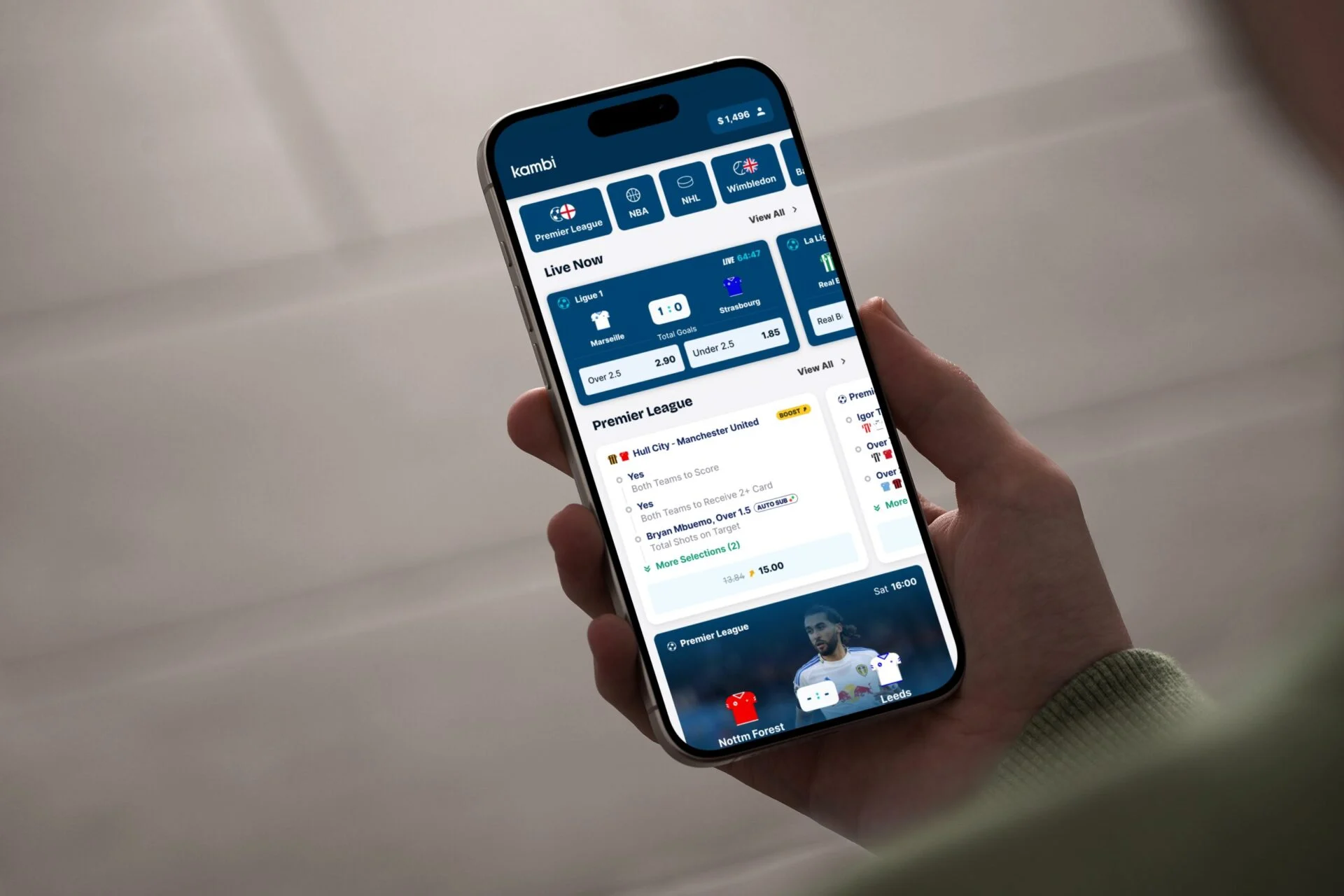
The number of Bet Builder bets during the 2026 World Cup doubled compared to the previous tournament. In-play bets saw the most significant increase, with live Bet Builders rising sevenfold to account for 22% of all live bets, up from just 3% in 2022.
Kambi reported that player propositions featured in 65% of Bet Builders, a substantial rise from 25% in 2022. Additionally, player shots on target emerged as Kambi's second-largest pre-match offering by turnover, alongside popular selections like player scoring or assisting.
“Customers seek personalized experiences and the ability to create customized wagers in real time,” Lamb noted. “Meeting these modern expectations through manual trading is no longer realistic at scale.”
AI also enabled Kambi to minimize the delay from when a customer selects an in-play bet to when they can place it. Its dynamic live delay technology allows it to tailor delays for individual bets, enhancing user experience and reducing friction. Between August 2025 and July 2026, Kambi cut live betting delays by over 40% across the Premier League and World Cup.
These advancements resulted in more options for customers, shorter suspension periods, and quicker bet acceptance, which could improve customer retention and profitability for operators.
Bettormetrics independently analyzed Kambi’s performance during the World Cup and found that Kambi’s partners excelled in key metrics such as time to market, live uptime, and bet delay, outperforming competitors on live uptime in World Cup markets.
As Lamb emphasized, “All the testing in the world cannot tell you precisely where you stand against the rest of the market on key aspects of the product. It was very positive to see Kambi as a leader in these key metrics.”
Customers displayed a preference for bets beyond traditional markets, with 63% of pre-match turnover coming from markets outside match-winners, up from 57% in 2022. Following the World Cup, Kambi plans to expand its options for shots-on-target before matches and increase automated intervals during games to create more betting opportunities.
“Offering bettors more ways to personalize their wagers around specific players and moments from the tournament was a significant lesson, and it continues to shape Kambi’s development of cutting-edge sports betting products,” Lamb remarked.
Looking ahead, Kambi is extending its AI trading capabilities to other sports like basketball, ice hockey, and American football, aiming to not just automate existing processes but innovate new products that were previously unmanageable at scale.
The goal is to establish an on-demand sportsbook that delivers the right bet to the right customer at the right moment. Lamb believes Kambi’s network of over 70 partners gives it a competitive advantage in realizing this vision. With more than €17 billion in annual liquidity and billions of bets annually, Kambi's models are equipped with invaluable data for pricing, risk management, and product development.
“The term AI is ubiquitous in technology, and the betting and gaming industry is a space where its effects are significant,” Lamb stated. “Transforming AI from a mere buzzword into practical systems capable of maximally leveraging its potential to produce the best outcomes is a challenge for many industries.”
For Kambi, this means merging deep data analysis with the insights of seasoned traders who can direct AI, scrutinize outputs, and uncover areas for additional value.
“You don’t have to look far in this industry to find companies touting the advantages of AI,” he added. “Achieving tangible results requires a blend of comprehensive data and expert human insight that not all possess, and there are no shortcuts to gaining that knowledge.”
The World Cup showcased Kambi’s AI capabilities under intense pressure, and the next objective is to transform that performance into an array of on-demand experiences tailored for its partners and their clientele.

