
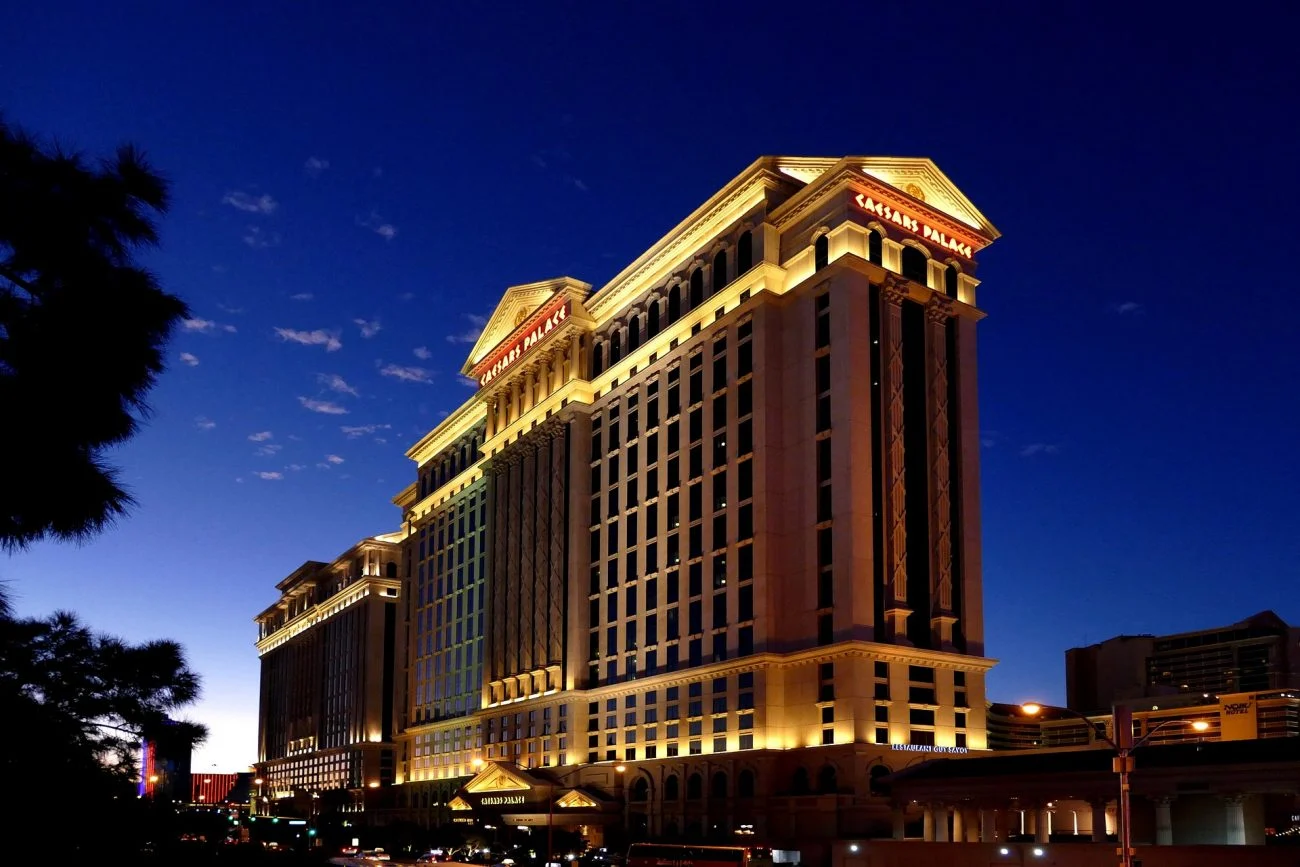
Caesars Entertainment announced its third-quarter earnings on Tuesday, revealing a decline in Las Vegas operations while experiencing moderate growth in its regional and Caesars Digital segments. This comes as the company progresses towards finalizing its acquisition by Fertitta Entertainment.
The $17.6 billion deal, announced in May after a competitive bidding process involving Fertitta and investor Carl Icahn, is slated for completion by mid-2024. The Federal Trade Commission requested additional documentation regarding the merger on September 17, extending the antitrust approval timeline by at least another month. On September 22, Caesars shareholders voted overwhelmingly in favor of the merger, with 65% supporting the decision.
In the third quarter, Caesars reported a 2% year-over-year decline in revenue from Las Vegas, bringing the total to $930 million. Both adjusted EBITDA and net income also fell by 10% and 40% respectively, falling to $343 million and $79 million. Year-to-date figures indicate a 2% decrease in Las Vegas revenue, an 8% drop in adjusted EBITDA, and a 21% decline in net income.
As the merger with Fertitta approaches, Caesars' stock price has dropped sharply from over $100 in 2021 to about $29 today. In Tuesday's trading, the stock slipped slightly, decreasing by less than 1%. The company did not hold a call with analysts this quarter because of the pending merger, but CEO Tom Reeg addressed upcoming changes at last month’s Global Gaming Expo in Las Vegas.
Reeg expressed concerns about the pressures of running a publicly traded company, stating that it’s “not healthy” to operate in 90-day cycles. He noted the necessity of a more sustainable approach to business management and highlighted the synergies expected from combining a hospitality operation with more than 400 restaurants nationwide.
The regional segment proved to be a positive aspect for Caesars in Q3, recording a 6% increase in revenue to $1.6 billion and a 3.5% rise in adjusted EBITDA to $524 million. Overall, regional adjusted EBITDA is up 4.5% to $1.4 billion, and net income has increased by 6% to $69 million.
Caesars operates a total of 54 properties across 20 jurisdictions in North America, 46 of which are classified as regional, meaning they are located outside Las Vegas. Fertitta's existing Golden Nugget brand adds eight casinos to the mix, seven of which are also outside Las Vegas.
Both companies are competitors in several regional markets, including Lake Tahoe, Laughlin, Atlantic City, Lake Charles, Danville, and Biloxi. During Caesars' acquisition by Eldorado Resorts in 2020, numerous properties were sold or divested to comply with antitrust regulations. Reeg indicated that it wouldn’t be surprising if one or two properties are sold as part of the current transaction.
At the end of the third quarter, Caesars had $864 million in cash and cash equivalents while carrying total debt of $11.6 billion, which will be inherited through the merger with Fertitta.
In its digital segment, Caesars reported $326 million in revenue for Q3, marking a 5% year-over-year increase. Adjusted EBITDA soared by 57%, reaching $44 million, and net income improved from a $21 million loss last year to a $4 million gain this quarter. Year-to-date digital revenue has increased by 6%, with adjusted EBITDA rising 20% and net income nearly tripling, up 194%.
Caesars Digital is regarded as the company’s primary growth segment, with speculation about a potential sell-off emerging prior to the Fertitta acquisition announcement. The company currently offers online sports betting across 28 jurisdictions and iGaming in six.
Unlike many of its competitors like FanDuel and DraftKings, which have invested heavily in prediction markets, Caesars has avoided entering this space due to risks associated with retail casino licenses. At G2E, Reeg criticized these markets and shared that he noted contracts on prediction platforms regarding Caesars’ acquisition, suggesting he could have profited had he chosen to participate. “There was nowhere in their rules that said I couldn’t place a bet,” he remarked in his speech.

