
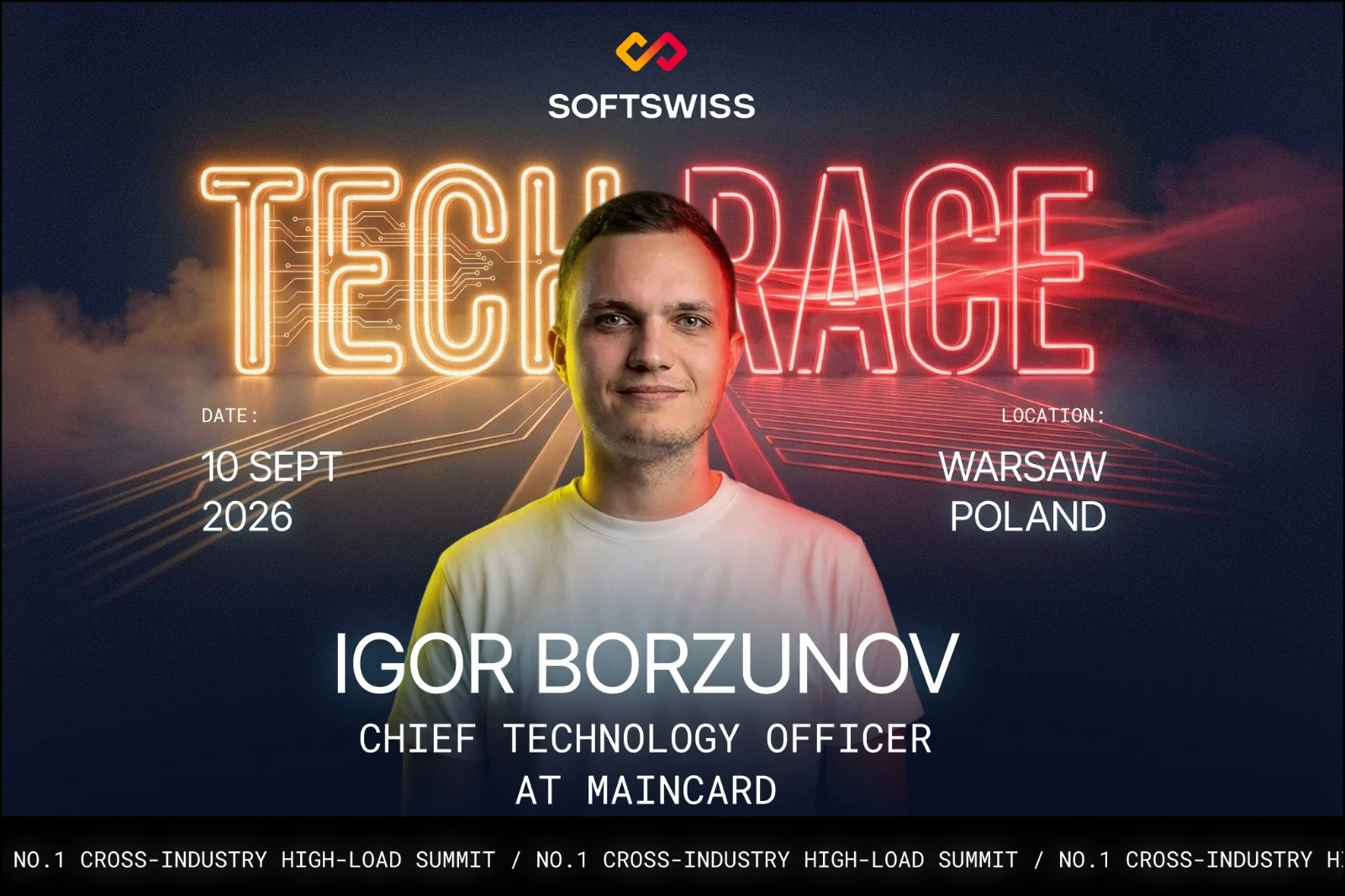
Igor Borzunov, the Chief Technology Officer at Maincard, has dedicated over a decade to developing high-load enterprise systems. Maincard is a no-code platform enabling operators to launch branded iGaming sites in less than half an hour. At the recent Tech Race Summit held on September 10 in Warsaw, Igor led a session titled "From 3am pages to 30 seconds: Building an autonomous AI ops agent," where he explored the intricacies of providing AI agents access to live production environments.
In an interview, Borzunov discussed the challenges and perceptions surrounding AI's role in software development, particularly in production situations.
When asked if engineering leaders are accurately gauging AI's impact on development teams, Borzunov expressed a dual perspective. "We overestimate what AI can do unsupervised. Every demo looks magical, but when you put it in front of real production, it confidently does the wrong thing. Our agent excels because we concentrated on the mundane aspects — implementing guardrails, establishing approval tiers, and understanding when to consult a human."
Conversely, he noted that the rapid evolution of team structures in response to AI tools is often underestimated. Just a year earlier, the notion of granting AI access to production seemed highly reckless, yet today these systems are already adept at managing night incidents. The divide in this aspect is growing faster than many executives realize. He emphasized that engineers capable of building and managing these systems will significantly outpace their peers who see AI merely as an enhanced autocomplete tool.
Maincard operates more than 40 casino brands from a singular platform. Borzunov highlighted a vital lesson regarding technology scaling within the iGaming sector: the primary challenge lies not in the technical scaling of code but in the scaling of operations. While the engineering problem of creating a universal codebase for multiple brands has been addressed, he pointed out that operational complexities increase with each new brand, leading to more payment routes and provider integrations — all of which can lead to unexpected failures.
He underscored, "Invest in operational tooling as significantly as you invest in features. We manage over 40 brands with a team of approximately 20 by treating operations as an engineering challenge rather than a financial burden."
Borzunov spoke critically about common practices in operational excellence, noting that many businesses prioritize minimizing incident counts instead of focusing on the time it takes to diagnose issues. He explained, "When addressing a failure takes 30 seconds with appropriate tools instead of 25 minutes manually, you turn a potential crisis into a non-issue. The problem arises when companies assign blame in the event of nightly incidents, leading employees to conceal rather than resolve issues. Effective tooling is the solution, not assigning blame."
With his background as the lead behind simplifying the launch process, Borzunov acknowledged that while launching new brands has become more straightforward, the true competitive edge now lies in effectively managing those brands. He noted, "Operating effectively is significantly harder than launching. A competitor may replicate your landing page swiftly, but they can't duplicate the discipline and tools that ensure the health of 40+ brands with a small team."
Regarding Maincard’s AI deployment, Borzunov explained that the major hurdle was fostering trust among users rather than technical obstacles. While integrating the agent with existing systems such as MySQL, Kubernetes, and Grafana was relatively quick, convincing staff to trust an AI system was the greater challenge. He outlined their implemented model, which requires different levels of approvals based on actions; necessary approvals increase significantly when financial aspects are involved. This tiered system allows the team to monitor the AI's operations gradually, building trust through proven performance.
Looking ahead, Borzunov forecasted a significant shift in the online casino sector driven by AI, shifting from simple functions like customer support to more complex operations. He stated, "In three to five years, I predict that the operational capabilities facilitated by AI will delineate successful operators from those that fall behind, as they handle operational loads that currently overwhelm human staff."
When discussing the iGaming industry’s pace of innovation, Borzunov suggested that the sector could draw valuable lessons from the fintech industry, which has tackled similar pressures with robust reliability practices. He stated, "iGaming should embrace the notion that operations need to be constructed as a product instead of merely being staffed with support teams."
At the Tech Race Summit, Igor Borzunov encouraged an essential shift in how AI’s role in production environments is perceived, urging attendees to view autonomy as a continuum rather than a binary decision. He hopes that participants will leave asking not if they should allow AI into their production workflows, but rather, at what level of access they should begin.

