
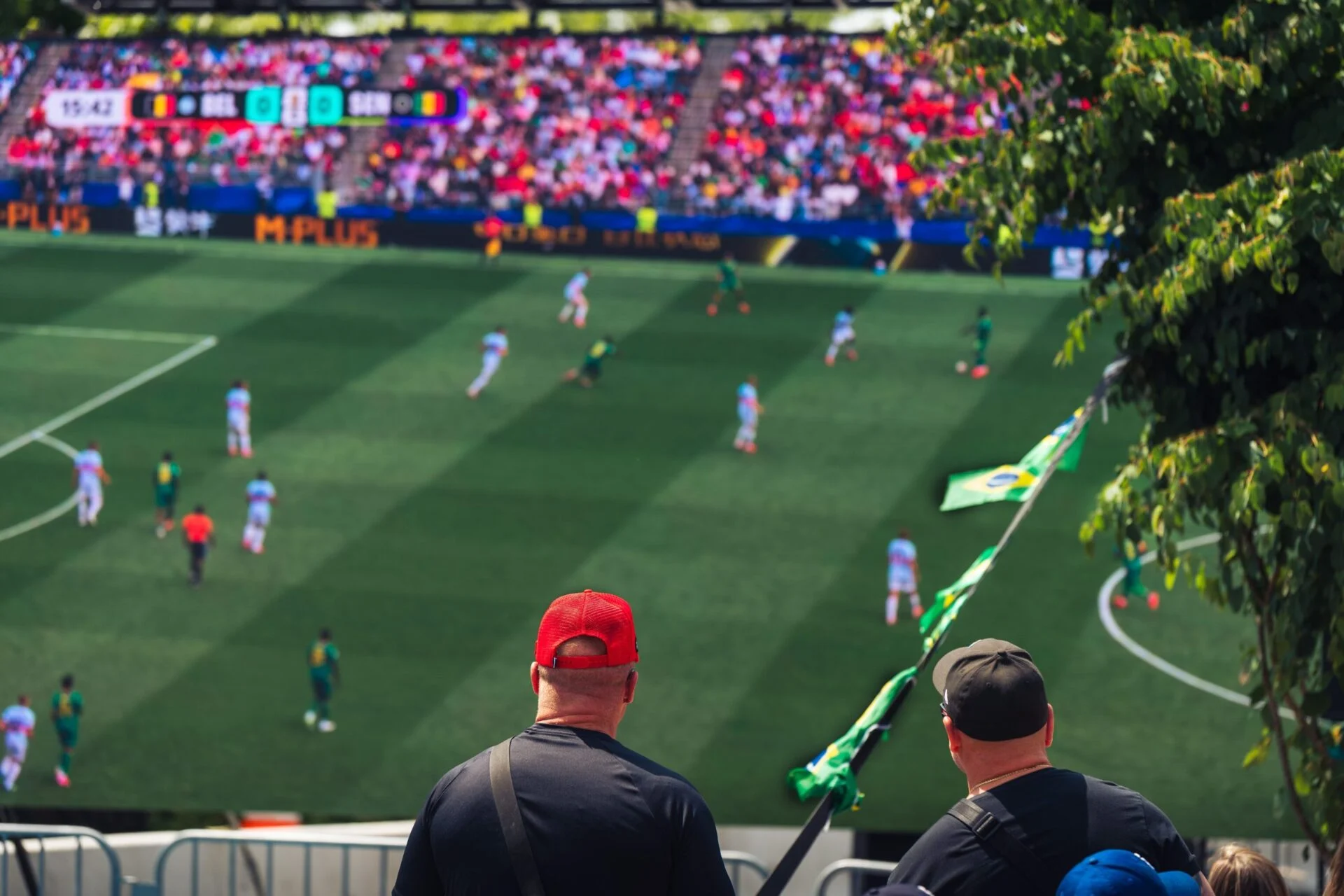
As the World Cup comes to a close across the US, Mexico, and Canada, many operators are evaluating the tournament's impact on their revenue. A crucial question is whether the true value of such large sporting events unfolds after the final whistle.
Before the tournament began, investment bank Macquarie projected that global wagers could reach $50 billion. Yet, during Entain's earnings call for fiscal year 2025 in March, CEO Stella David revealed that the anticipated revenue boost from the World Cup was marginal, leading to skepticism about the tournament's commercial significance. "It’s not as big a thing as you might think," David remarked, estimating that the event would contribute around 1% to annual revenue, adding, "It’s bigger than the Euros, but it’s not as dramatic as you would think."
Despite the figure appearing modest, Ed Birkin, managing director of H2 Gambling Capital, pointed out that major sporting events are often more valuable for customer acquisition than for generating substantial immediate revenue. He noted that, in markets where data is reported, the World Cup typically constitutes about 7% of sports betting turnover, depending on game outcomes.
The expansion of the World Cup this year to 48 teams means an increase of over 60% in matches. This change led to group-stage matchups that showcased football powerhouses against less favored teams, including first-time qualifiers. For instance, Cape Verde managed to tie with Spain and Uruguay, demonstrating that surprising results could affect how operators fare.
Chad Beynon, managing director at Macquarie Group, indicated that the performance of strong teams like England or France will significantly influence operators' financial outcomes. "If England makes it to the final, then you’re going to see those numbers completely smash what Entain had been saying," he asserted, emphasizing the need for top teams to advance to later stages to drive profits.
According to Beynon and Birkin, the long-term value for operators may lie in cross-selling opportunities from sports betting to casino games. Super Group CEO Neal Menashe previously highlighted that early rounds of the World Cup could be uneven due to mismatched opponents, but for his company, the key was in cross-selling sports bettors to casino offerings, which he estimated to stand at around 60%-70%.
Beynon echoed this sentiment, stating, "We’ve always thought about poker and sports betting as the top of funnel, and then iGaming as the money printer," and he was uncertain if new customers would show the same cross-sell rates.
Birkin raised concerns about whether operators could effectively cross-sell into casinos, particularly in the US, where iGaming expansion has stalled in most states. He argued that sports betting customers do not necessarily translate into casino players, indicating a greater propensity for cross-selling poker over slots.
For many betting operators, the World Cup may serve more as a customer acquisition opportunity than a significant revenue generator. Bally’s Intralot CEO Robeson Reeves noted during their Q1 earnings call that while his company's B2C business in the UK wouldn't heavily invest in World Cup marketing, the goal was to attract customers from competitors after the tournament’s marketing expenses decreased.
Birkin agreed with this strategy, pointing out that with heightened costs during the World Cup from various advertisers, it may be wiser to delay marketing investments until after the event. This approach could lead to a better return as advertising costs typically drop post-World Cup.
Beynon also suggested that Bally’s focus on profitability over extensive marketing campaigns positions the company uniquely, allowing them to maintain a careful yet effective customer acquisition strategy.
As the World Cup returns to North America for the first time since 1994, Beynon sees the potential for great commercial advantage, particularly for DraftKings, which operates as one of the market leaders alongside FanDuel.
Although DraftKings’ EVP and GM of sports, Greg Karamitis, refrained from giving specific revenue projections, he mentioned that the World Cup offers invaluable chances for acquiring new customers. “We view the World Cup as a significant opportunity to deepen fan engagement and expand our customer base,” he explained, emphasizing the event's timing and its significance for U.S. audiences, particularly Hispanic communities.
With marketing costs expected to spike during the World Cup, operators might risk overspending. Nonetheless, Birkin believes that competitive pressures compel operators to increase their marketing efforts; otherwise, they may fall behind in the customer acquisition race.
Karamitis acknowledged the anticipated rise in marketing expenditures, yet he argued that the increased acquisition efficiency would offset such costs and make the event an attractive investment in the long term.
Prediction markets have also emerged as competition for traditional sports betting, potentially impacting profit margins. Beynon stated that Kalshi, a leading prediction market in the U.S., recorded about $15 billion in wagers in May, hinting at a promising future for this sector, though its direct impact on betting revenue remains unclear.
Birkin downplayed the risk prediction markets pose to traditional betting revenues, especially in Europe, where regulatory bodies have begun cracking down on such platforms.
As the tournament reaches its final stages, the ultimate success for betting operators may hinge on their ability to transform a temporary surge in engagement into lasting customer loyalty. Beynon suggested that sportsbooks typically become profitable between 12 to 18 months after acquiring new customers.
For DraftKings, success will depend on executing operations efficiently throughout the tournament, ensuring that their platforms remain responsive to the unfolding events while enhancing user experience. Karamitis expressed confidence in DraftKings’ capabilities, both in managing major sporting events and in its technological advantages to satisfy customers and generate value for stakeholders.

