
In May, just ahead of the Memorial Day weekend, the U.S. Senate convened for its first hearing on sports betting in over a year. Titled "No Sure Bets: Protecting Sports Integrity in America," the session was initially intended to address various sports betting scandals but quickly turned into a contentious discussion on prediction markets.
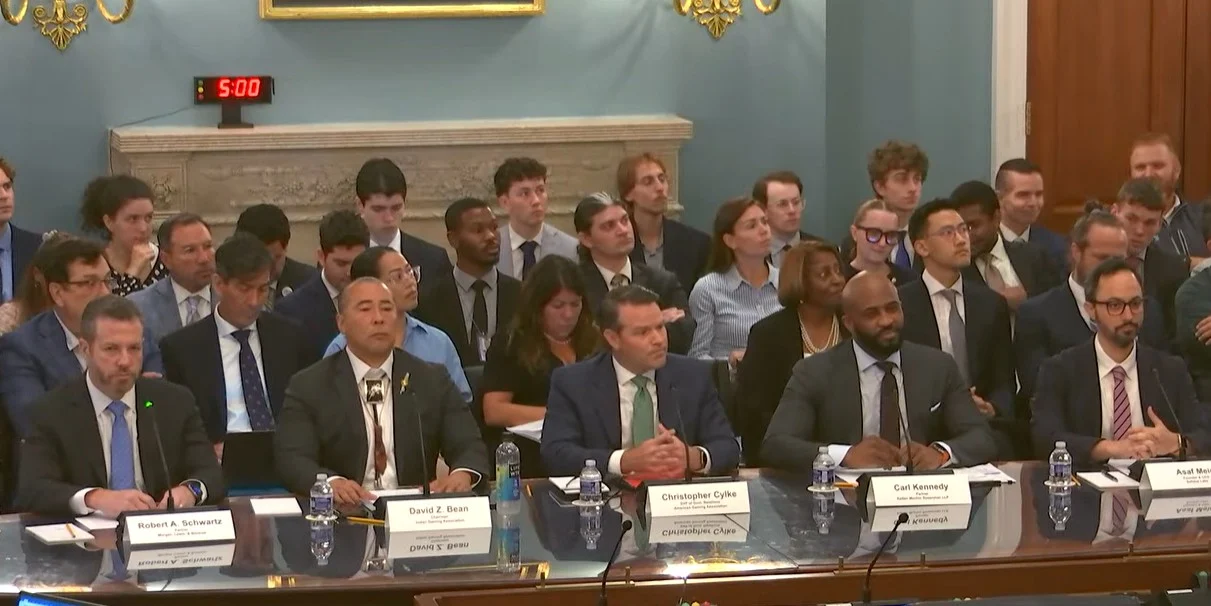
The House of Representatives recently took its own steps to address significant issues surrounding this emerging asset class. On Tuesday, a House subcommittee held a hearing focusing on market integrity concerning sports derivative contracts. This marked the first hearing on the subject following the introduction of more than a dozen bills from Congress aimed at creating protective measures for the lucrative industry.
Public interest in sports event contracts has surged, as highlighted by projections during the 2026 FIFA World Cup, where trading volume reportedly exceeded $50 billion. This high volume also emphasizes ongoing conflicts over the regulation of sports derivatives, which some advocates claim are illegal under state laws.
Industry representatives from the American Gaming Association and the Indian Gaming Association testified that states and tribal nations are potentially losing millions due to the rise of prediction markets. The hearing was supplemented by insights from two attorneys with market perspectives and testimony from Asaf Meir, CEO of Solidus Labs, who discussed the capabilities of market surveillance in detecting and preventing insider trading.
Representative Shomari Figures of Alabama described the hearing as the most balanced he has attended, thanking the diverse range of witnesses for fostering an intellectual debate on the matter.
The conflict intensified after prediction markets gained popularity in 2025, as the U.S. Commodity Futures Trading Commission (CFTC) has been working to affirm the legality of sports event contracts against state-level opposition. Proponents argue that sports event contracts parallel traditional contracts such as grain futures, thereby falling under the CFTC's authority. CFTC Chair Michael Selig has consistently reaffirmed the agency's jurisdiction over these contracts since his appointment.
The House Agriculture Subcommittee on Commodity Markets, Digital Assets, and Rural Development, led by Chair GT Thompson, hosted the hearings at the House Longworth Office on Capitol Hill. A recent draft of proposed CFTC regulations mentioned a public interest test more than 500 times, indicating a method for the agency to discern whether certain sports derivatives serve the public good before finalizing rules.
Thompson has expressed optimism about the rulemaking process, emphasizing its clarity in the definitions and standards pertaining to public interest, a subject that has been muddled in the past.
Despite typically having five commissioners, Selig remains the sole Senate-confirmed member of the CFTC. IGA Chair David Bean argued that the agency is understaffed, asserting that under Selig's leadership, it has shifted its focus from agriculture to entertainment.
In the midst of this regulatory struggle, any compromise appears unlikely. While Congress might consider a federal regulatory framework for prediction markets, state regulators seem reluctant to surrender control to federal oversight. Carl Kennedy, a derivatives lawyer with a CFTC background, pointed out that many assets can fall under the jurisdiction of multiple regulatory bodies.
He noted the example of gold, which can be bought from a local dealer under state law, while trading gold futures takes place on a CFTC-registered exchange. Similarly, he argued, trading prediction markets and wagering through state-licensed sportsbooks should coexist without conflict.
Bean calls for advance of HR 7840, the "Event Contract Enforcement Act," a 2026 bill that would amend the Commodity Exchange Act to prevent federally regulated exchanges from offering sports event contracts. However, with political gridlock evident in Washington, passing legislation has proven challenging, as evidenced by GovTrack data showing that less than 3% of standalone bills were passed in 2025.
Kennedy advocates against a blanket ban, proposing instead a nuanced approach that allows the CFTC to fulfill its federally mandated role. Designated Contract Markets, such as Kalshi, are required to comply with core principles that govern their operations. Kennedy argues that these principles are crucial in ensuring customer protection and market integrity.
Most experts anticipate that disputes over sports event contracts may eventually escalate to the Supreme Court. Kennedy, alongside former CFTC general counsel Robert Schwartz, acknowledged the unpredictability of when or if the Supreme Court would take up related cases. However, Schwartz did indicate that New Jersey might soon seek Supreme Court review of the Third Circuit’s ruling favoring Kalshi.
Such matters do not fit neatly along political divisions, according to Schwartz, which could bode well for achieving consensus and legislative action. Representative Dusty Johnson, chair of the House subcommittee, affirmed that this week's hearing would not be the last concerning prediction markets. He emphasized the committee's obligation to seek common ground in these discussions.

