
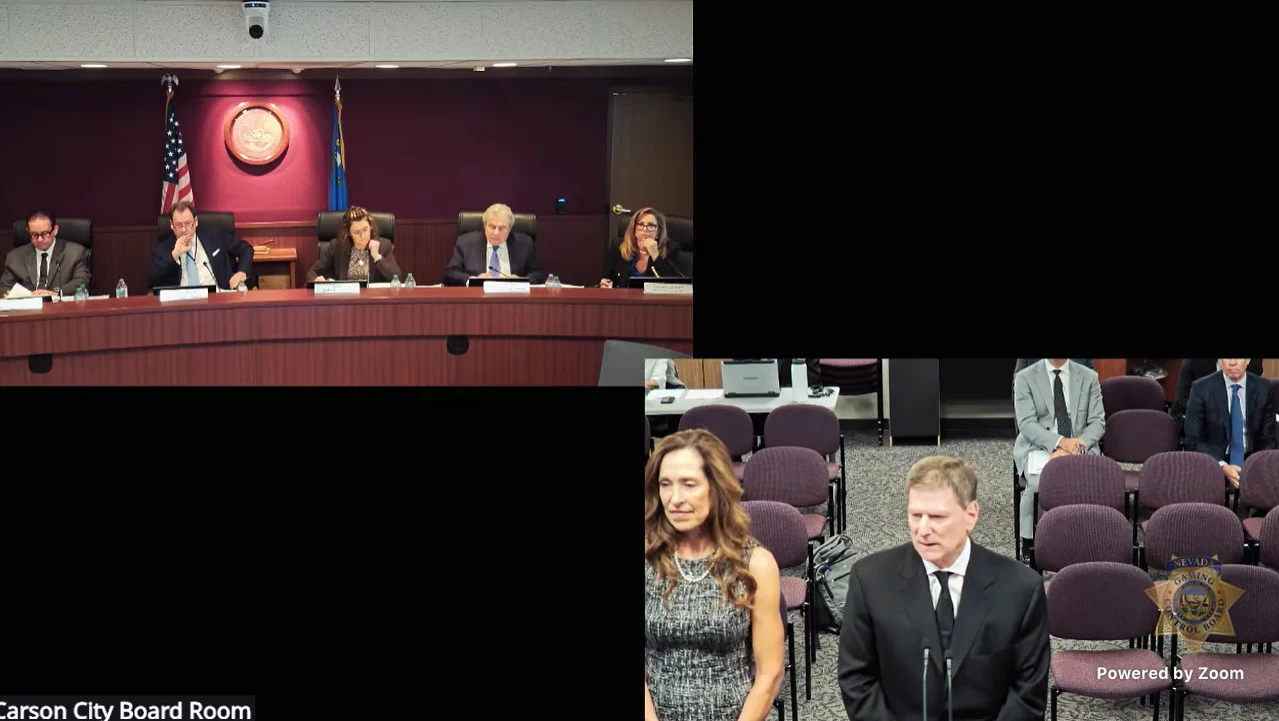
On Thursday, the Nevada Gaming Commission voted unanimously to approve the licenses of two Fertitta Entertainment executives, paving the way for the company’s $17.6 billion acquisition and privatization of Caesars Entertainment. Richard Liem, the Chief Financial Officer, and Steven Scheinthal, the General Counsel, were granted licenses, although both have held similar licenses repeatedly since Fertitta began acquiring Golden Nugget Casinos back in 2005.
Though the focus was primarily on the Caesars deal, specific details about the transaction remain sparse. To date, neither Caesars nor Fertitta has provided any public statements detailing next steps beyond a brief announcement. The go-shop period, which permitted Caesars to explore alternative offers, ended on July 11. Investor Carl Icahn was reportedly preparing a bid just before this deadline, but there have been no updates since then. Liem's response to questions about whether the deal was finalized post-go-shop was somewhat curt. "I would say when it comes to Caesars, and that transaction, Caesars is a public company, and so Caesars will make whatever public announcements that they need to make," he stated. Caesars also refused to comment when approached for details.
For the acquisition to succeed, it must clear antitrust reviews, which pose a significant regulatory challenge. Currently, Caesars and Fertitta‘s Golden Nugget brand compete in multiple markets across the U.S., including three in Nevada: Lake Tahoe, Laughlin, and Las Vegas. The Nevada Gaming Control Board did not address competitive dynamics during the approval of the executives' applications. When Eldorado Resorts acquired Caesars in 2020, both firms were required to divest certain assets for the transaction to be accepted by regulators. Previously, the Nevada Gaming Control Board indicated it would await federal rulings before making any state-level decisions regarding such transactions.
Outside of the executives’ licensure, the only confirmed action has been the filing of a Hart-Scott-Rodino antitrust application with the Federal Trade Commission. Liem indicated that the application was submitted but emphasized the process lacks a fixed timeline, pointing to the challenges of high-stakes mergers, such as the $110 billion merger between Paramount Skydance and Warner Bros Discovery, which has faced legal challenges. As a public entity, Caesars must also prepare a proxy statement and obtain shareholder approval moving forward.
The commissioners were interested in the role of Tilman Fertitta, the billionaire at the helm of Fertitta Entertainment, who is currently the U.S. ambassador to Italy. Due to ethics guidelines, Fertitta must distance himself from his business affairs. Liem clarified that while Fertitta does not engage in daily operations, he remains involved in providing strategic guidance. This remark seemed to confuse some commissioners but was not expanded upon. Liem mentioned that Fertitta has been cleared for a few responsibilities, including those related to the ownership of the NBA’s Houston Rockets, but not for gaming or hospitality ties.
Scheinthal elaborated that union negotiations had brought him to Las Vegas and highlighted Fertitta's strong relationship with the Culinary Union. He recounted a personal call from the union’s Secretary-Treasurer Ted Pappageorge upon the deal's announcement.
On the potential integration of Caesars and Golden Nugget, Scheinthal made it clear that the integration would likely mean Golden Nugget’s operations would assimilate into Caesars, which he frames as a larger entity with extensive resources. "They’re much larger than us; it’s easier for us to integrate our properties into their system than for us to integrate their properties into our system," he explained. Scheinthal also noted that Caesars is still dealing with the aftermath of a $7.8 million fine related to anti-money laundering failures from issues connected to illegal bookmaker Mathew Bowyer. He expressed optimism about Caesars' compliance measures, stating, "They’ve got a tremendous [compliance] department that they’ve put together."
Scheinthal also shared insights on various topics, including the emerging landscape of prediction markets. Both Golden Nugget and Caesars operate casinos and online gaming platforms, making them susceptible to competition from prediction markets. He speculated that this issue could eventually escalate to the Supreme Court, suggesting that advocates for state rights might fare well there.
Regarding the possibility of gaming expansion in Texas, where Fertitta is based, Scheinthal remained skeptical, noting political resistance from figures like Lieutenant Governor Dan Patrick. While there had been rumors of Fertitta pursuing a Houston casino project, he expressed doubt. "I do not envision that gaming would come to Texas based on current state politics," he remarked, forecasting that without a significant political shift, any gaming advancements in Texas could remain stalled until at least 2032.

