
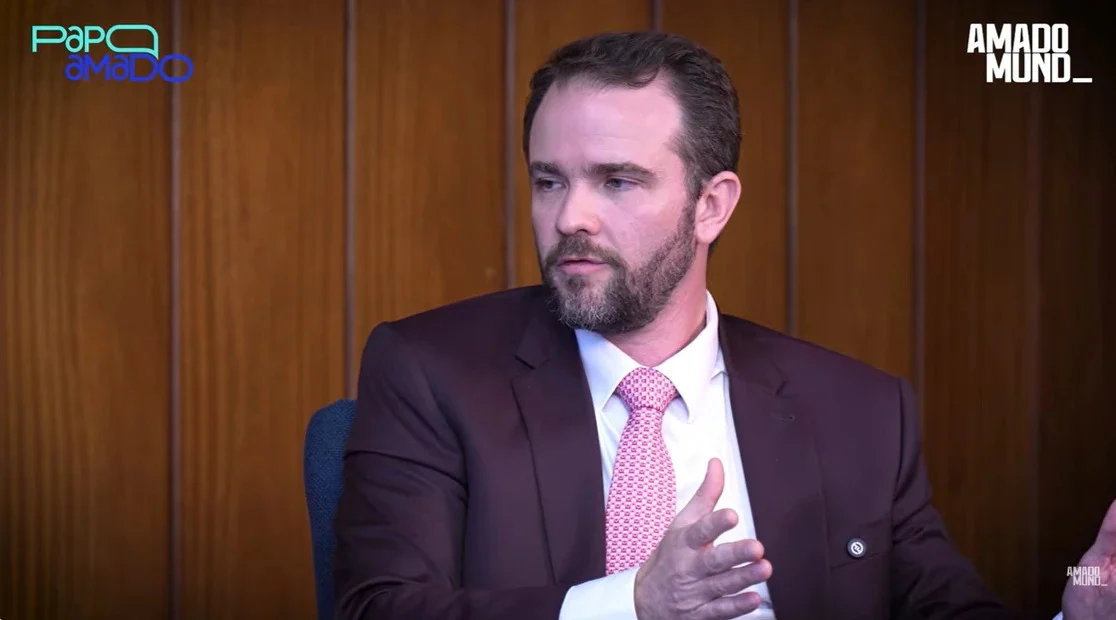
Brazil's Finance Minister, Dario Durigan, emphasized that the nation does not rely on betting revenue to maintain its public finances. He clarified that the aim of regulating the sector is not primarily to generate income.
"Tax collection is part of the economic framework, and every sector, including betting, contributes," Durigan explained. He further suggested that gambling should be subject to the same strict regulations as tobacco products.
In an interview featured in Guilherme Amado's column in Amado Mundo, Durigan discussed the government's fulfillment of its obligations under the legislation that established sports betting in Brazil. "The law mandated regulation of the sector, which was neglected by the previous administration," he stated. "When we took office, the sector had been operating without proper oversight for almost five years.
"We noticed their presence in football and advertising, which has both political and economic significance. Recognizing that Congress was unlikely to ban the activity, we decided to implement regulations to put a stop to unregulated operations.
"My goal in collecting taxes is not due to a financial need but rather for fairness’s sake: companies selling cars pay taxes, as do those selling beverages. If a business is authorized to operate, it should pay its dues.
In the interview, Durigan brought up tax amendments proposed by the Ministry of Finance, including recent restrictions on beneficiaries of social welfare programs engaging in gambling.
Addressing President Luiz Inácio Lula da Silva's reported unease regarding the impact of betting on public welfare, Durigan remarked, "Lula has expressed his concerns about the costs and overall quality of life. Thus, we have been discussing this issue. I have engaged with Congress, the Supreme Federal Court, and the Attorney General to examine how betting affects Brazilians.
"We have made strides, such as raising the direct tax rate to 15% and incorporating betting into the Selective Tax framework. Additionally, individuals benefiting from social assistance programs, including those enrolled in the Desenrola initiative, are prohibited from gambling.
Durigan mentioned the introduction of a self-exclusion measure to help keep vulnerable individuals away from betting.
"The conversation regarding prohibition will continue in Brazil over the next few years," he asserted. "This will be an institutional dialogue involving the Supreme Court, Congress, and the executive branch. He did not suggest that the government is contemplating a ban on gambling activities.

