
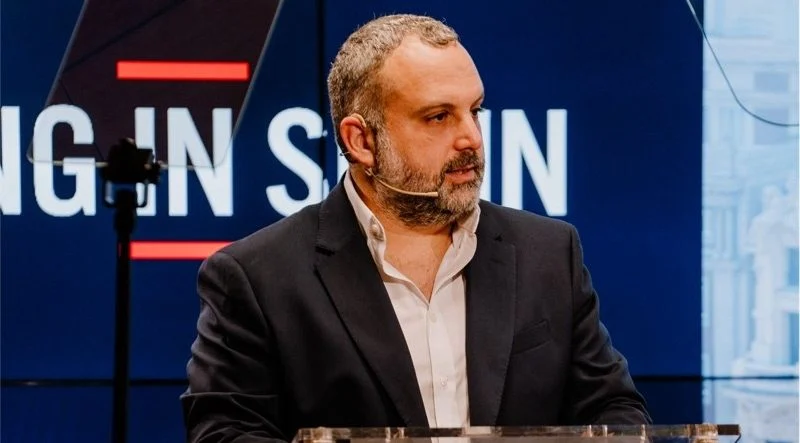
Aviv Sher, the CEO of Nasdaq-listed Codere Online, has been an advocate for a cautious approach to expansion into new markets. As Brazil’s regulated sector has come to a sudden halt, he shared with iGB how this careful strategy has spared the company from costly miscalculations.
The launch of Brazil’s regulated market at the beginning of 2025 was anticipated as a pivotal moment for the country, home to over 200 million sports enthusiasts eager for online gambling. Major international companies, including Flutter, Entain, and Betano, quickly established a foothold, with Flutter acquiring a majority stake in NSX Group, the owner of Betnacional, for over $350 million.
While many global firms rushed into Brazil, Codere Online took a step back. Sher emphasized that the opportunity was exciting but the financial demands and potential for regulatory fluctuations prompted them to keep their distance from the market.
That decision has proven to be beneficial. In late September, Brazilian President Luiz Inácio Lula da Silva announced a ban on the licensed sector, closing a market projected to generate up to BRL16 billion (approximately $3.18 billion) in tax revenue by the end of 2026.
Sher believes that Codere Online’s choice to stay out of Brazil was justified, primarily due to concerns about regulatory unpredictability and tax uncertainties. He remarked that the sudden upheaval in Brazil jeopardizes the investments made by operators who had anticipated a stable regulatory framework.
"We dodged the bullet," Sher commented.
He noted that the Brazilian government's decision essentially reneged on agreements with operators who invested heavily in hopes of achieving returns from sponsorships and marketing contracts. "A lot of money from the operator side flowed into the market, and there will be no return," he explained. "Our conservative approach, aimed at protecting our investors, was the right strategy in this case."
Although Codere Online was not involved in Brazil before the market closure, Sher is monitoring the situation closely, as changes could have wider implications for the gaming landscape in Latin America.
When a large market like Brazil experiences significant regulatory shifts, it may provoke caution among other regulators in the region, which is something the industry will keep an eye on.
Sher expressed interest in further expanding into Latin America beyond Codere Online’s existing markets of Mexico, Colombia, Panama, and Argentina. "I don’t think 2027 will be a boring year," he indicated.
The potential for entry into markets like Chile, Peru, and Uruguay is already under consideration, though decisions will depend on certain conditions. For example, while Peru has attracted international interest from firms like Betsson, Bet365, and Stake, Sher noted that for now, Codere Online would remain cautious.
"Peru is of interest, but not at the moment," he said, referring to the significant investments already made by other competitors. "We will wait and see how the market evolves before making any decisions.
"Unlike Brazil, Peru currently enjoys an organized regulatory environment. Operators are generally content with the regulator, and the market appears stable after initial challenges," he remarked, recognizing that the evolving competitive landscape will be closely monitored.
In contrast, the situation in both Chile and Uruguay remains stagnant as Codere Online awaits regulatory frameworks to be established. Sher expressed frustration regarding the slow progress of online gambling legislation in Chile, which has been in limbo since it was first proposed in 2021.
“I met with individuals involved in the Chilean regulation who assured me the bill would be finalized by the end of last year,” he recounted. "Here we are, a year later, and the progress has been sluggish. There’s a concern that the framework might be too costly, potentially limiting lucrative opportunities.
"The delay is a mistake; the government is missing out on tax revenue while operators continue to operate in grey markets, sponsoring teams and generating activity that isn’t tax-revenue-generating for the government,” Sher insisted.
Codere Online is also considering extending its operations in Argentina, where it holds a license in Buenos Aires and is exploring the possibility of a provincial license. The province represents about 40% of Argentina’s population, but the legal structure only allows for a maximum of seven online gambling licenses, currently held by operators like Betano, Betsson, Bet365, and Stake.
Sher highlighted concerns about a newly introduced 2% tax on online slot machine winnings, which he believes could severely hinder profitability for operators.
“This tax could eliminate two-thirds of the profit for all operators there,” he observed. Despite this, he reaffirmed Argentina’s importance as a target market and expressed a willingness to acquire the provincial license when feasible, commenting, “We’re waiting to see how things develop in Argentina.”

