
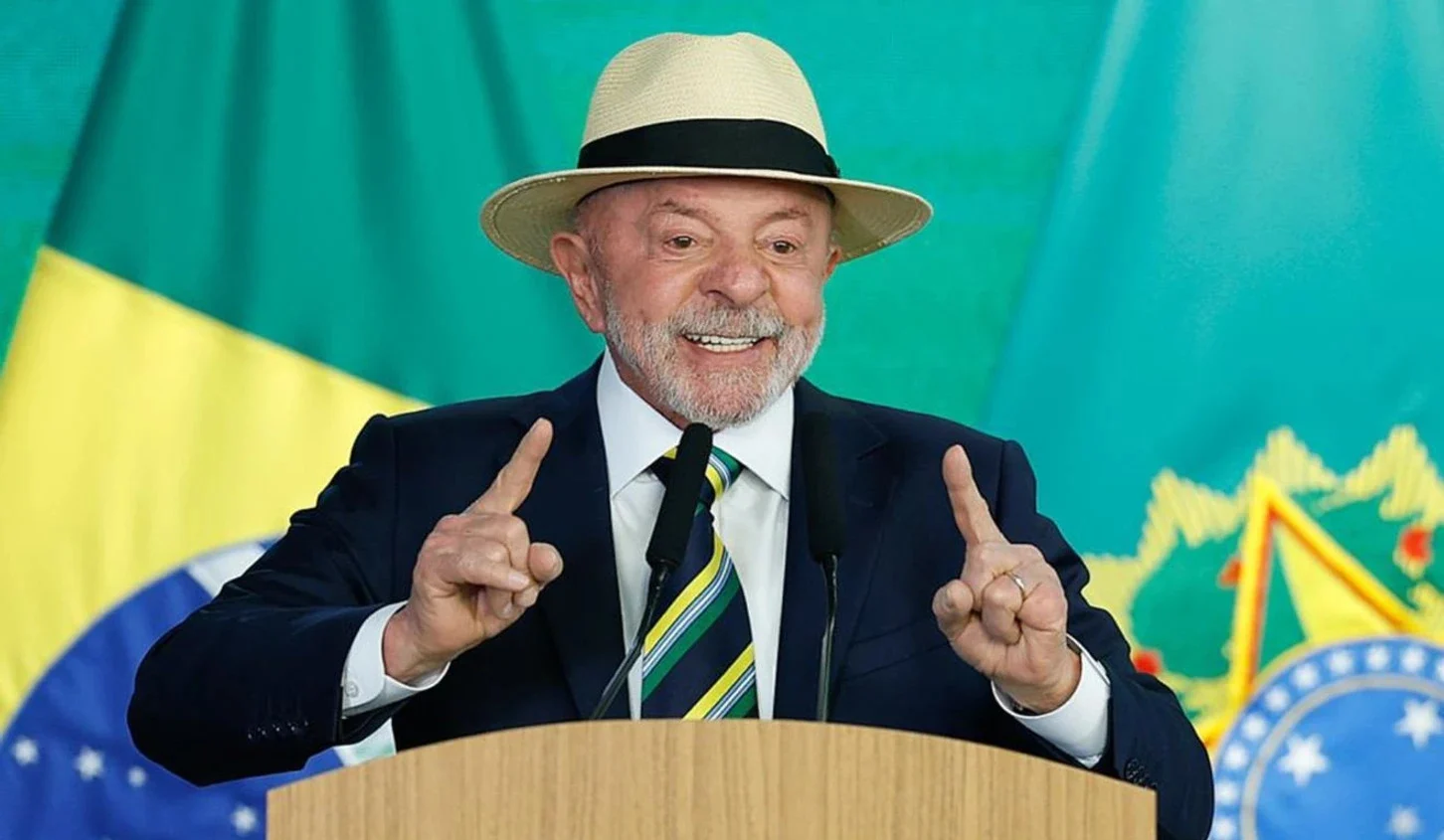
Brazil's Superior Electoral Court (TSE) officially confirmed Luiz Inácio Lula da Silva's re-election as president on Sunday. Lula garnered nearly 52% of the vote, compared to just over 48% for Flávio Bolsonaro, a margin of approximately 4.3 million votes that underscored the contest's closeness.
Lula's anti-gambling position contributed to the announcement of Provisional Measure 1,394, which instituted a ban on gambling. In light of his electoral victory, Lula is expected to intensify his criticism of the betting industry. His campaign even framed the election as a referendum on the future of betting.
The battle to overturn the gambling ban resumes on Monday, with challenges expected on two fronts: the Supreme Federal Court (STF) and the National Congress. Following the implementation of Provisional Measure 1,394, Lula emphasized that the ban aimed to protect families burdened by debt.
Buoyed by his electoral win, Lula is anticipated to adopt a firmer stance against gambling, even as tax revenues from the sector are crucial for maintaining balanced state finances. Ahead of the second round of voting, he asserted that gambling would not be reinstated, unaware that such decisions are not solely within his purview.
The STF will first evaluate the constitutionality of the provisional measure. Challenges have been mounted by various industry groups and football clubs. Minister Luiz Fux, the rapporteur assigned to the issue, has committed to delivering a decision once the electoral process concludes.
Fux’s expert understanding of constitutional law places him in a position to assess whether the provisional measure could breach contracts, lead to significant layoffs, or fail to eradicate gambling altogether. Many believe that a complete ban on gambling through a provisional measure is unfeasible, potentially pushing bettors into illicit markets. Observers expect Fux to consider revoking the measure due to potential constitutional violations.
Nonetheless, this ban has already inflicted significant harm on Brazil's reputation as an investment destination. Operators who anticipated a regulated market invested BRL30 million ($6 million) for five-year concessions and an additional BRL5 million in reserves, only to suspend their operations for over a month, incurring an estimated loss of BRL1.2 billion in revenue. This situation raises concerns about financial accountability for these losses.
Additionally, the government has seen a decline of more than BRL400 million in tax revenues, covering various tax categories including Direct Tax on GGR and Corporate Income Tax.
As of Sunday, the licenses granted under the previous regime have expired. Should the STF annul the provisional measure, the invalidation of these licenses would also be overturned.
The National Congress remains another critical battlefield, where a Joint Committee has already named 12 senators and 13 representatives as full members for Provisional Measure 1,394; alternates include six senators and seven representatives. A complete committee consists of 26 senators and 26 representatives, though a president and rapporteur have yet to be appointed.
Congress must address the provisional measure by 25 November, with an option to request a 60-day extension. However, starting 9 November, Congress will be unable to proceed with other matters until it has voted on the ban.
In recent months, Lula managed to effectively push his legislative agenda through the Chamber of Deputies and Senate by leveraging political favors. Now, with diminished leverage, sustaining the provisional measure will prove substantially more challenging for him. Even if he manages to do so, it is unlikely that the Congress will act on it before the 25 November deadline, indicating a tough uphill battle ahead.
Lula's opposition, particularly from the PL party, holds considerable influence in both legislative bodies, further complicating his position. Currently, discussions indicate that any potential for betting sites to resume operations could be limited to sports betting, excluding online casinos. The validity of licenses that expired on 25 October raises the question of whether new applications will be required for any resumption of activities, a decision that will ultimately rest with Congress.

