
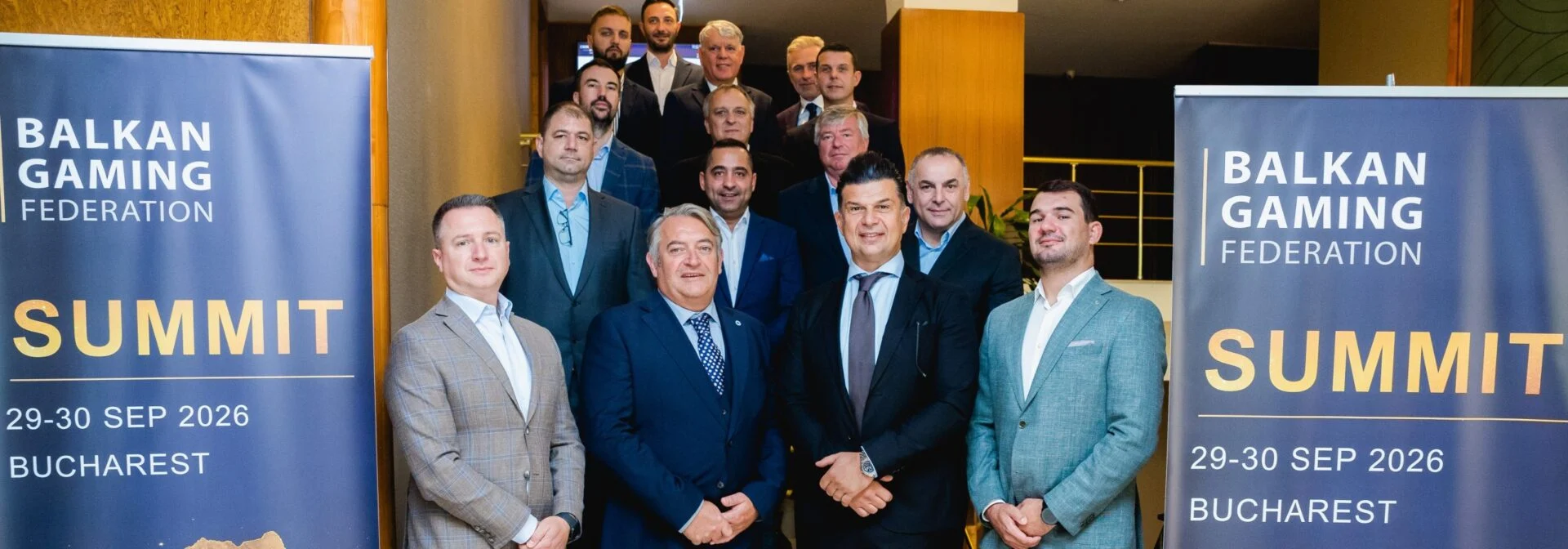
On September 30, Dragan Skrbic, who serves as the president of the Serbian gambling association AGOS, was elected as the inaugural president of the Balkan Gaming Federation (BGF) during a conference held in Bucharest.
Filip Jelavić, the secretary general of Croatia’s HUPIS, and Sorin Georgescu, who holds the roles of president of Romania’s ROMSLOT and vice president of FEDBET, were elected as vice presidents of the federation.
This newly formed leadership team is tasked with kicking off the BGF’s initial campaigns advocating for the legal gambling sector in the Balkans. A prime focus will be on fostering closer relationships with EUROMAT, the land-based trade association, which was present throughout the two-day conference and leadership election in Romania.
Since its establishment in Serbia in March, the BGF has aimed to strengthen its ties with EUROMAT. The federation, in a statement released after the meeting, emphasized its objective to position itself as a regional cluster within the EU-wide trade body.
The press release noted, "This will allow the federation to consolidate the challenges, expertise, and positions of Balkan markets and connect them more directly with the European policy debate, while giving EUROMAT a more structured link to a region that includes both EU member states and Western Balkan markets."
Collectively, the BGF unites seven trade associations from the Western Balkans—covering Serbia, Bulgaria, Croatia, Romania, Montenegro, Bosnia and Herzegovina, and North Macedonia. With the legal gambling industry facing increasing pressure in the region, the BGF aims to provide operators and suppliers with a united front. Thus far, it has established Croatia as its headquarters and has issued joint statements on regulatory developments in countries like Romania, Montenegro, and North Macedonia.
Filip Jelavić, now serving as a vice president, emphasized the rapidly evolving nature of challenges posed by the black market within the region, attributing part of the issue to excessive regulations.
He stated, "The relationship between regulation and illegal gambling cannot be ignored. Experience across Europe increasingly shows that overregulation, particularly when not supported by evidence or impact assessments, can unintentionally drive consumers towards the black market."
In recent years, various jurisdictions in the Western Balkans have intensified their regulatory crackdowns. Bulgaria, for instance, has consistently tightened advertising regulations, with a potential ban on affiliates in the works. Conversely, Romania has shifted gambling authorizations to local authorities, leaving land-based operators uncertain.
Following the leadership election, the BGF’s new team will present its priorities for 2027 at the New Horizons Gaming Industry Gala Dinner scheduled in Sofia on November 24. This event will mark the first public appearance of the leadership alongside representatives from member associations.
The next day, the BGF will host a roundtable discussion that will bring together prominent companies and industry leaders from the Balkans. This gathering aims to become an annual event, focusing on mutual business interests, regulatory hurdles, collaborative initiatives, and safeguarding the legal gaming sector.
As part of its mission, the BGF is also working on a larger B2B regional forum, which will include an exhibition aimed at enhancing connections across the industry within the Balkans. This event is set to move between Bulgaria, Romania, and Serbia.
Jelavić expressed optimism in July that the federation could evolve into a “credible regional voice” and a significant participant in discussions with governmental bodies, regulators, and European institutions.
He remarked, "If, after the first year, the federation is recognized as a serious regional partner, actively engaged in combating illegal gambling and capable of uniting operators, suppliers, and industry stakeholders around common goals, that would be a very successful start."

