
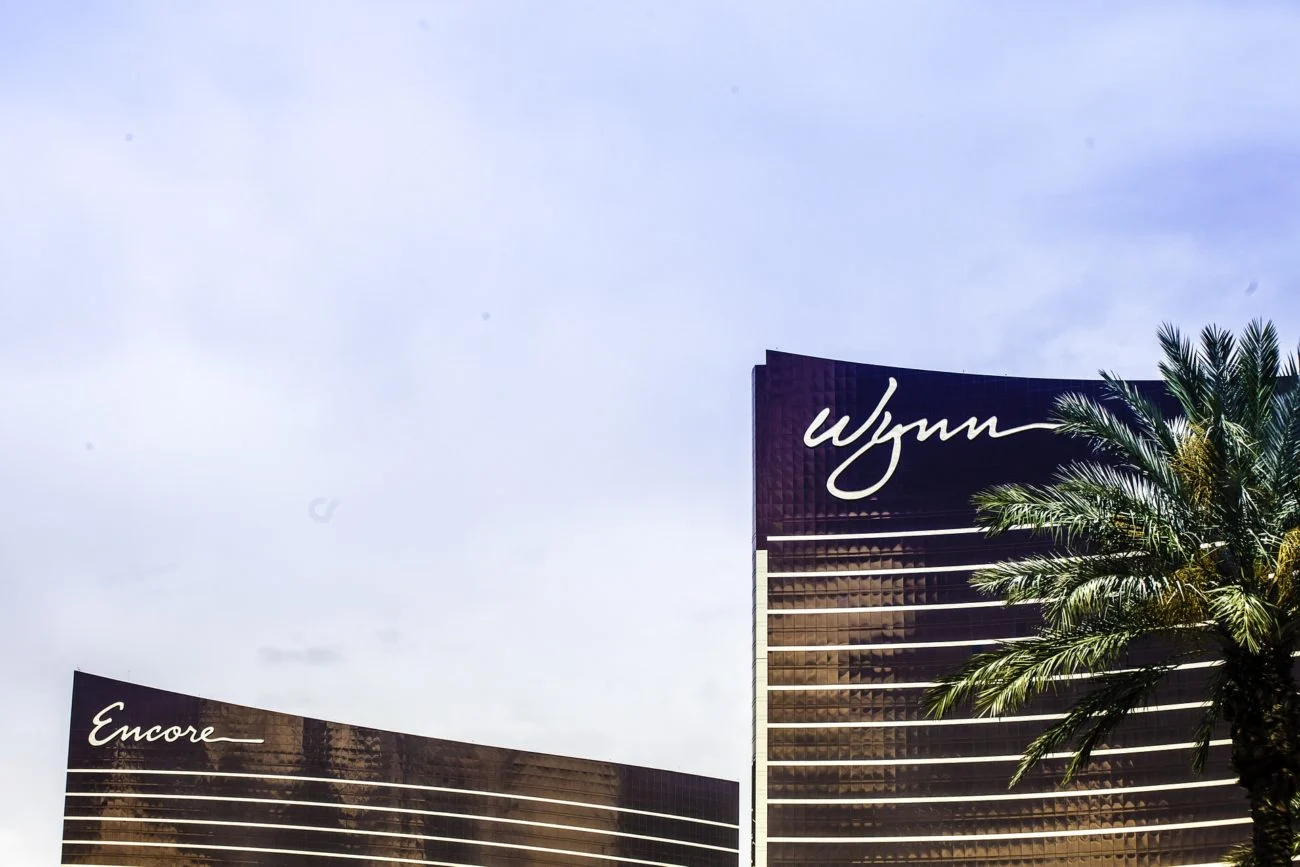
Wynn Resorts announced key financial results for the second quarter on Tuesday, revealing a significant six-month delay in launching its UAE resort and an increase of $600 million in its construction budget due to ongoing Middle Eastern conflicts. Despite these challenges, the luxury operator recorded solid results for the quarter.
The company reported group revenue of $1.86 billion, reflecting a 7% year-over-year increase, while net income rose impressively from $66.2 million last year to $140.1 million this year. Group-adjusted EBITDA grew about 3% year-over-year to reach $568.3 million.
Macau emerged as a strong performer during the quarter, particularly for Wynn Palace in Cotai, where revenue surged 21% year-over-year to $653.4 million and adjusted EBITDAR climbed 28% to $201.5 million. Interestingly, these figures were primarily fueled by mass market patrons rather than high rollers, a departure from Wynn's typical focus. The property witnessed a decrease in both VIP turnover and VIP table games, down 32% and 29% respectively, while mass market table game revenue increased by 37%.
In a significant development, Wynn previously announced The Enclave, a hotel tower with 432 suites at Wynn Palace, estimated to cost between $900 million and $950 million. Wynn's CEO Craig Billings confirmed construction on The Enclave would commence before the year's end, alongside the start of work on a new event center and theater at Wynn Palace, set to open in 2028, while The Enclave is scheduled for a 2029 completion.
"We continue to focus on Macau, targeting a specific customer type that currently drives the market, and we remain committed to this strategy," Billings stated during the earnings call.
In Las Vegas, total revenue was stable at $643.2 million, although casino revenue saw a 6.5% increase to $158.1 million. Segment-adjusted EBITDAR decreased by 8% year-over-year to $215.2 million, reflecting intensified competition from rivals MGM and Caesars. While MGM has benefitted from market gains, Caesars is undergoing a transition as it prepares to be taken private by Fertitta Entertainment.
Wynn's CFO Craig Fullalove emphasized the importance of continuously enhancing offerings for high-value customers in Las Vegas, linking it to the current performance metrics.
On the topic of a potential NBA franchise in Las Vegas, which may be finalized by the year's end, Billings mentioned Wynn's 38-acre vacant land on the Strip, acquired in 2017, as a potential site for an arena. Competing interests from Caesars and MGM also exist, but Billings expressed optimism about the NBA's positive impact on visitation.
"We would welcome an NBA franchise in Las Vegas, as it attracts high-end visitors and great customers for our business," he said.
Regarding Encore Boston Harbor, the venue experienced a 3% decline in revenue to $209.2 million and a 12% drop in adjusted EBITDAR to $56 million, primarily due to a decrease in table game winnings. Nonetheless, Billings shared positive news about record performance in hotel revenue and revPAR, attributing the healthy demand in Boston to ongoing interest in slot gaming, which remains ahead of last year’s figures.
A notable potential regulatory change involves the legalization of historical horse racing (HHR) in Massachusetts, aimed at introducing slot-like games that permit betting on anonymized past races. This initiative is tied to a recently approved economic bill in the Massachusetts House and would benefit Suffolk Downs, situated five miles from Encore Boston Harbor.
As of the end of the quarter, Wynn reported cash and equivalents of $1.5 billion against current and long-term debt totaling $10.7 billion. The company repurchased $75 million in shares during the quarter and has approximately $326 million remaining in repurchase authority. Wynn’s shares closed at $101.15 on Wednesday, reflecting a 3% gain for the day, though the stock has declined about 17% since the beginning of the year.
Macquarie analyst Chad Beynon maintained an outperform rating for Wynn with a target price of $143, suggesting the market is underestimating the resilience of earnings in Las Vegas and Macau, as well as potential in the UAE market despite the recent budgetary increases.

