
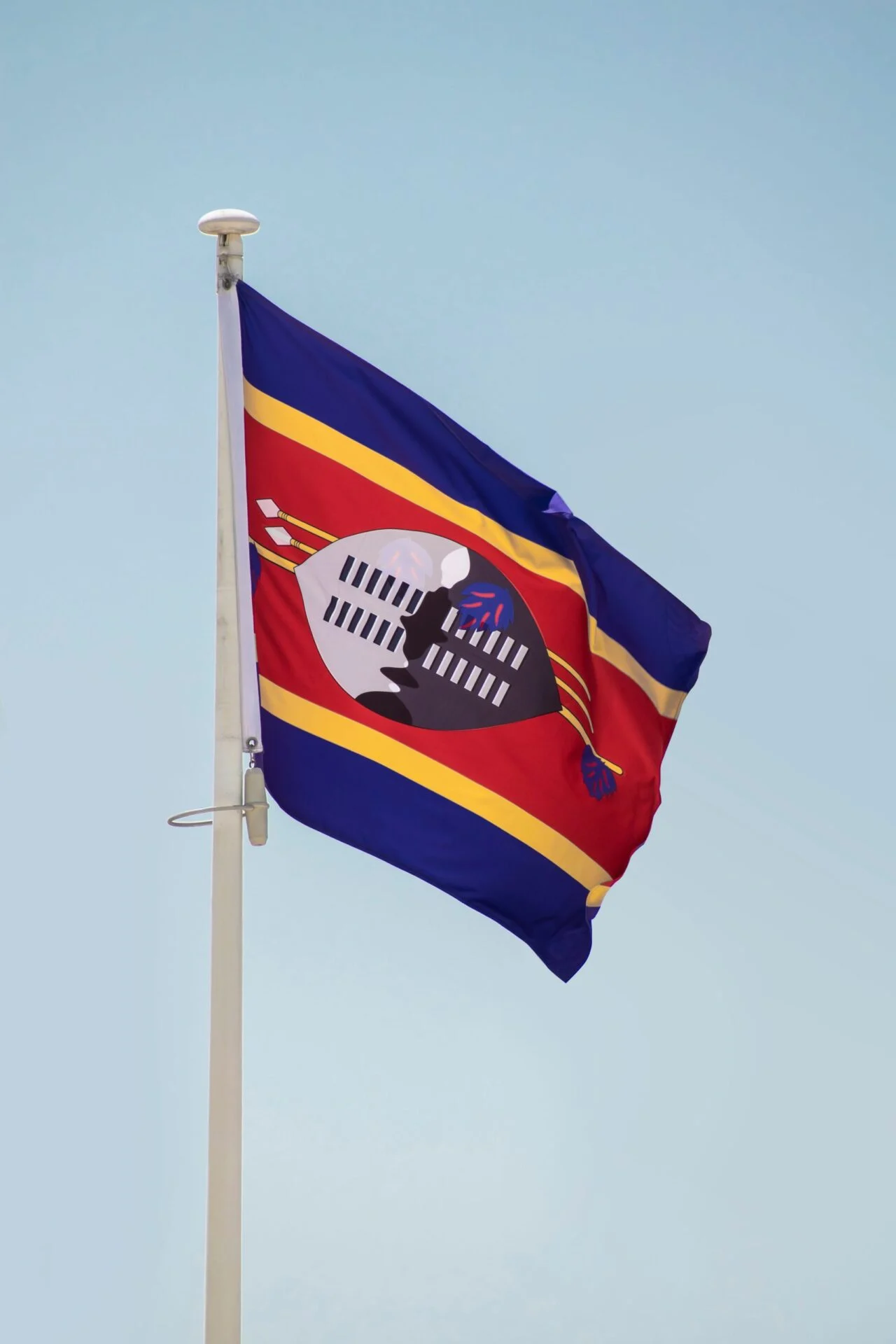
Eswatini's Royal Eswatini Police Service (REPS) informed the High Court that their investigation into illegal online gambling has escalated into a broader international inquiry focusing on fraud and organized crime. The investigation, led by Detective Constable Ntokozo Dlamini from the Organised Crime Unit, revealed troubling connections between this criminal scheme and high-ranking politicians, police officials, and immigration authorities.
In a court affidavit, Dlamini disclosed that over 400 electronic devices are currently undergoing forensic examination, aided by INTERPOL's support. According to INTERPOL's account of the operation, dubbed Operation First Light 2026, 240 devices have been confiscated, and 82 people have been arrested in the targeted actions within Eswatini.
These devices were seized during coordinated raids in Mbabane and Ezulwini in early 2026, which included significant operations at the Castle Hotel—identified as a major command center for the syndicate.
Initially, the investigation focused on domestic illegal gambling and immigration issues. In March 2026, REPS conducted raids across Mbabane, leading to the arrest of 146 foreign nationals, predominantly from China, Taiwan, Indonesia, Cambodia, and Brazil. During the first wave of arrests, police confiscated 313 electronic devices. The detained individuals face charges under the Gaming Control Act, the Money Laundering and Financing of Terrorism (Prevention) Act, and the Immigration Act.
Following the initial raids, forensic examinations revealed that the organized crime operation targeted victims in Brazil and India while facilitating unlicensed online gambling from Eswatini. Authorities allege that syndicate members pooled their illegal earnings and converted them into cryptocurrency, primarily USDT, before funneling the funds through banks in Abu Dhabi and the United States, ultimately returning the money to Eswatini.
Investigators also discovered a sophisticated impersonation scheme connected to the criminal network. Officers uncovered what seemed to be a falsified Brazilian police holding facility in Castle Hotel, which included Brazilian police uniforms, bulletproof vests, five communication radios, and a Brazilian Federal Police badge. Members of the network allegedly posed as Brazilian Federal Police officers during video calls, telling their victims they were under investigation and pressured them to sign fraudulent "confidentiality agreements," demanding that money be transferred to accounts they claimed were held by the Brazilian Central Bank for safekeeping.
Approximately 40 Brazilian citizens were identified as victims of this operation, with INTERPOL mobilizing its Operational Support Team in Eswatini as part of Operation First Light 2026, which has seized illicit assets worth around $293 million globally across 97 countries.
Meanwhile, the investigation has heightened scrutiny on Eswatini's gambling licensing framework. On June 2, 2026, National Commissioner of Police Vusi Manoma Masango recommended that the Ministry of Tourism and Environmental Affairs temporarily suspend the issuance of new gambling licences until the investigation is resolved. He warned that continuing to issue licences during an active inquiry could expose the country to further infiltration by criminal elements, jeopardizing security and investor confidence.
Masango firmly stated in an August 3 interview, "No individual is above the law, regardless of rank or political influence and we do not fear them."
In light of these developments, Senate Deputy President Ndumiso Mdluli has urged Prime Minister Russell Mmiso Dlamini to investigate whether politicians have unknowingly provided accommodations to foreign nationals participating in illegal online gambling. Mdluli raised concerns about existing penalties, noting that many offenders face minimal consequences. In June 2026, 84 of the foreign nationals were convicted for immigration infringements rather than gambling offenses and were given sentences of six months, with options for fines of E500 (about $30).
The current state of Eswatini's Gaming Control Act, enacted in 2022, remains an issue, as its regulatory aspects are still being formulated. Members of parliament have advocated for a halt on issuing new gambling licences until these regulations are finalized and presented before parliament. The Ministry of Tourism has suspended new applications and only renewed four existing licences under close scrutiny. The Ministry of Finance advised the High Court that the lack of a regulated environment could risk categorizing Eswatini among international financial-crime grey lists.
With the forensic examination of the seized devices ongoing, police plan to compile a detailed report in due course. The results of this investigation may intensify calls for stricter gambling regulations and enforcement measures in Eswatini. What started as a raid on unlicensed gambling operations has unfolded into a complex and expansive case implicating numerous victims in a sophisticated scam, likely impacting future gambling regulation in the country.

