
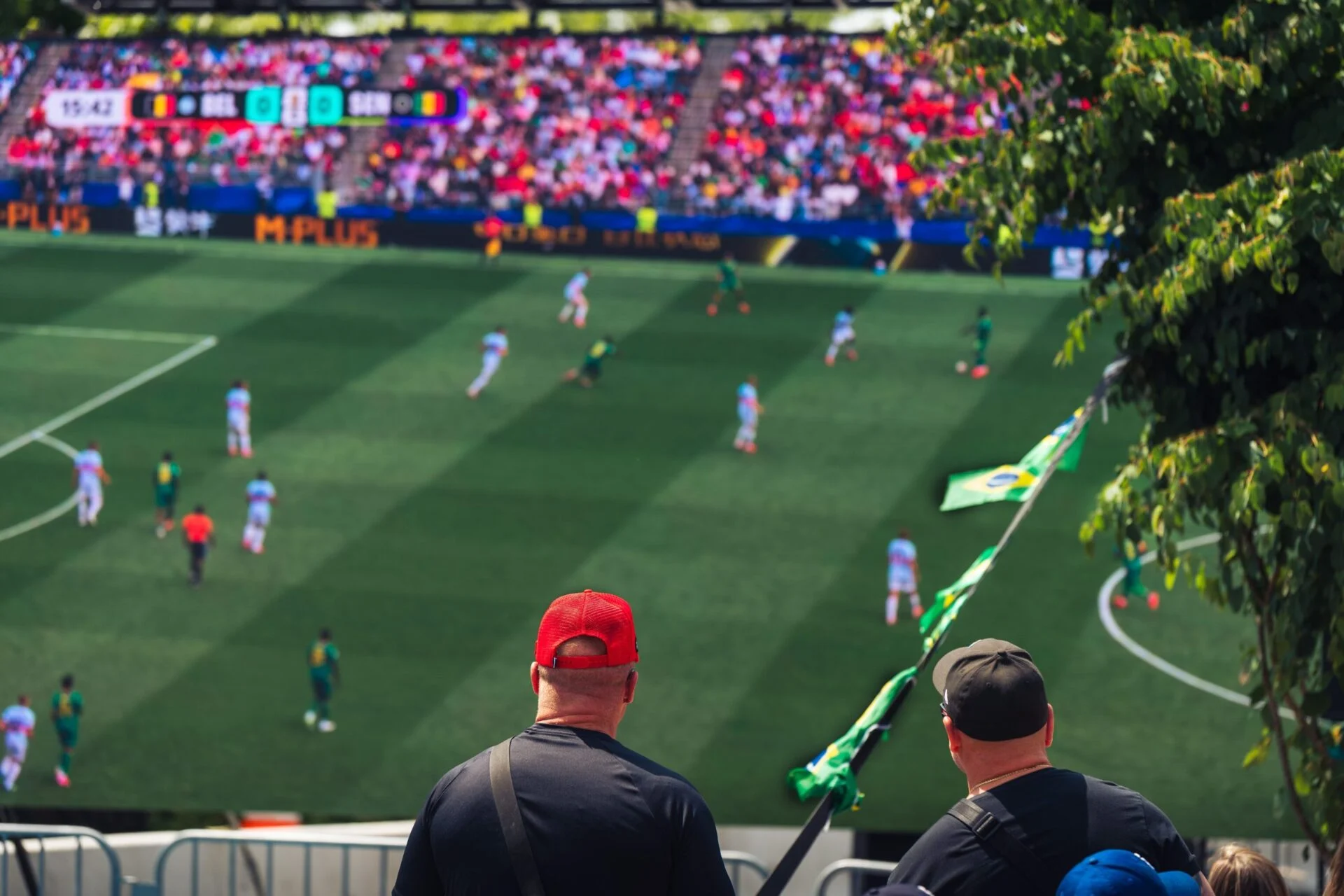
As the World Cup approaches its conclusion in the US, Mexico, and Canada, operators will soon evaluate whether the tournament has met commercial expectations. The question arises: does the true value of large events lie in the activity after the final whistle?
Before the tournament commenced, investment bank Macquarie projected global wagers could top $50 billion. However, during Entain’s FY ’25 earnings call in March, CEO Stella David shared insights into the actual revenue the tournament might yield, which raised concerns about its overall value.
"It’s not as big a thing as you might think," David stated, addressing analysts on the annual revenue from the World Cup for Entain. "It’s probably worth about 1% or something like that across the year as an upside. It’s bigger than the Euros, but it’s not as dramatic as you would think."
This estimate appears low, but Ed Birkin, managing director of H2 Gambling Capital, suggests that major sporting events primarily act as customer acquisition tools instead of significant revenue sources. "In markets that report it, [the World Cup is] accounting for around 7% of sports turnover," Birkin noted. He added that actual performance varies based on game outcomes.
“If you’re only making 1% from the World Cup, then it would be disappointing. However, that depends on your split. Those more focused on sports will see a bigger benefit. Entain has a strong UK presence, but their gaming brands remain larger,” Birkin explained.
The results on the field are pivotal. This year's World Cup introduced 48 teams, leading to over 60% more matches but also several mismatches in the group stages where powerhouse teams faced off against newcomers. For example, first-time qualifier Cape Verde managed draws against both Spain and Uruguay, while traditional powerhouses Brazil, Germany, Portugal, England, and the Netherlands all stumbled.
Chad Beynon, a senior analyst with Macquarie Group, emphasized that the tournament's outcomes are critical for operators' success. “If England makes it to the final, those numbers will shatter what Entain anticipated,” Beynon stated. “We need big teams to progress; if England, France, Argentina are upset by lower-ranked countries, revenues would be negatively impacted in the later stages.”
Another perspective from Beynon, supported by Super Group CEO Neal Menashe, indicates the true potential of the World Cup lies in cross-selling opportunities to casinos, with Menashe estimating a conversion rate of around 60% to 70% from sports betting to casino games. “We view poker and sports betting as the top of the funnel, with iGaming as the revenue generator," he added, although he noted that new customers might exhibit lower cross-sell rates due to lack of prior participation in iGaming.
Challenges remain; Birkin expressed doubts about the effectiveness of cross-selling in the US market, particularly where iGaming expansion has stalled in many states. “In the US, it’s significant only in five states, and there are concerns that sports bettors may not transition much to casinos,” he pointed out.
For betting operators, the World Cup may serve more as a strategy to acquire customers than to realize immediate profits. Robeson Reeves, CEO of Bally’s Intralot, mentioned during the firm’s Q1 earnings call that they wouldn’t heavily invest in World Cup marketing, instead planning to capture customers from competitors once the event’s promotional noise settled.
Birkin remarked on this approach, suggesting that with marketing costs rising as sportsbooks compete fiercely during the event, it makes sense for some companies to be strategic about their spending. “Why spend money when advertising costs soar? It’s a crowded space for everyone,” Birkin noted, emphasizing that competition drives marketing expenses.
Beynon concurred, asserting that Bally’s is focusing on customer acquisition strategies that emphasize profitability over aggressive marketing. “Bally’s is unique in pursuing profit margins more diligently than others and efficiently managing customer acquisitions across their operations,” he explained.
With the World Cup taking place in North America for the first time since 1994, Beynon describes it as a vast commercial opportunity. DraftKings, a market leader alongside Flutter Entertainment’s FanDuel, is enthusiastic about the prospects for customer acquisition. Greg Karamitis, DraftKings’ EVP and GM of sports, highlighted that while exact revenue predictions for the tournament are not available, the primary goal is customer engagement. “We’re eager about the customer engagement opportunities that the 2026 World Cup presents,” he stated, underlining the significance of providing a rewarding experience for fans, particularly the Spanish-speaking demographic.
As operators ramp up marketing expenditures during major sporting events, concerns about overspending arise. Birkin believes operators must participate in high marketing costs to avoid losing market share. “If operators collectively decided not to spend, it wouldn’t greatly affect their revenues, but they risk missing out on customer acquisition,” he noted.
Karamitis acknowledged the increased costs but is confident in the long-term benefits. “While marketing expenditure does rise during these events, acquisition efficiency often improves, making such investments worthwhile,” he said.
Another emerging competitive factor is prediction markets, which according to Beynon could disrupt traditional sports betting revenue. Kalshi, a leader in US prediction markets, saw $15 billion in wagers in May. Beynon estimates that legal sports betting might generate $3 billion in gross gaming revenue (GGR) during the World Cup, while prediction markets could account for $2 billion.
Despite this growth, Birkin believes the impact of prediction markets on traditional betting will be limited, particularly in Europe where several countries have barred them. “In the US, they mainly affect states without licensed sportsbooks, posing a minor challenge to licensed operators,” he said, stressing that attributing a poor World Cup to prediction markets would be misleading.
As the tournament nears the end, betting operators face the challenge of converting heightened engagement into sustainable player loyalty. Beynon indicated that sportsbooks typically turn profitable on customers after 12 to 18 months. Karamitis emphasized that the success of the tournament will depend on effective execution across various operational aspects. “Our aim is to remain responsive and relevant throughout the event, adapting our offerings to engage customers fully,” he concluded, expressing confidence in DraftKings’ ability to deliver a seamless experience.

