
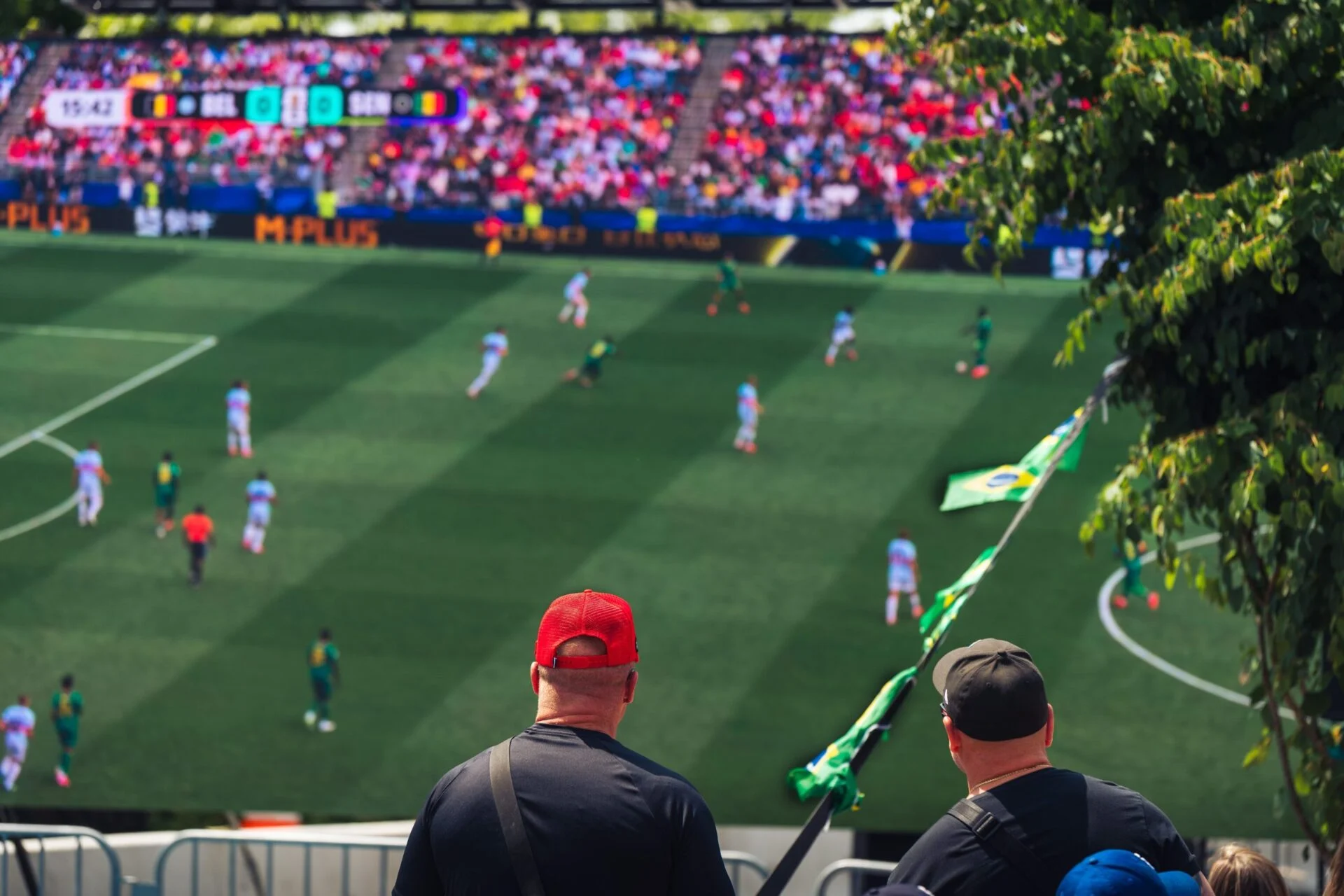
As the World Cup approaches its conclusion across the US, Mexico, and Canada, betting operators are evaluating the tournament's overall commercial impact. A critical consideration is whether the true value of such high-profile events is realized after the final whistle.
Prior to kickoff, investment bank Macquarie projected that global wagers could hit $50 billion. However, during Entain’s earnings call for FY’25 in March, CEO Stella David remarked on the extent of the tournament’s contribution to annual revenue, sparking discussions about the real commercial significance of the event.
“It’s not as big a thing as you might think,” David stated when asked about the tournament's revenue for Entain. “I mean, it’s probably worth about 1% or something like that across the year is really where we would anticipate that to be as an upside. It’s bigger than the Euros, but it’s not as dramatic as you would think.”
Though this estimate appears modest, Ed Birkin, managing director of H2 Gambling Capital, argues that major sporting events function more as tools for customer acquisition rather than significant revenue generators. “Overall in markets that report it, [the World Cup is] accounting for around 7% of sports turnover,” Birkin explained to iGB. “However, it really depends on the outcomes of games in terms of what is going to be done. If you’re only making 1% from the World Cup, then it would be disappointing. However, that also depends on your split. The ones who are more sports-focused will see a lot bigger benefit. Entain, they’ve got the UK business, although their gaming brands are still bigger.”
This year's World Cup saw an expansion to 48 teams, resulting in over 60% more matches. Despite the increased number of games, several group-stage matches involved prominent football nations facing off against less established teams, with some nations qualifying for the first time. As Birkin noted, operators' performance is closely linked to match outcomes, particularly if unexpected upsets occur.
For instance, first-time qualifier Cape Verde drew with Spain and later tied with Uruguay, while other heavyweights like Brazil, Germany, Portugal, England, and the Netherlands dropped points in the group stages. Chad Beynon, a managing director at Macquarie Group, emphasized that outcomes on the pitch will be essential in determining operators’ success. “If England makes it to the final, then you’re going to see those numbers completely smash what Entain had been saying,” Beynon said.
Beynon and Birkin's sentiments resonate with Super Group CEO Neal Menashe, who indicated that early rounds of the tournament might be “hairy” because of mismatches. For Super Group, the real value derived from the World Cup lies in transitioning customers from sports betting to casino gaming, which they estimate ranges between 60%-70% interest.
Beynon supported this viewpoint, stating, “In terms of iGaming cross-sell, I think that is the ultimate goal. I mean, we’ve always thought about poker and sports betting as the top of funnel, and then iGaming as the money printer. I just don’t know if you’re going to see those same cross-sell rates [with] new customers because they haven’t participated in iGaming or else they would have an account. But I do think it’ll still be pretty strong.”
Birkin expressed caution regarding the ability of operators to effectively cross-sell casino products as they expect, particularly in the US where iGaming growth has been stagnant. “In the US, it’s only relevant for five states,” Birkin explained. “Casino is where you monetize players, but I’ve had a few people say to me that this idea that sports betting customers want to go to casino just doesn’t work particularly well. So I think some operators are more successful than others. In general, sports betting players tend to have better cross-sell into poker, but in terms of slots and stuff, they don’t seem to have been big across that.”
For betting firms, the World Cup may serve less as a means of achieving short-term profits and more as a strategy to cultivate longer-term customer relationships. Robeson Reeves, CEO of Bally’s Intralot, noted in his Q1 earnings call that the company’s UK B2C business would not significantly invest in World Cup marketing but would rather focus on attracting competitors’ customers as marketing pressures decrease post-tournament.
Birkin believes Bally's focus on the casino sector could provide a strategic advantage. “All the sportsbook operators are spending a load of money, so all the customer acquisition costs are going up,” he pointed out. “Why would you spend money at a time when all the advertising costs are sky high? Because it’s not just gambling companies advertising during the World Cup. It’s every company.” He argued that after the World Cup concludes, many sportsbooks will likely cut back their advertising budgets, leading to lower advertising costs and an opportunity for better market share.
Beynon concurred, stating that Bally’s recent mergers and acquisitions suggest a more measured approach to customer acquisition. “I think with Bally’s in particular, they focus on profit margins, probably more than any other company,” he said. He praised their operational efficiency in the UK and Europe and highlighted their acquisition strategy as a means of maintaining customer retention costs at lower rates compared to competitors.
With the World Cup hosted in North America for the first time since 1994, the potential for profit is enormous. DraftKings, one of the market's leaders alongside Flutter Entertainment's FanDuel stands to gain significantly. Though Greg Karamitis, DraftKings’ EVP and GM of sports, refrained from estimating the financial impact of the tournament, he reiterated its role in acquiring new customers. “We’re very excited about the customer acquisition and engagement opportunities that the 2026 World Cup presents,” Karamitis said. “While we’re not providing specific revenue guidance at this time, we view the World Cup as a significant opportunity to deepen fan engagement and expand our customer base.”
He noted that DraftKings is particularly equipped to capitalize on emerging opportunities, especially considering the growing number of Spanish-speaking audiences due to Mexico’s joint hosting role.
The surge in marketing costs during major sporting events poses a risk for operators, leading Birkin to suggest that, despite potential criticisms, companies feel compelled to intensify their advertising efforts. “You can argue the industry does [spend too much on marketing] as a whole,” he noted. “But if you’re an operator, it’s pretty difficult with what all your competitors are doing, because you’re just going to lose share of voice.”
Karamitis acknowledged the anticipated rise in marketing expenses but asserted that the benefits of increased customer acquisition outweigh the costs. “While marketing costs can increase during these periods, acquisition efficiency usually improves,” he stated.
In the context of rising competition in the US market, particularly with prediction markets, Beynon expressed that although major tournaments like the World Cup may not substantially impact revenue, they could nonetheless divert patronage from traditional sports betting. “Prediction markets like Kalshi took approximately $15 billion in wagers across the month of May,” Beynon cited, suggesting that prediction markets could achieve around $2 billion in gross gaming revenue during the World Cup.
Birkin tempered expectations regarding the impact of prediction markets on traditional operators, particularly in Europe, where regulators continue cracking down on such sites. He stated, “With nine European countries declaring them illegal, their effects could be limited.”
As the tournament unfolds towards its finale, the primary prospect for betting operators revolves around transforming heightened engagement into lasting customer loyalty and subsequent revenue. Beynon remarked on the operational timeline for sportsbooks, indicating profitability typically emerges between the 12th and 18th month post-acquisition of a new user.
Karamitis summarized the objective as ensuring excellence across operations, technology, and marketing to fully leverage the tournament's potential. “Given our proven track record of successfully managing major sporting events, we are confident in our ability at DraftKings to deliver a seamless experience for customers while creating value for stakeholders.

