
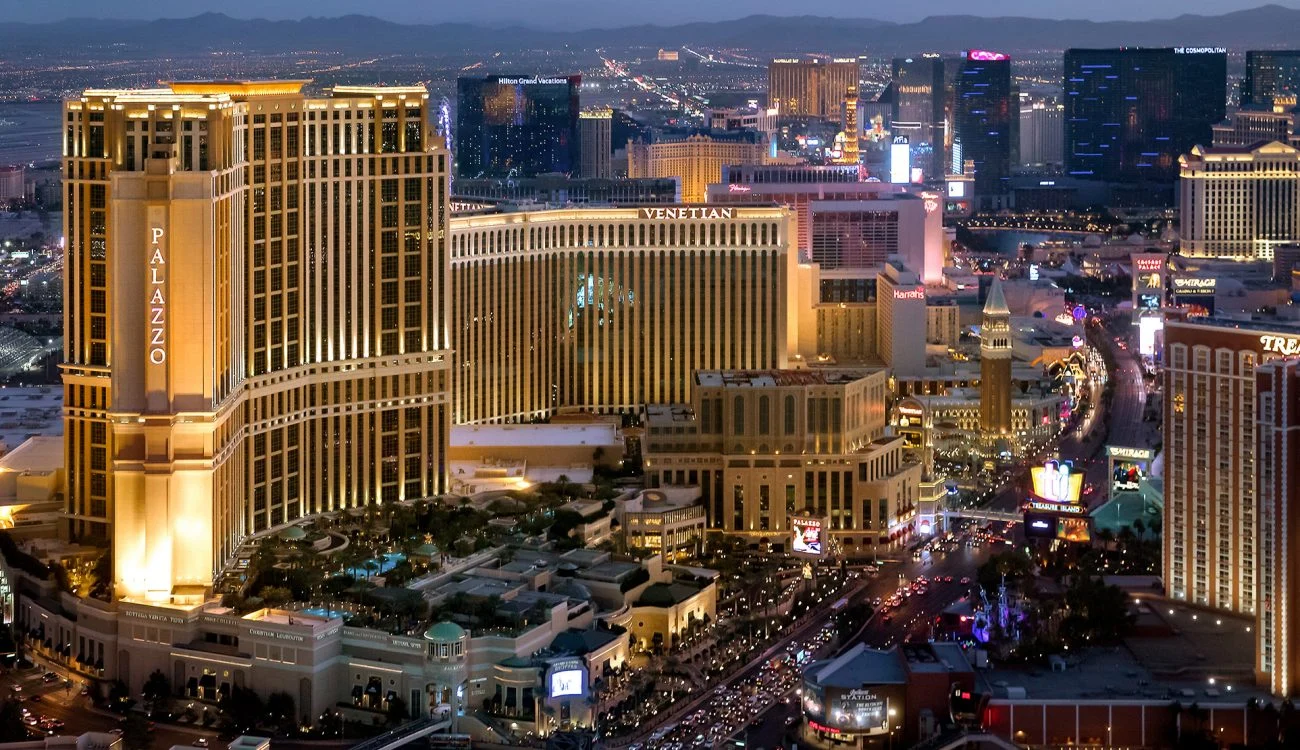
On Thursday, the Nevada Gaming Commission sanctioned the Venetian Resort Las Vegas with a hefty $7.2 million fine for deficiencies in its anti-money laundering (AML) procedures. This penalty marks the fourth violation linked to Mathew Bowyer, an illegal bookmaker and renowned gambler, since the beginning of 2025 involving a Las Vegas Strip entity for AML failures.
This incident closely mirrors earlier investigations against Resorts World, MGM Resorts, and Caesars Entertainment, where all four establishments failed to properly verify Bowyer's financial sources and inadequately addressed his presence on their premises. Combined, these cases have amassed a total of $34 million in fines.
The Venetian's case was further complicated by ownership changes and regulatory conflicts. Two commissioners, George Markantonis and Richard Schonfeld, recused themselves from the voting process. Apollo Global Management currently owns the Venetian and accepted the fine despite findings that much of the misconduct occurred between 2019 and 2021, when Las Vegas Sands was the owner.
Markantonis previously held the position of president at the Venetian during the relevant investigation period, while Schonfeld, a defense attorney, had represented a party involved in a related investigation. Despite the commission's concerns, the remaining commissioners unanimously approved the fine, albeit with some criticism of the Venetian’s practices.
In explaining the situation, Mike Somps, a senior deputy from the attorney general's office, stated that the Nevada Gaming Control Board found the Venetian’s conduct “not as egregious” as that of other casinos involved in similar inquiries. He cited several reasons for this leniency:
1. There was no indication of a “culture of non-compliance” within the Venetian.
2. The resort was not subject to a federal investigation for the violations.
3. The misconduct was confined solely to Bowyer, with no other illegal bookmakers implicated.
4. The compliance department lacked information regarding Bowyer’s illegal gambling activities.
5. There was no evidence suggesting that senior executives were aware of Bowyer’s actions.
Given Markantonis' role as president during this time, the absence of knowledge about Bowyer’s activities raises questions about oversight. Upon inquiry, a commission spokesperson declined to clarify Markantonis' involvement.
Las Vegas Sands has not yet provided comments concerning this investigation. Schonfeld did not disclose the identity of the individual connected to his recusal, although his firm typically represents figures accused of gaming-related offenses, including those linked to underground betting operations similar to Bowyer's.
According to state findings, Bowyer frequented the Venetian from 2019 to 2024, losing $3.6 million at the casino. The imposed $7.2 million fine was double the amount Bowyer lost, a relatively lighter penalty compared to Caesars, which received a $7.8 million fine—three times its $2.6 million in profits obtained from Bowyer.
Appearing before the commission, Venetian representatives expressed regret but distanced themselves from the prior ownership's faults. Greg Brower, an attorney and former Nevada state senator representing the Venetian, emphasized that nearly all of Bowyer’s activity transpired before Apollo acquired the resort in 2022. He claimed that less than $100,000 of Bowyer-related profits occurred under Apollo’s ownership.
“Since taking ownership, we have strived to fulfill all state and federal legal and regulatory responsibilities, including our AML obligations under the Bank Secrecy Act,” Brower stated.
When questioned by commissioners, Brower and Venetian CEO Patrick Nichols provided vague responses regarding Sands’ misconduct. According to Brower, Sands' AML compliance was managed at a corporate level, a strategy Apollo found to be ineffective. Nichols noted that the current management refrains from retaining players if there are concerns about the origins of their funds.
NGCB Chair Mike Dreitzer reaffirmed that the imposed fine was appropriate, reflecting the severity of the violations compared to others associated with Bowyer.
Commissioner Brian Krolicki articulated ongoing frustration with repeated AML infractions, implying that Sands should bear greater accountability. "I suspect the folks I really want to have in front of me are not in front of me today," he remarked, hinting at Sands’ absence from the meeting.
While Krolicki mentioned the option of a public hearing on the matter, he felt it was unnecessary at this stage but might reconsider if former management were present. Commission Chair Jennifer Togliatti highlighted the unique regulatory framework in Nevada, where the Gaming Commission retains final say over recommendations made by the Control Board. She respected the year-long investigation and the subsequent six months of negotiations leading to the fine's approval.
Collectively, the four AML cases tied to Bowyer received a vote of 15-1, with the sole dissenting vote from former commissioner Rosa Solis-Rainey in the Caesars case. After her term, Schonfeld succeeded her on the commission. Solis-Rainey expressed concerns that the penalties imposed have not adequately addressed the extent of misconduct prevalent in casinos.

