
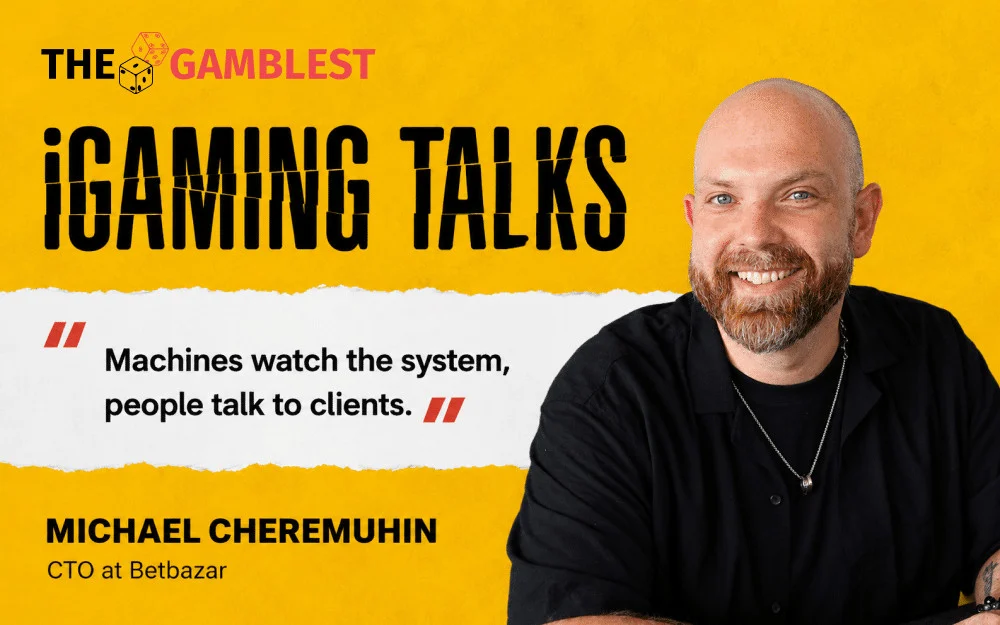
Michael Cheremuhin, the Chief Technology Officer at B1, discusses the nuances of sports data coverage in a recent interview, emphasizing that size alone isn't the key to profitability. B1 currently maintains an extensive portfolio, boasting coverage of over 3,000 active tournaments, more than 260,000 live events, and around 230,000 pre-match events across traditional sports, esports, and their AI-generated competitions.
Cheremuhin advises operators not to be swayed by impressive figures presented in sales pitches. Instead, he insists that the crucial factor lies in whether the data feed aligns with the actual betting preferences of players, ensuring substantial market depth, quality, and speed. While impressive numbers look appealing on slides, it’s quality that makes the operation profitable.
When discussing the distinctions between pre-match and live betting coverage, Cheremuhin outlines that these serve very different purposes.
"Pre-match focuses on depth and stability," he explains. "We set up early markets and ensure pricing remains accurate for extended periods, allowing operators to accept bets well before the event starts. In contrast, live betting hinges on speed, with odds changing every single second. Markets need to suspend and reopen quickly, so timely updates are critical to client engagement. In this realm, the freshness of information is essential."
His team has designed the B1 structure to prioritize swift delivery, aiming for updates within 200 milliseconds. According to Cheremuhin, pre-match coverage cultivates operator trust, while live coverage drives revenue.
In response to inquiries about white label services, Cheremuhin acknowledges the industry's reliance on varied content sources. He clarifies that while no provider can cover every event entirely in-house, B1 ensures that any third-party content adheres to their internal standards. "Once the content reaches our platform, it undergoes the same rigorous processes—validation, monitoring, and oversight—as our in-house productions. The origin of the content is our responsibility, not the client’s," he reinforces.
Cheremuhin notes B1's agility in responding to new sports trends. The platform's modular design allows for quick integration of new sports without extensive engineering. Instead, the focus shifts to how confidently the trading team can set responsible pricing. With their AI sports offerings, B1 can take the initiative to create content, bypassing traditional reliance on existing fixture lists.
On the topic of support, Cheremuhin highlights a blend of automation and human oversight, stating, "Automation manages everything that should operate without delay. We continuously track platform metrics and escalate issues autonomously. However, human intervention is essential when decisions require judgment, particularly in trading and integration inquiries. My guiding principle is that machines monitor the system while people communicate with clients. The worst-case scenario is where support relies solely on humans monitoring dashboards while clients interact with bots."
He explains that personal support begins even before a potential client fully commits. During the integration planning, support teams familiarize themselves with the setup right from the outset. For specific inquiries, especially for AI sports, B1's support can provide a comprehensive range of detailed information, including video evidence of events. For traditional sports, direct communication with trading teams ensures accurate responses, eliminating bureaucratic delays.
Cheremuhin points out that B1 has managed to maintain an average response time of under two minutes, attributing this efficiency to a combination of 24/7 team availability and a layered responsibility system. Rarely does a message linger in a queue unnoticed, as most issues are caught before the clients even reach out, thanks to the platform's advanced monitoring systems.
In the event of a problem, Cheremuhin explains that the escalation process kicks in automatically. When a system anomaly is detected, alerts efficiently guide personnel to address the situation, often before clients become aware of any disruption. B1’s infrastructure is engineered for resilience, with built-in redundancies allowing for seamless recovery within seconds. Their commitment lies in providing responsive communication and accountability, striving for conditions where clients learn about incidents from B1 rather than observing them on their dashboards.

