
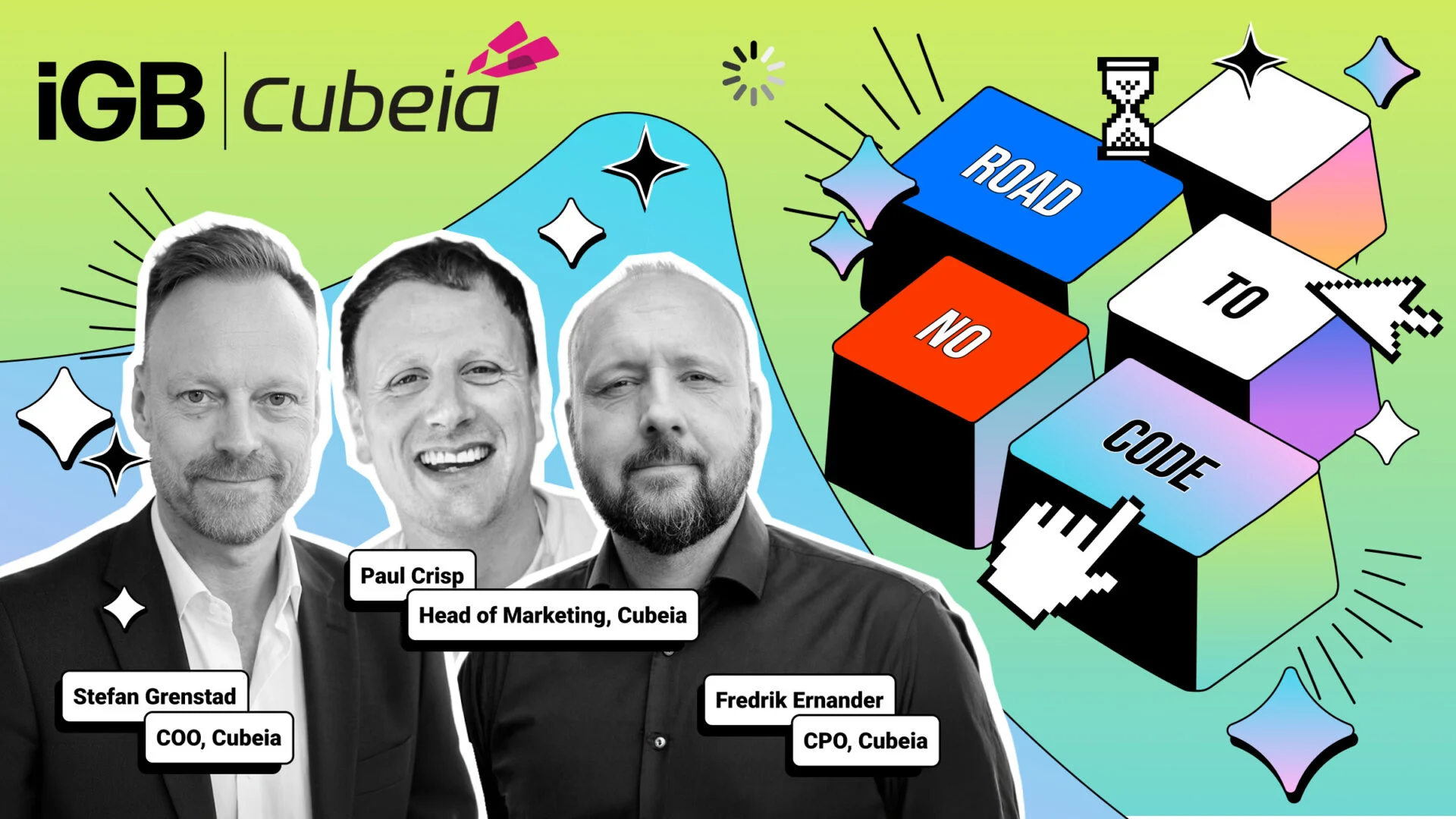
Cubeia, a Swedish software company, has advanced to the third phase of its AI-assisted development initiative, transitioning from allowing developers to use AI based on personal discretion to establishing a formal AI-driven development process.
The company now confronts a significant question: how should operations adapt when coding is no longer the primary limitation? "We’re doing this 100%,” stated COO Stefan Grenstad, emphasizing their commitment to an AI-enhanced development approach.
The focus has shifted towards utilizing the increased capacity made possible by AI. Six months prior, Cubeia’s efforts largely revolved around substituting human-generated code with AI-generated alternatives. Now, the scope is much broader, encompassing a revamped development pipeline, reshaping roles for developers and quality assurance (QA), reorganizing teams, and forging a new dynamic with customers.
**Creating Business Value**
Cubeia's initial phase embraced an open AI approach, permitting developers to utilize AI tools freely. Phase two introduced a uniform structure where all developers employed the same agents and navigated through a common AI-powered pipeline. This shift demanded the resolution of issues surrounding quality and collaboration among agents, while ensuring employee acclimatization to the new methodologies—work that Grenstad believes has been largely successful.
"During the hybrid period in Q1, Cubeia addressed 259 issues. After we transitioned to the AI-driven process, that number soared to 421—marking a 62% increase. We saw larger projects increase from 17 to 58. So yes, the switch to AI-enhanced development has significantly boosted our productivity," Grenstad explained.
Yet, the pressing concern now is how Cubeia will leverage this newfound capacity. Grenstad noted, "Since we’re spending less time coding, we’re focusing more on understanding the business, discussing value, and gaining domain knowledge."
Instead of merely executing requests, teams are increasingly tasked with grasping the rationale behind projects and the value they are meant to deliver. Paul Crisp, the head of marketing at Cubeia, illustrated this point, stating, "If our goal is to achieve 10% more traffic, we need to establish a baseline, implement changes, and assess if we attain that increase. If it rises only by 1%, we might need to refine our approach further."
**‘Say Yes’**
Customer-driven demands are now steering the next phases of development. "We [recently] began asking, 'What does this mean for the customer? What can the customer actually do with this?" Grenstad remarked. This inquiry was partly fueled by customers reaching out with requests to connect their AI agents with Cubeia’s data streams and platform.
One client developed a custom casino landing page and sought to integrate it with Cubeia’s APIs. "Another client wanted to leverage our player account management system to create personalized bonuses," Grenstad added.
The tactic emphasizes providing access to Cubeia’s platform and data rather than just offering another AI tool, marking a shift towards supporting customer-generated AI infrastructures. Following the landing page initiative, Cubeia is conducting a pilot project.
This collaborative customer engagement was not anticipated just six months ago, but Grenstad now believes Cubeia should be prepared to "say yes" when clients present products created with their own AI technologies. "We’ve realized we’re going to be part of their ecosystem," he acknowledged.
**A Different Development Structure**
The enhanced capabilities are influencing the organization of Cubeia’s development teams. The company is testing a rapid-response team dedicated to addressing smaller customer requests alongside a separate team focused on larger projects and long-term objectives.
Current teams consist of five and eight members, but Grenstad envisions potentially downsizing these to two or three members per team. Developers will have the flexibility to transition between rapid-response and long-term projects based on their preferences and skills.
However, increased capacity has not resolved all bottlenecks. AI tools produce multiple streams of work, which requires balancing how much each individual can manage and review. "The bottleneck becomes the person reviewing everything. That doesn’t rule out code reviews entirely; we still closely examine sensitive or critical areas for architecture, performance, security, and reliability. However, we don’t apply the same level of detailed manual code review to all tasks," stated Grenstad.
Changing recruitment strategies is also a consequence of this AI-driven transition. Seeking team members for player journey projects now prioritizes those with knowledge of casinos and iGaming over traditional technical skills exclusively. "While technical expertise remains crucial, domain knowledge has become more vital. I would prefer hiring someone knowledgeable in the industry, even if they lack familiarity with Java," Grenstad explained.
This shift presents questions regarding the entry of future developers into the field. With the diminishing necessity for junior Java programmers, the conventional evolution from junior to senior engineers is becoming less defined. Grenstad raised a pertinent question: "How do we avoid ending up with old Java developers and no younger candidates because the latter were never hired? This concern is something we’ve been actively discussing."
**Big Changes and Unknowns**
Cubeia is evolving away from the traditional workflow where developers build products for QA to test. Previously, Grenstad outlined that product owners determined project scope, developers crafted the build, QA conducted testing, and operations handled deployment. In contrast, QA has now integrated into the process itself, working alongside product engineers from the planning stage to ascertain what can be automated and identifying any testing coverage gaps.
Ownership of projects is now extending from identifying issues to development, deployment, and evaluating results.
Amid these transformations, challenges persist. Some developers are missing the coding aspect of their roles, as Grenstad observed, "We still have team members who cherished the coding process—solving problems through code and constructing elegant solutions—who are struggling with these changes. For them, a beloved aspect of their jobs has vanished."
Additionally, the dependence on AI providers is a strategic concern. Currently, Cubeia relies heavily on Claude, leading Grenstad to consider potential future issues if providers increase rates or quality fluctuates. However, he views the uncertainties as opportunities for growth and adaptation. "We’re confident in our ability to navigate and learn from the problems we encounter along the way," he noted.
**Sharing the Journey**
When Cubeia embarked on its AI initiative, the overarching goal was straightforward. "When we started this journey, my only vision was: ‘Let’s not be writing code in August,’" Grenstad recalled. The company aimed to eliminate coding as a bottleneck in software development, only to uncover that coding was merely one constraint in a larger context. As the bottleneck shifts, so do organizational demands, emphasizing the importance of domain insight, product understanding, quality, prioritization, and grasping customer needs.
Consequently, the technology itself has become less critical to the narrative; what Cubeia does with that technology moving forward has taken center stage.

