
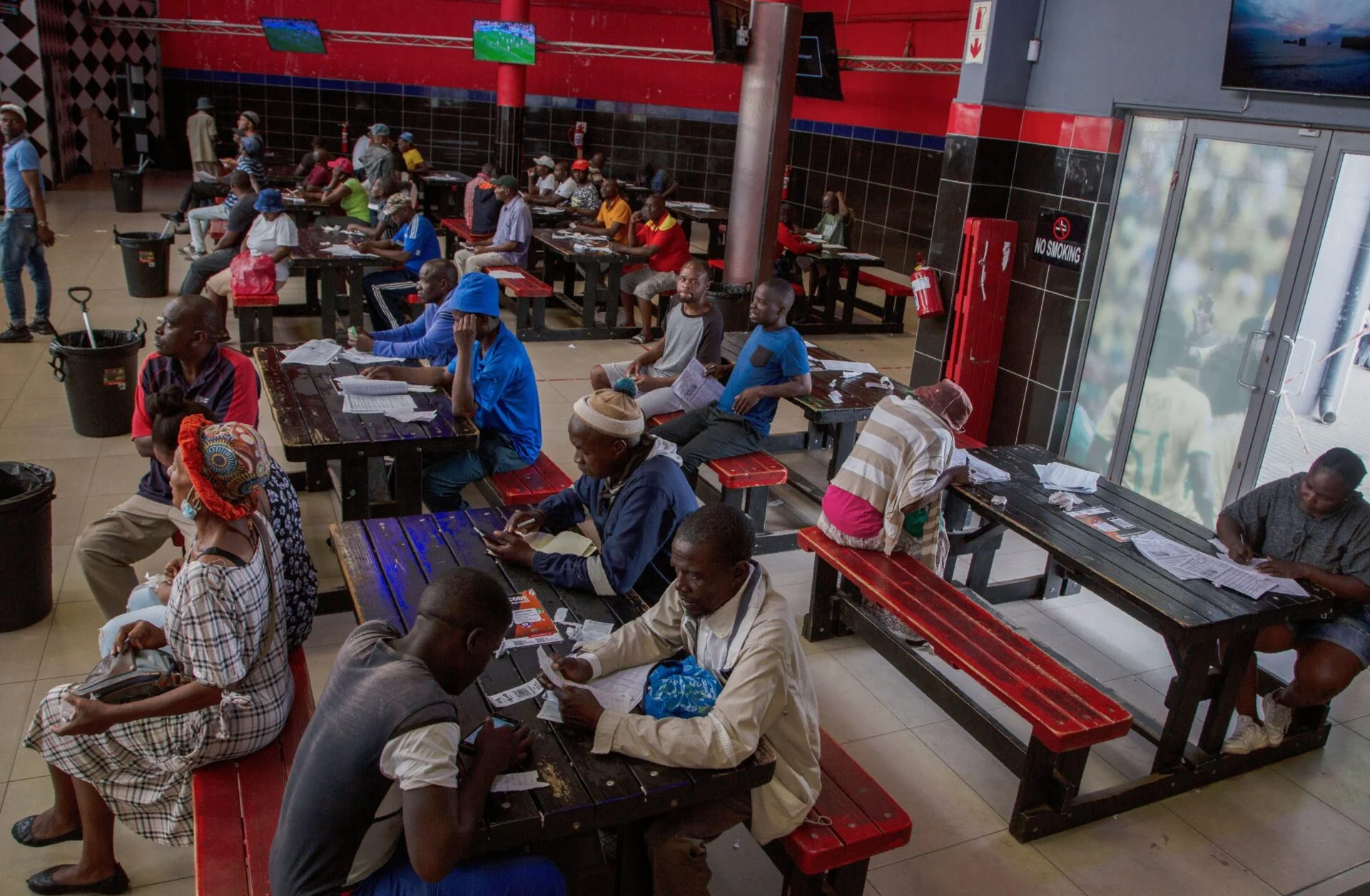
In Africa, agents play a crucial role in the gambling sector, a function that contrasts sharply with the landscapes of Europe and the USA. These community figures establish relationships with local customers, guiding them in placing bets, playing games, or purchasing lottery tickets.
Despite assumptions that in-person sports betting may be fading as the industry shifts online, professionals in Africa's gambling market assert that agents represent a distinct channel catering to a demographic unlikely to transition online anytime soon.
Martin Nieri, founder and CMO of 888AFRICA, highlights the unique nature of the market: “Africa is street. It’s a street-led economy. Every 20 meters, you will find a mobile money vendor kiosk or a betting terminal.” While 888AFRICA, an online operator, currently does not employ agents, Nieri’s extensive background, including his previous role at retail operator Premier Bet, gives him insight into the importance of agents in this sector.
“In Africa, the trust economy is the biggest and most important aspect. There’s very little trust in governments, banks, and financial institutions,” Nieri adds.
Nieri's perspective aligns with insights gained from the recent Gaming Tech Summit Africa in Nairobi, where local industry experts emphasized the role of agents. Hydah Okinda, now an account manager for slot studio Endorphina, previously worked for Pakakumi and spent years recruiting agents for Betin Kenya. Andrew Osieko, a finance and compliance consultant, has managed various Kenyan betting shop agent networks, including DAFABET Kenya, which operates around 50 shops.
Osieko outlines his responsibilities with DAFABET Kenya: “I go to the regulator. I get a licence to run betting, then I look for game providers. Then I either open the shops myself, or I get agents to open the shop.” Okinda explains that agents often operate franchises under established brands. “These are people who want to go into business,” she notes, revealing a shift in the industry dynamics where agents are now seeking operators instead of the reverse.
Nieri differentiates between various agent models, from those managing shops to those stationed at street kiosks. “The offline side of things is still a huge part of betting in Africa,” he states. Other agents operate mobile terminals, approaching potential customers in social settings, such as markets or bars.
The success of this model largely boils down to trust in personal interactions over digital transactions. “There’s very little trust in governments, banks, and financial institutions,” Nieri reiterates, emphasizing the importance of visible transactions where cash is exchanged for tangible betting tickets.
Cultural differences significantly affect gambling motivations. In Europe, gamblers are often pressed for time but financially secure, seeking quick betting solutions. In contrast, many African gamblers are seeking to improve their economic situation through betting, leading to a rich community environment in betting shops, similar to social interactions in the UK decades ago.
Okinda recounts her experience trying to engage a potential player who lacked a smartphone. She explains, “For online registration, you must pay for the session time at a cyber cafe. But with agents, playing in the shop is free.” Meanwhile, she points out that some players, particularly those over 45, favor in-person interactions as they feel more secure in handling their money face-to-face.
Regarding player acquisition, Okinda claims that agents do not need to chase customers actively. “In Kenya, the moment you open a shop, you don’t have to call people. They’ll come!” she asserts, crediting operators for much of the marketing efforts that drive customers to agents.
Nieri's experience suggests otherwise, noting that agents actively seek customers in local venues, leveraging the low barrier of entry provided by mobile accounts requiring only a phone number.
A typical week for an agent network involves various tasks, from compiling weekly trading reports to handling accounting and billing. Osieko describes his processes, including tracking financial performance and ensuring agents meet their revenue obligations.
While Nieri and Okinda acknowledge the value of agents, they also point to the risks associated with the model. Osieko explains the dilemma: “The agent is the one who holds the money, and when he holds the money, he could run away with it.” Security measures, including requiring deposits from agents, have shifted with the rise of black-market competitors who offer more enticing terms.
Recent tax changes in Kenya, including raising betting stakes from 10% to 20%, have compounded challenges for operators like Betin. Okinda recalls when agents previously enjoyed significant earnings due to lower taxes but now experience less favorable revenue splits.
Despite these challenges, Okinda emphasizes that the agent franchise remains significant, especially as many untapped regions in Africa present vast potential. As Nieri concludes, “There’s always going to be a requirement for [agents]. It’s trusted, it’s physical, and it’s there.” Whether the agent model can adapt to future challenges remains uncertain, with experts divided on its trajectory in the evolving industry landscape.

