
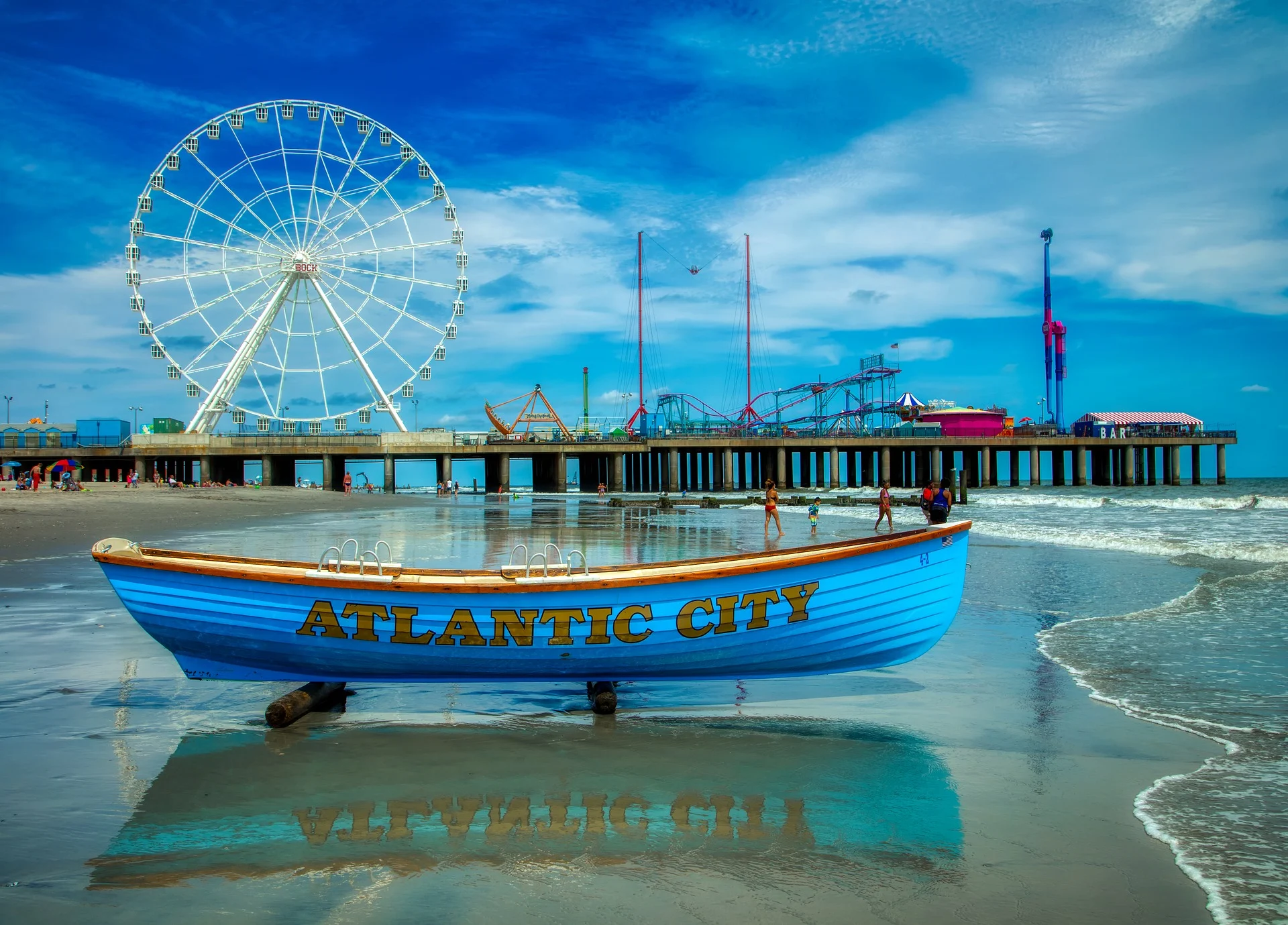
Atlantic City's primary labor union, UNITE HERE Local 54, finalized a new labor agreement with Bally's Atlantic City earlier this week, marking the completion of negotiations with all nine casinos in the city. Each of these agreements spans just one year.
These brief contracts underscore the uncertainty in the market, largely driven by increasing competition from New York City’s emerging casino scene and New Jersey's substantial online gaming sector. Typically, labor agreements for casinos last three years or more; the previous negotiations took place in 2022.
Donna DeCaprio, president of Local 54, expressed pride in the negotiating committee and the union members, saying, “We are proud of our negotiating committee, our members and our staff who stood up and fought to maintain and improve the contractual pay, benefit and employment standards that make these jobs good union jobs.”
Looking toward New York, the one-year pause in negotiations may provide further clarity on the competitive environment. Currently, Resorts World NYC is the only operating casino in that market, generating an average of approximately $30 million per week in gross gaming revenue during its first three months of operation. This translates to around $1.5 billion in gross gaming revenue for a full year from a single property. In contrast, Atlantic City's nine casinos produced $2.8 billion in gross gaming revenue in 2025 and $1.5 billion in the first half of this year.
While Resorts World raises concerns for Atlantic City, the timelines for the other two upcoming licensees, Metropolitan Park and Bally's Bronx, may be more extended than expected. Both are currently slated for single-phase openings in 2030; however, Metropolitan Park has faced delays, and Bally's is struggling to secure financing for its $4 billion project. These projections may change over the next year.
In conjunction with the recent labor agreements, an alarming economic report was released this week. The Greater Atlantic City Casino-Hotel Employment Exposure Assessment, published by the Atlantic County Economic Alliance, suggests that up to 8,000 jobs could be endangered due to competition from New York City by 2035 under a worst-case scenario. Given the current workforce of about 21,100 in Atlantic City's casinos, this would mean a loss of over a third of jobs in the sector.
Alternative scenarios presented in the report suggest that around 5,100 jobs could be lost under a central projection and about 1,500 under the most optimistic, or "Blue Sky," outlook. Researchers have pointed out that current employment levels are the lowest seen in nearly a decade, dipping even below early post-COVID figures.
The report took into account several factors, limiting its modeling to just four:
1. Competition from the three New York casinos;
2. Potential economic recession in the U.S.;
3. Prospective in-state expansions at new casinos in the Meadowlands and Monmouth Park, though such initiatives have stalled in the past and won’t be presented to voters until 2026;
4. Competition from the burgeoning online gambling scene in New Jersey.
Dr. Max Slusher, who prepared the analysis, clarified, "This analysis is an exposure assessment, not a prediction. It does not say that a specific number of jobs will disappear on a specific date. It asks a planning question: how much of Atlantic City’s 2025 bricks and mortar casino-floor revenue base is exposed if several pressures land on the region at the same time?"
Simultaneously, the potential threat from NYC competition intersects with the growth of New Jersey's iGaming sector. While Atlantic City's casino revenues have kept pace with online revenues, the steady double-digit growth rates for iGaming have sparked debates over revenue cannibalization.
In 2025, New Jersey's online gaming revenue reached $2.9 billion, marking the first time iGaming outperformed retail casinos. As of July, online revenue stood at $1.8 billion, reflecting a 14.5% increase over the previous record-setting year.
Opponents of the cannibalization argument contend that iGaming is a driving force for overall industry growth, as statewide gaming revenue hits new highs. Nevertheless, Atlantic City casinos are facing challenges; during the first half of 2026, for instance, operating profits dropped 15% compared to the same period in 2025, despite an uptick in revenue.
James Plousis, chair of the New Jersey Casino Control Commission, noted, "The casino hotels encountered their highest second-quarter costs and expenses in nine years, significantly constraining reported gross operating profits."

