
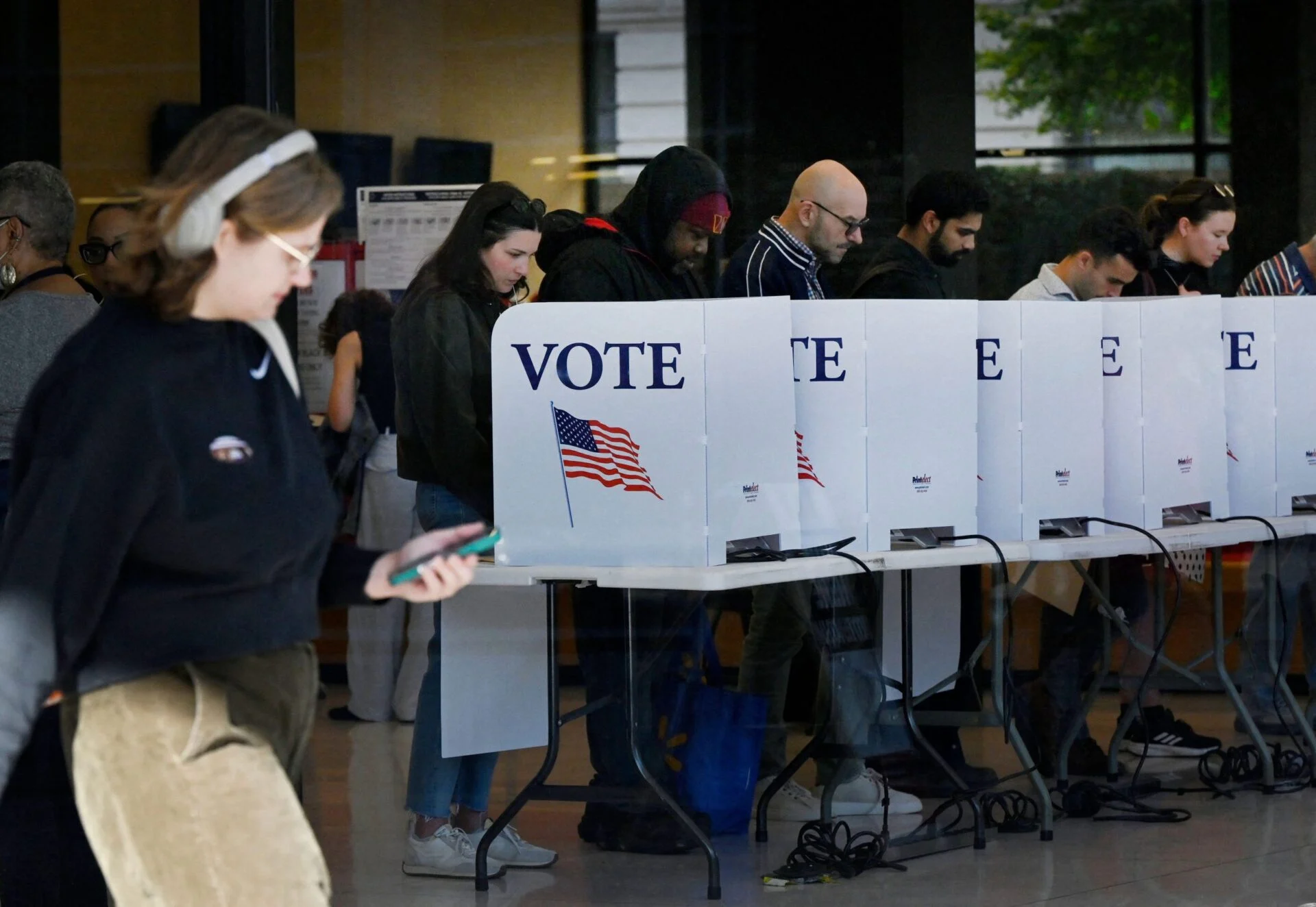
In the recent midterm elections, the Democratic Party saw significant victories, taking control of both the Senate and the House of Representatives. This shift in power will enable Democrats to challenge President Trump's agenda throughout the remainder of his term.
While the election results are not anticipated to have an immediate effect on the national gambling landscape, the future of prediction markets—an important topic in the U.S. gaming industry—is likely to be determined more by the Supreme Court than by lawmakers in the near term.
Nonetheless, growing national dissatisfaction with Donald Trump and the Republican Party could have implications in the medium term. Under Trump, prediction markets enjoyed considerable support, largely due to the regulatory flexibility provided by Trump-appointed CFTC chair Michael Selig. This marked a departure from the approach of the Biden administration, which may alter the future landscape for prediction markets if discontent continues leading up to the 2028 Presidential election.
With Democrats in control, if Justice Clarence Thomas or Justice Samuel Alito were to retire during Trump’s presidency, the chance of him appointing a sympathetic figure is considerably low—an assessment echoed by Florida Governor Ron DeSantis, who stated that the odds of “confirming a worthy successor” are virtually “zero.” This could complicate a Supreme Court case concerning the legality of sports-event contracts if it comes before the justices.
Regarding state-level elections, several notable developments occurred on Tuesday that could affect the gambling industry. In Nevada, Democrat Aaron Ford emerged victorious in the governor’s race, defeating the incumbent Republican Joe Lombardo in a closely contested matchup significant to the state’s gambling sector. Lombardo, seen as more pro-business, controversially claimed that he needed to “take care” of the state’s gaming billionaires who provide jobs. His campaign received millions in contributions from gaming interests, including $3 million from Station Casinos and $2 million from the Fertitta family.
Ford, in contrast, was supported by unions representing casino workers, which may affect his approach to gaming policies moving forward.
In Ohio, Democrat Amy Acton defeated Republican Vivek Ramaswamy for governor. Acton has expressed support for legalizing online casinos in Ohio, though with a focus on player safety and advertising regulations. While online sports betting and brick-and-mortar casinos are legal in Ohio, online casinos remain prohibited.
Ramaswamy did not take a clear stance on iGaming but his Republican predecessor, current governor Mike DeWine, opposed legalization, claiming Ohio had reached a saturation point in gambling expansion. The Republican-controlled state legislature will be a critical factor as Acton seeks to navigate potential iGaming legalization during her term.
A closely watched measure in Nebraska, aimed at legalizing online wagering, appears set for rejection. Two accompanying measures necessary for this initiative needed to pass: Measure 440 and Measure 441. These measures are projected to fail by approximately 55% to 45%.
In Virginia, there were mixed outcomes regarding local measures for expanding physical wagering. A proposition for pari-mutuel wagering at satellite facilities in Pulaski was rejected by 56.46% to 43.54%, while a similar measure in Amherst County was narrowly leading with 50.66% to 49.34% with partial results reported.
Lastly, initial reports from Indiana indicate that three counties—Allen, DeKalb, and Steuben—are likely to reject local initiatives for a casino license. Each county sought voter permission for a single inland casino license, which would have been awarded to one of them if all measures had been approved.
According to US election analysts, Allen County's rejection stands at about 60% to 40%, Steuben County at 59% to 41%, and DeKalb by 65% to 35%. Supporters view the casino project as an economic boost, while opponents criticize it for potential negative impacts on the community.

