
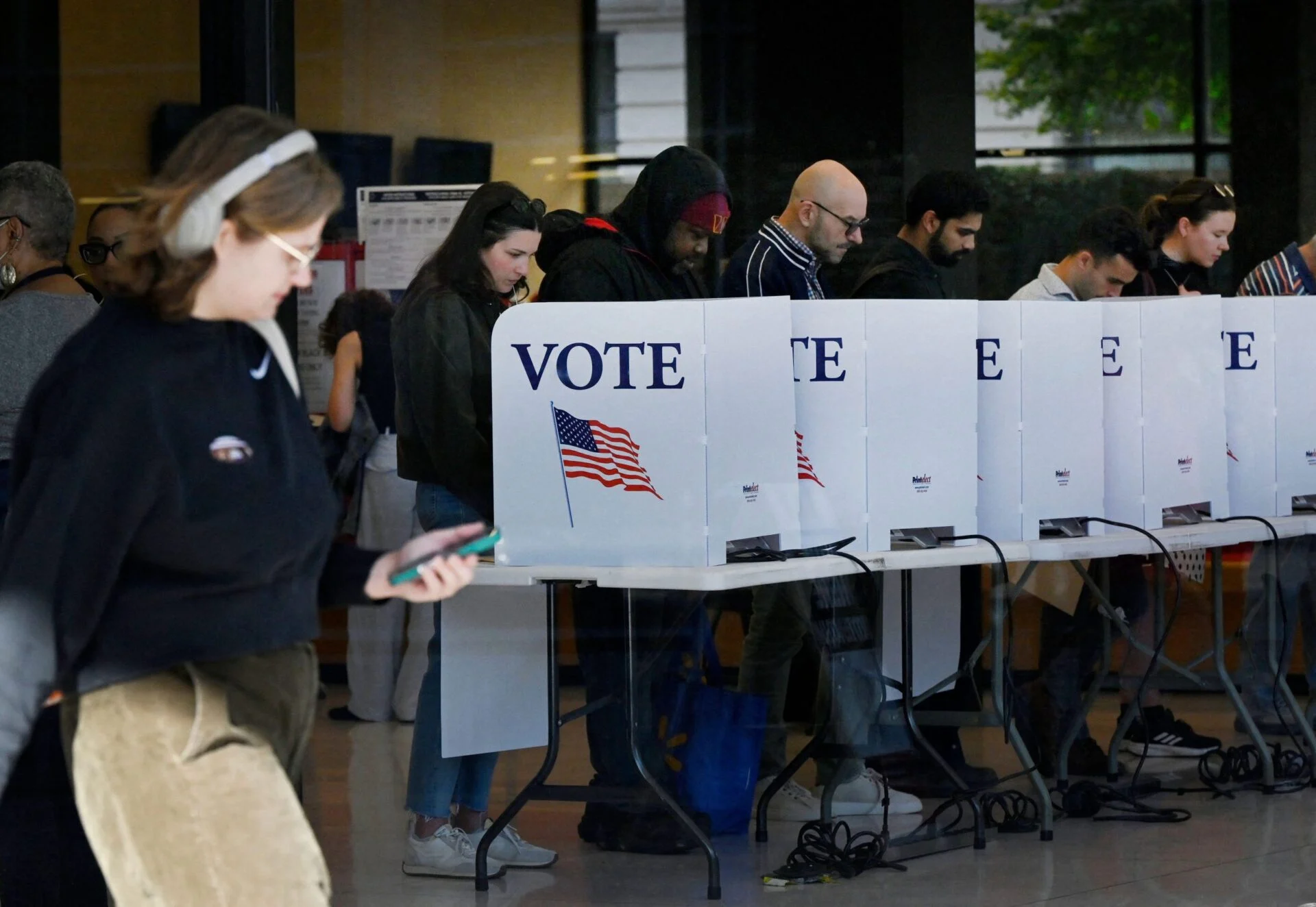
The Democratic Party achieved significant success in the recent US midterm elections, securing numerous key races that resulted in control of both the Senate and the House of Representatives. This shift in power allows Democrats to more effectively challenge President Trump's agenda for the remainder of his term.
While the election outcomes may not have an immediate effect on the national gambling landscape, the direction of the prediction markets—currently a focal point in the industry—may be more influenced by Supreme Court decisions than Congressional actions in the near future.
Nonetheless, the growing national discontent with President Trump, whose approval ratings are notably low, could influence future developments. Prediction markets have thrived under Trump's administration, with CFTC Chair Michael Selig, appointed by Trump, providing them broad regulatory support, contrasting with the more cautious approach of the Biden administration. If dissatisfaction persists into the 2028 Presidential election, a Democratic president could alter the trajectory of this emerging sector.
Furthermore, Democratic control of the legislature might impede Trump's ability to appoint a Supreme Court judge sympathetic to his agenda, particularly if Justices Clarence Thomas or Samuel Alito were to retire. Florida Governor Ron DeSantis remarked that the chance of confirming a qualified successor to these justices during Trump's presidency is virtually nonexistent, complicating potential legal disputes regarding sports-event contracts.
On a state level, several election results were noteworthy to gaming stakeholders. In Nevada, Democrat Aaron Ford triumphed in the governor's race against incumbent Republican Joe Lombardo, a result that holds significance for the state's prominent gambling sector. Lombardo had promoted himself as a pro-business candidate, emphasizing the need to support the state's gaming billionaires who play critical roles in employment. He received substantial backing from various gaming-related contributors, including $3 million from Station Casinos, $2 million from the Fertitta family, and $1 million from Las Vegas Sands. In contrast, Ford garnered support from unions, especially those representing casino workers.
In Ohio, Democrat Amy Acton defeated Republican Vivek Ramaswamy in the gubernatorial election. Acton has publicly supported the legalization of online casinos, though she emphasized the importance of player safety and responsible advertising. While state law currently permits online sports betting and physical casinos, online casinos specifically remain illegal. Ramaswamy did not express a clear stance on the issue; however, his Republican predecessor, Governor Mike DeWine, opposed iGaming legalization last year, citing concerns about market saturation. The Republican-controlled legislature will be critical in determining the future of online casino legalization in Ohio, and Acton will need to collaborate across party lines.
In Nebraska, a ballot measure aimed at legalizing online wagering was anticipated to fail. Two necessary measures, Measure 440 and Measure 441, sought to permit licensed racetracks to partner with online gambling operators. With over 95% of votes counted, Measure 440 is projected to be rejected by around 55% to 45%, with Measure 441 also failing by a similar margin.
Virginia saw mixed results in local measures aimed at expanding physical wagering. A proposal to allow pari-mutuel wagering at satellite facilities in Pulaski County was rejected by a significant margin. Conversely, a similar measure in Amherst County may narrowly pass with results indicating a close race.
In Indiana, election results remain pending, but reports suggest that voters in three counties—Allen, DeKalb, and Steuben—oppose potential licenses for new casinos in their areas. While local business groups promoted the project as an economic boost, critics raised concerns about the impact of gambling on the community.

