
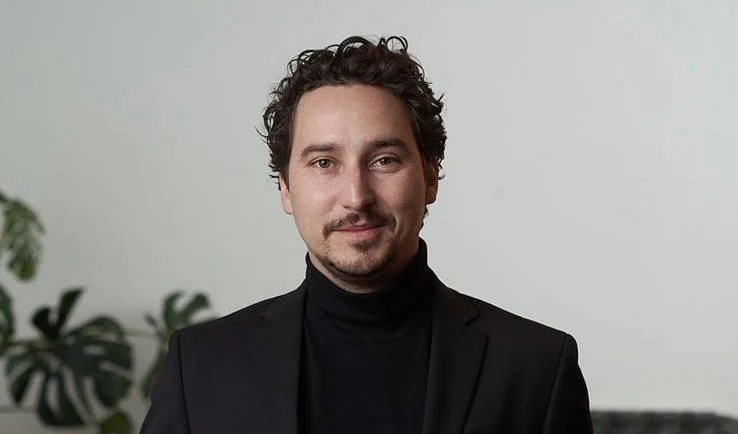
For five years, Niklas Sattler, a former executive at Casinos Austria, has been laying the groundwork to challenge the entrenched land-based casino landscape in Austria through his company, Alea Trust. Sattler has assembled a diverse team of top casino executives and industry specialists to compete against his former employer, the dominant player in the Austrian gaming scene.
"This old-school image of the industry – I don’t like that," Sattler stated. "So I said, let's refresh the industry and let’s jump inside the tender. Let’s do it ourselves."
Since 2021, Sattler has recruited at least 40 former managers from Casinos Austria and various international casino brands, culminating in what he calls a formidable team ready to reshape the sector. "Casinos Austria has a track record as a company, but they’ve lost a lot of expertise over the years," he pointed out. "Our idea was to find the top experts in AML, responsible gambling, finance, and casino operations and build a team that could compete at the very highest level."
With Austria set for its first significant casino tender in years, Sattler believes that this moment may offer an opportunity to revitalize the aging industry with a more progressive approach. However, he remains uncertain about the structure of the anticipated 13 casino licences and whether the playing field will truly accommodate new competitors or largely benefit the incumbent.
Currently, Casinos Austria (CASAG) monopolizes the market with two sets of 15-year licenses, covering six in urban areas and six in tourist destinations. A draft bill released by Austria’s coalition government in June outlined comprehensive gambling reforms, which notably include the opening of the online gaming market.
Though there are substantial changes on the horizon, the proposed alterations to land-based gaming have not been as heavily scrutinized. The Finance Ministry’s plan indicates there will be 13 casino licences available instead of the existing 12, with potential division into "objectively justified" packages.
The Ministry clarified that location decisions would stem from an objective study considering factors like population dynamics, tourism prospects, and casino market areas, while also balancing commercial feasibility and minimizing competition to protect players.
Sattler advocates for issuing individual concessions, suggesting that this approach would create a fairer market. "Our idea is: let’s make 13 single licences," he proposed, indicating that interested parties could apply for just one.
However, Casinos Austria has publicly supported retaining the package system, arguing that it ensures comprehensive coverage across the country and accounts for local economic conditions and tourism potential. According to Patrick Minar, a spokesperson for Casinos Austria, having a limited number of packages could mitigate competitive pressures that lead to aggressive marketing.
The exact direction of the government’s tender process remains to be seen. Nonetheless, the mention of packages in the proposed law indicates a potential preference for that model. Nicole Daniel, a legal and regulatory partner at DLA Piper in Vienna, highlighted that while regulations now offer a stronger legal foundation for packaging, the risks of favoring incumbents persist. The criteria could potentially impose unnecessary burdens on new entrants.
"If, for example, you combine a highly profitable casino with a less favorable establishment in a different region, that requires bidders to operate a more nationwide portfolio than they may have wanted," she noted.
Arthur Stadler, a gaming lawyer based in Vienna, emphasized the importance of thorough and precise execution for the forthcoming tender by the new Austrian Gambling Authority. He warned that the draft law’s wording allows significant interpretation, especially regarding the packaging of licenses, which could lead to litigation from disappointed bidders in the future.
The history of Austrian gaming is fraught with challenges, as the Finance Ministry has previously faced scrutiny for its dual role as both the licensing body and a stakeholder in Casinos Austria. In past tenders, the packaging system was controversial, leading to annulments of bids by courts for lack of transparency in evaluation criteria.
Looking ahead, the draft also indicates that the six urban casino concessions, set to expire in 2027, may be extended until the end of 2028, with potential for a further 24-month extension based on legal contexts or failure to replace expiring licenses.
While Casinos Austria describes these provisions as standard, the legality surrounding these extensions is under scrutiny. Daniel stated that while the one-year extension is defensible, the longer delay could allow incumbents to avoid fresh competition until as late as 2030.
Sattler, coming from a lineage of casino professionals, sees a pressing need for revitalization in Austria's land-based gaming, suggesting that casinos should reflect the evolving values of society.
"Our vision is much more about giving something back to players and to the community," he explained. "We take revenues, yes, obviously, but we have to do something for the regional community – investments or sponsorships – and work in the proper balance."
The broader question he raises is whether increased competition can foster a more socially responsible gambling environment. While Casinos Austria defends a less competitive model for maintaining high standards, Sattler believes that more operators would facilitate mutual accountability and improvement.
As Austria’s gambling reform bill progresses, it has completed its consultation phase and awaits EU review, with a possibility of extending the timeline. The revised laws might be passed by the year's end, setting the stage for the licensing process to commence in early 2027. However, critical procedural details on evaluation criteria remain undisclosed, leaving many interested bidders in a state of uncertainty.
Sattler stresses that the fairness of the evaluation criteria will ultimately dictate his participation. "We’re only going to enter the tender if the criteria are fair and safe and abide by European Union standards," he asserted. "If it’s fair then we go inside, if not, not."
The stakes are substantial for Sattler, who fears a missed opportunity that could affect Austria's gaming landscape for the next decade and beyond. Namely, he emphasized, "It’s a chance missed for the next 15 years. And my dream of the last five years would be smashed entirely."

