
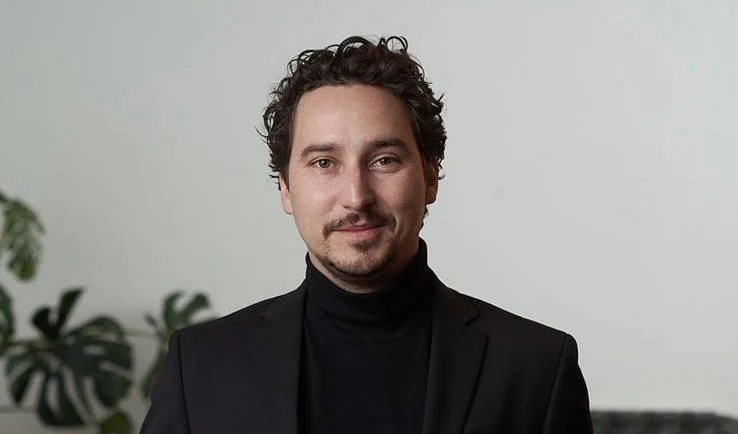
Niklas Sattler, a former executive at Casinos Austria, has spent the last five years developing a bid aimed at shaking up the country’s stagnant land-based casino industry through his company, Alea Trust. With an impressive lineup of over 40 seasoned casino professionals from Casinos Austria and other top international brands, Sattler's goal is to challenge the dominance of his old employer in the forthcoming tender for Austria’s coveted casino licenses.
Sattler expresses his frustration with the traditional perception of the casino industry, stating, "This old-school image of the industry – I don’t like that. So I said, let’s refresh the industry and let’s jump inside the tender. Let’s do it ourselves."
Since launching Alea Trust in 2021, Sattler and his team have focused on assembling a high-caliber group of experts in areas such as anti-money laundering, responsible gambling, finance, and casino operations. “Casinos Austria has a track record as a company, but they’ve lost a lot of expertise over the years,” he emphasizes. “Our idea was to find the top experts… and build a team that could compete at the very highest level.”
With Austria gearing up for its first significant casino tender in years, Sattler believes the timing is ripe for transformation in a sector he regards as aging. However, key questions remain regarding the structure of the proposed 13 casino licenses. Will these licenses truly open the door for new entrants, or will they favor the incumbent monopolist?
For decades, Casinos Austria (CASAG) has held a commanding position in the market, currently operating two packages of 15-year licenses: six in urban areas (the Stadtpaket) and six in tourist regions (the Landpaket). A draft bill from Austria’s coalition government, released in June, outlines sweeping reforms to gambling laws, including the introduction of 13 licenses, up from the current 12.
The Finance Ministry has indicated that these licenses will be split into "objectively justified" packages, with decisions regarding location based on comprehensive studies evaluating factors such as population, tourism potential, and socioeconomic conditions. Applications will reportedly be open to all market participants.
Sattler advocates for issuing single licenses to promote fairness: “Let’s make 13 single licenses,” he proposes, suggesting it would allow smaller competitors a fair chance to apply for individual opportunities. In contrast, CASAG is advocating for a retention of the packaging system, asserting that fewer packages would ensure better coverage of casinos while reducing competitive pressure that could lead to aggressive marketing.
Patrick Minar, a spokesperson for Casinos Austria, argues, "Only a carefully designed package solution can guarantee all of this… Individual tenders would produce the opposite effect and encourage ‘cherry-picking.’"
The optimal approach the government will adopt for the upcoming tender remains uncertain, but the inclusion of packages in the draft law suggests a continuation of that system. Nicole Daniel, a partner at the DLA Piper law firm, notes that the new provisions offer a stronger legal basis for license packaging but warns it doesn’t eliminate the risk of bias toward existing operators. Depending on how criteria are interpreted, new entrants may face disadvantages if the merging of high-performing and lower-performing casinos is favored.
Arthur Stadler, a gaming lawyer in Vienna, stresses the importance of the new Austrian Gambling Authority executing a diligent and detailed tender process to avoid past pitfalls. Given Austria's history with casino tenders, where criteria were not clearly disclosed to applicants, Stadler predicts that future challenges to the tender outcomes could arise, potentially reaching the Constitutional Court.
Moreover, the draft bill extends the concessions set to expire at the end of 2027 to December 31, 2028, and allows for additional extensions, which could postpone new entries into the market even further. While Casinos Austria maintains that such provisions are not novel, Daniel points out that they could enable incumbents to remain operational until as late as 2030 without a new tender.
Looking at the wider landscape, Sattler believes that the land-based gaming sector needs revitalization. As society diversifies, he argues that casinos should mirror the community's values. “Our vision is much more about giving something back to players and to the community,” he asserts, emphasizing the need for casinos to engage in regional investments and sponsorships.
The ongoing legislative process for Austria’s gambling reforms is still unfolding. With public consultations having closed on July 15 and a three-month EU notification period ahead, experts speculate about possible delays. Despite the political timeline aiming for passage by the year’s end, potential bidders like Sattler are left in uncertainty regarding the tender process’s criteria and implementation.
Sattler remains committed to entering the tender, but only if the evaluation criteria align fairly with individual and EU standards. "If it’s fair then we go inside, if not, not," he states, reflecting on the stakes involved in a process he has been preparing for over the past five years. "It’s a chance missed for the next 15 years," he adds, capturing the weight of his aspirations amidst the continuing unpredictability surrounding the tender.

