
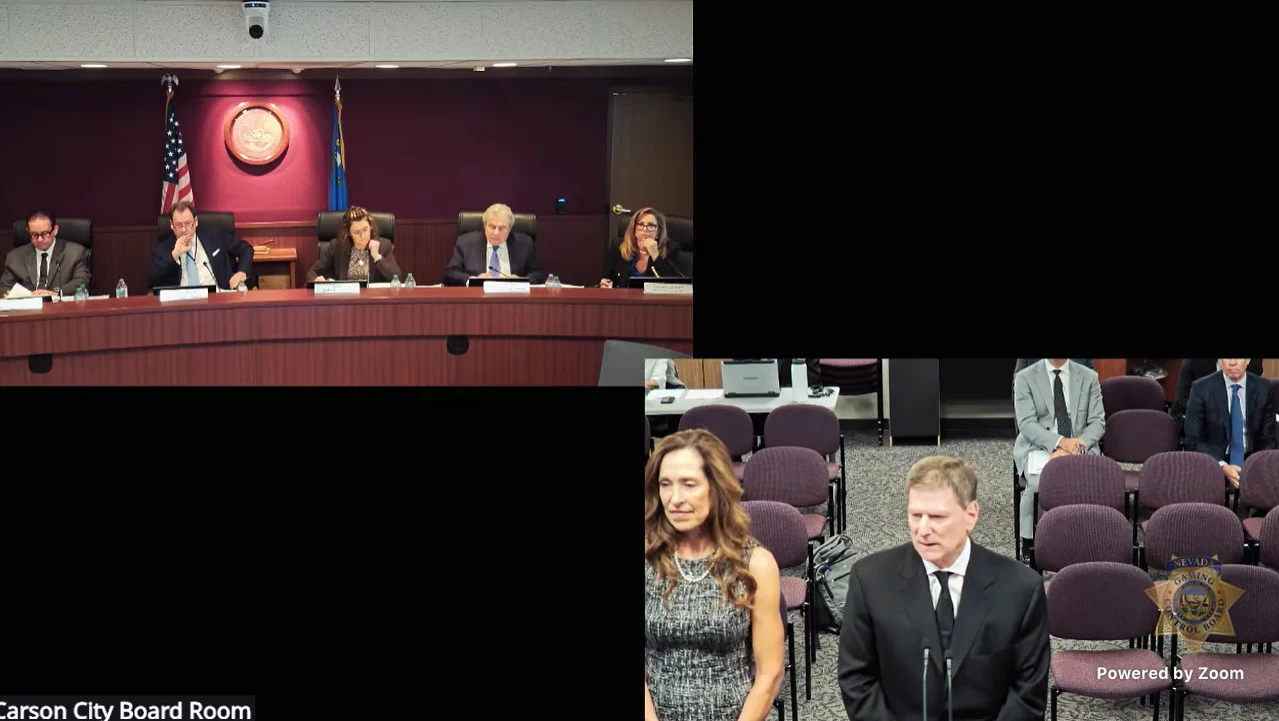
The Nevada Gaming Commission has granted unanimous approval for the licensing of two executives from Fertitta Entertainment, paving the way for the company to advance its $17.6 billion acquisition of Caesars Entertainment. Richard Liem, the CFO, and Steven Scheinthal, the general counsel, both received their licenses during the latest round, although they have been licensed numerous times since Fertitta's acquisition of Golden Nugget Casinos in 2005.
Despite the focus on the Caesars acquisition, few specifics have emerged regarding future steps. To date, neither Fertitta nor Caesars has issued any statements beyond an initial announcement from executives. The go-shop period, which allowed Caesars to seek competing bids, ended on July 11. Although investor Carl Icahn was reported to be considering a last-minute bid, there have been no updates since the window closed. When questioned by the commissioners about the status of the deal post-July 11, Liem's response was somewhat terse, indicating that as a public company, Caesars would handle any necessary announcements.
Caesars did not comment when approached for clarity on the deal.
The acquisition faces regulatory scrutiny, particularly regarding antitrust concerns. Both Caesars and Fertitta's Golden Nugget currently compete in six U.S. markets, with three located in Nevada: Lake Tahoe, Laughlin, and Las Vegas. The Nevada Gaming Control Board did not address competitive dynamics during the approval of Liem's and Scheinthal's licenses. Previous acquisitions, like Eldorado Resorts' 2020 purchase of Caesars, required divestitures for regulatory approval, and the board has stated that it will await federal rulings before making state-level decisions.
In addition to the executives' licensing, a Hart-Scott-Rodino antitrust application has been submitted to the Federal Trade Commission. Liem confirmed the filing but cautioned that the review process is variable and does not adhere to a set timeline. He referenced a complex $110 billion merger involving Paramount and Warner Bros Discovery to illustrate the difficulties associated with large-scale mergers.
The Federal Trade Commission has also engaged in antitrust actions recently. Earlier this week, a federal judge extended a restraining order blocking the Paramount-Warner merger amid a cluster of lawsuits. For Caesars, as a public entity, the next steps will also require a proxy statement and shareholder approval.
Questions from the commissioners also touched on the influence of Tilman Fertitta, the billionaire entrepreneur behind Fertitta Entertainment, who is currently serving as U.S. ambassador to Italy and San Marino. Liem stated that Fertitta is not involved in day-to-day operations but provides strategic direction. However, this explanation caused some confusion among commissioners and was not probed further.
Liem added that while Fertitta is cleared to maintain some responsibilities, including those related to the Houston Rockets NBA franchise, he must refrain from any involvement regarding gaming or hospitality.
Scheinthal indicated that union negotiations were a primary reason for his presence in Las Vegas. He mentioned a strong relationship between Fertitta and the Culinary Union, citing a personal call he received from Secretary-Treasurer Ted Pappageorge when the acquisition was announced.
Regarding the integration of Caesars and Golden Nugget, Scheinthal emphasized that the plan was for Golden Nugget properties to fit into the larger Caesars system, particularly concerning employee benefits and anti-money laundering (AML) compliance. He noted that due to Caesars' size, it would be easier for Golden Nugget to merge into their framework rather than vice versa. Last year, Caesars faced a $7.8 million AML fine after failing to adequately investigate the source of funds for illegal bookmaker Mathew Bowyer, who gambled at Caesars properties.
Scheinthal was optimistic about Caesars' compliance capabilities moving forward, asserting that the past issues are behind them. He stated that Golden Nugget has never encountered AML issues under Fertitta's ownership because of the nature of their clientele.
In discussing other topics, Scheinthal addressed the growing importance of prediction markets, highlighting that Golden Nugget, like Caesars, faces significant competition in this area. He speculated that this issue could escalate to the Supreme Court, where states' rights advocates may find success based on judicial trends.
When asked about the prospects for gaming expansion in Texas, where Fertitta's company is based, Scheinthal expressed skepticism. He noted the lobbying efforts by Las Vegas Sands for Texas casinos have consistently been thwarted by anti-gaming politicians, particularly Lieutenant Governor Dan Patrick. Although there has been chatter about Fertitta potentially pursuing a Houston casino should legalization occur, Scheinthal was doubtful about that possibility. He suggested that, barring changes in state politics, significant developments in gaming could remain stagnant until 2032.

