
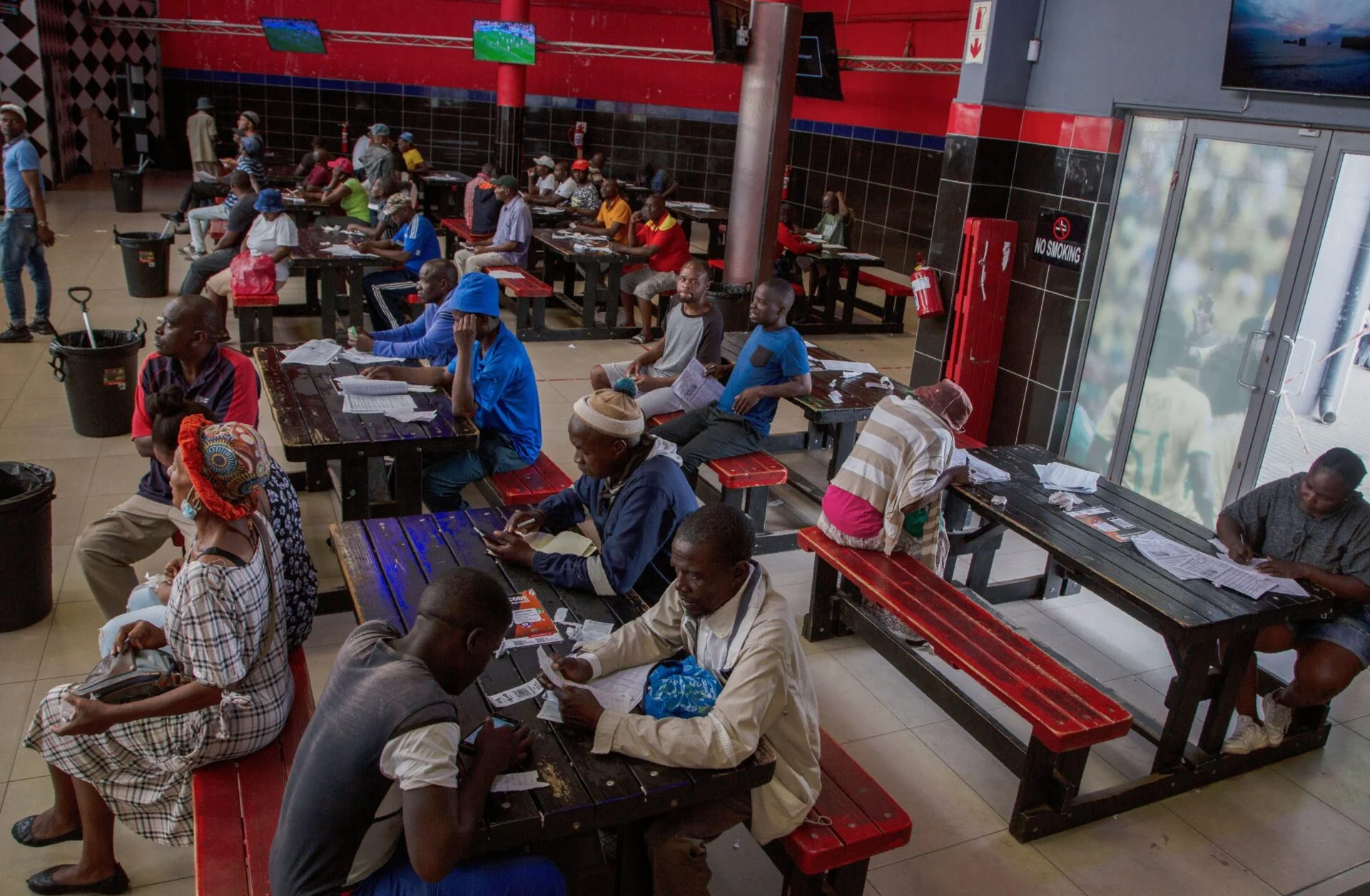
In Africa, agents play a unique role that is largely absent in Europe and the USA. These individuals serve as community intermediaries, building personal relationships with local bettors and assisting them in placing wagers, playing games, or purchasing lottery tickets.
Contrary to the global trend of moving toward online betting, professionals within the African gambling industry argue that agents provide a vital channel to different customer segments that may not transition to online platforms for many years.
Martin Nieri, the founder and CMO of 888AFRICA, emphasizes the significance of local engagement in Africa's economy: "Africa is street. It's a street-led economy. Every 20 meters, you will find a mobile money vendor kiosk or a betting terminal."
888AFRICA is a prominent online gaming operator, leading the market in Mozambique and also active in Angola, Tanzania, Zambia, and Malawi. Although it does not currently utilize agents, Nieri, with experience at 888AFRICA and at retail-focused company Premier Bet, recognizes the critical function agents serve.
Trust is paramount in Africa’s gambling economy. Nieri comments, "There’s very little trust in governments, banks, and financial institutions, so being able to see someone, hand over your money, and receive a ticket is tremendously important."
The disparity between attitudes in Africa and those in Europe highlights a different motivation behind gambling: in Europe, ease and speed dominate, while in Africa, individuals often seek income opportunities and life-changing winnings.
Agents facilitate this process in ways that online betting cannot. Andrew Osieko, a finance and compliance consultant for DAFABET Kenya, describes his work: "I go to the regulator, get a license to run betting, look for game providers, and either open shops myself or engage agents to open shops."
Osieko adds that agents generally operate franchise models, which allow aspiring business owners to leverage established brand recognition. The relationship dynamics have shifted; agents previously sought out operators, but now operators find agents approaching them.
Nieri categorizes agents into various types, including those running shops, street vendors with kiosks, and offline affiliates. He notes, "The offline side of things is still a huge part of betting in Africa."
For agents working within larger retail networks, Nieri compares it to being self-employed drivers, collecting commissions and selling on behalf of the company. Success depends on building and maintaining trust with customers, who often feel more secure handing cash to an agent than engaging with online platforms.
Okinda recounts her campaign experience, noting skepticism among those without smartphones. "I was running a campaign, and people expressed interest, but many lacked access to the necessary technology. Agents provide free entry to their shops, making them relevant to this demographic."
Demographics matter in the agent model; older gamblers often prefer interacting directly with an agent to using digital means. Osieko confirms this generational divide: "Some won’t use phones for transactions. They stick to cash interactions with agents."
Agents effectively draw customers as shop openings often allure local bettors, especially when operators engage in aggressive marketing campaigns. Okinda states, "In Kenya, the moment you open a shop, you don’t have to call people. They’ll come!"
Nieri observes that agents often scout for players in market areas, fostering conversations with those gathered to watch games, which aids in customer acquisition.
Daily operations for agents involve a range of financial activities. Osieko notes the need for weekly reports on performance metrics, followed by accounting tasks and billing the agents for revenue shares. This meticulous attention underscores the financial and operational complexities involved in running a successful agent network.
However, while the agent model has its advantages, it also carries risks. Agents manage customer funds, which poses a threat of financial misconduct. Historically, deposits from agents minimized this risk, but the rise of the black market has eroded these practices. Osieko acknowledges the reluctance from agents when asked to provide security deposits, given tempting offers from unregulated operators.
Tax changes have further complicated the landscape. For instance, in 2019, Kenya raised excise duty on betting stakes, prompting some operators, like Betin, to exit the market entirely. Okinda remembers higher profit-sharing ratios before tax increases pushed agents into challenging positions.
As a result, agents often resort to offering games from multiple operators to remain competitive, leading to fluctuating partnerships. Okinda refers to some agents as "bonus hunters," indicating their tendency to switch affiliations based on better offers from competing operators.
Moreover, security remains a significant concern, as gambling shops have previously been targets for theft. Measures such as CCTV and hiring security personnel have been implemented to enhance safety, a necessity intensified by the shift to digital payment systems like M-Pesa. Okinda notes, "Most players will win and tell you, 'Just put the money in my phone!'"
Nieri has his concerns as well, particularly around compliance and know-your-customer (KYC) protections. He observes that managing an agent network comes with unique challenges absent in online operations, where technology simplifies transactions.
Overall, the future of the agent model in Africa remains uncertain. While Osieko expresses concern over increasing regulatory hurdles, Nieri is optimistic about growth potential, suggesting, "I don’t think you’ll ever have a digital-only Africa. Not for the next 10 to 15 years, anyway."
Okinda strikes a balanced perspective, acknowledging that local agents are still essential for many bettors and there are unexplored regions with untapped potential. She concludes, "The agent franchise of shops is still big. It's only that people haven’t realized it yet." Trust remains a cornerstone, and as Nieri puts it, "There’s always going to be a requirement for it. It’s trusted, it’s physical, it’s there."

