
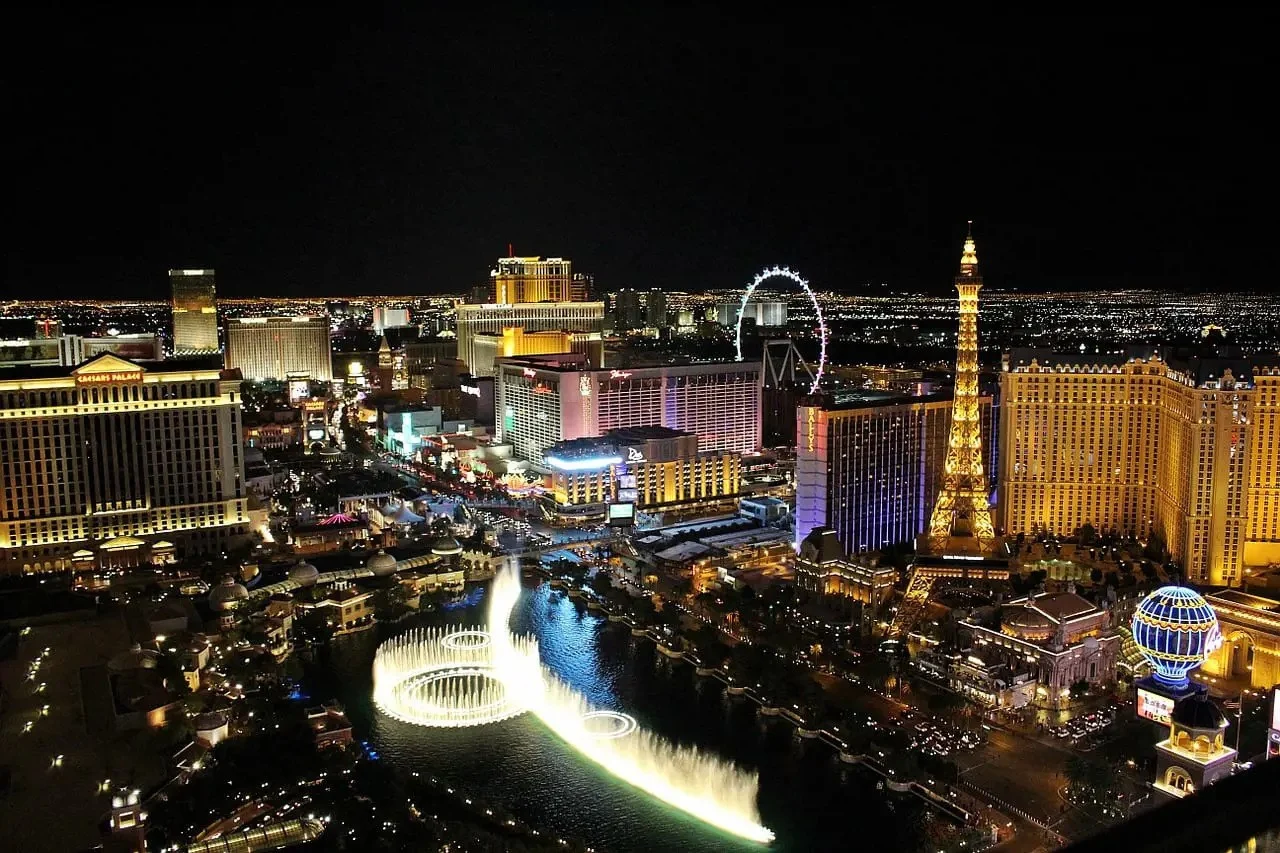
A unanimous decision from a federal appeals court issued on Friday has allowed Nevada to enforce its gambling regulations against Kalshi, marking a significant setback for the prediction market operator. This ruling raises the likelihood of a Supreme Court review before the 2027 NFL season begins.
The US Court of Appeals for the Ninth Circuit delivered a 3-0 verdict stating that sports event contracts are not considered federally regulated swaps under the Commodity Exchange Act (CEA). This decision overturns a previous injunction that had restricted Nevada gaming officials from regulating such financial products.
In their detailed 50-page opinion, the three-judge panel concluded that the CEA does not take precedence over Nevada’s gaming regulations concerning Kalshi’s sports event contracts. US Circuit Judge Ryan Nelson emphasized that these sports event contracts should be viewed as "sports gambling" regardless of Kalshi's designation of them as "swaps." He illustrated his point with an analogy from William Shakespeare's "Romeo and Juliet," stating, "To call a rose by any other name would smell as sweet."
Nelson remarked that Kalshi's claim that its sports event contracts are not, in fact, sports bets, misrepresents reality. "For Kalshi to deny that its sports event contracts are sports bets under a reasonable person’s understanding is disingenuous,” he wrote.
In response, Nevada Gaming Control Board Chair Mike Dreitzer asserted that the ruling vindicated the board's long-held view that these contracts are indeed forms of sports betting and should be regulated accordingly.
The American Gaming Association (AGA), a leading opponent of prediction markets, commended Nevada's actions for maintaining regulatory control over gambling within the state. AGA President Bill Miller described the ruling as a victory for consumer protections and state tax revenues, citing calculations indicating that states have missed out on over $1 billion in tax from illegal prediction market operations.
The CFTC, however, maintains that it has exclusive authority over event contracts. During an appearance on CNBC earlier this year, CFTC Chair Michael Selig remarked that state restrictions on prediction markets attempt to invalidate federal jurisdiction. Following a recent $36 billion lawsuit from New York against Kalshi, Selig asserted that the CFTC will continue to uphold its regulatory jurisdiction.
The Ninth Circuit's decision contradicts a ruling from the US Court of Appeals for the Third Circuit regarding KalshiEX LLC v. Flaherty. In that case, resolved with a 2-1 decision on April 6, the court found that the CEA allowed Kalshi to operate without New Jersey state interference. Such discrepancies among circuit courts often lead to Supreme Court involvement in matters of national importance.
Trading on Polymarket has emerged, reflecting the uncertainty surrounding potential Supreme Court involvement, with one contract focusing on whether the high court will agree to hear the case by December 31. As of Friday evening, this contract had accrued over $976,000 in trading volume. After previously hovering around 30%, the likelihood of the Supreme Court taking the case surged to 64% on Friday. New Jersey has until September 3 to decide on filing a petition for certiorari.
In more social context regarding prediction markets, Donald Trump Jr. recently spoke at a high-profile event, weighing in on the ongoing debates over prediction markets. He commented on the influence of the gambling lobby and expressed his belief that state attorneys general had been misled. As reported by the New York Times on August 27, his comments suggested that federal oversight was sufficient and that states should step back.
Trump Jr. has reportedly gained a substantial stake in Kalshi, receiving over $300,000 in company shares, alongside an investment in Polymarket, which was made through his involvement at 1789 Capital. A spokesperson clarified that Trump Jr. does not represent any company in his discussions with the federal government.
The current NCAA college football season commenced on Thursday, featuring early matchups in the Football Championship Subdivision. More games are scheduled for Saturday, including a notable international contest between the University of North Carolina and Texas Christian University in Dublin. By the end of Labor Day Weekend, every team in the Football Bowl Subdivision will have begun its season, as Las Vegas prepares to host its first-ever college football national championship in January.
As the prediction market landscape heats up, trading volumes for college football have reached between $20 million and $30 million, signifying a 22-fold increase over the past year, according to recent reports. On Kalshi, trading for national championship futures exceeded $17.5 million on Friday, with Ohio State and Notre Dame sharing the top odds, followed closely by Texas featuring Heisman candidate Arch Manning.
As the season unfolds, DraftKings has launched new campaigns in key states, pushing innovative offerings that mimic traditional parlay betting options. Recently, their combo wagers achieved a notable spike in daily volume, highlighting the growing interest in sports betting activities.

