
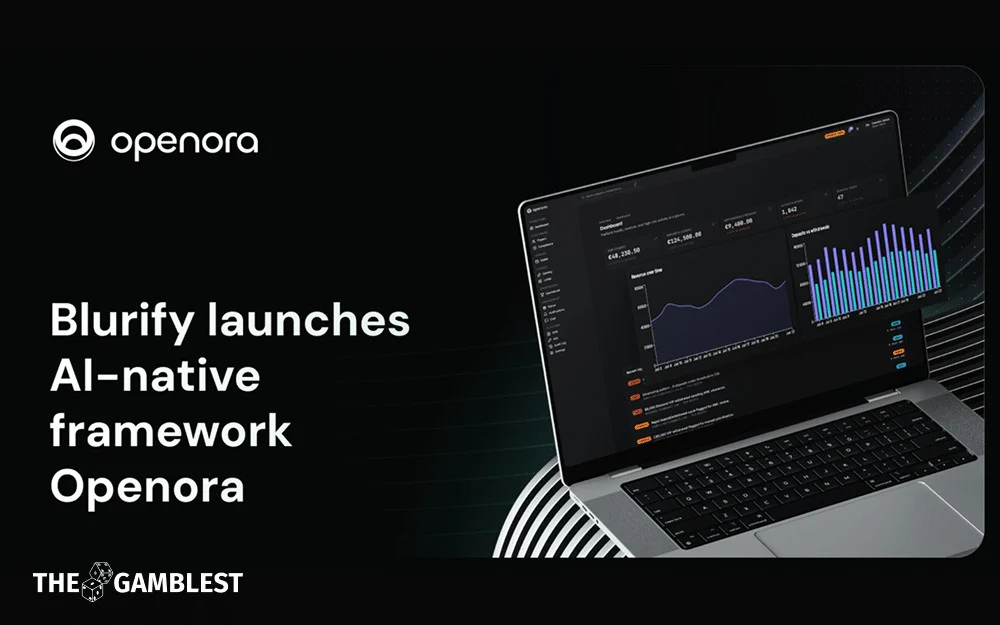
Blurify, a software development firm focused on tailored technology solutions for the iGaming sector, has introduced Openora, an AI-native framework aimed at assisting operators in rapidly building, extending, modernizing, and migrating their platforms.
Openora offers an open foundation that operators can customize to meet specific business, market, and regulatory needs. It does not require the replacement of an operator's entire technology stack; instead, it allows for the introduction of new capabilities alongside existing systems, fostering incremental evolution in response to changing business demands.
This framework is distinct from conventional gaming platforms as it is designed with artificial intelligence embedded in its architecture. Openora features AI-readable project context, development rules, instructions, and task-specific skills, enabling AI agents to quickly comprehend the platform. This aspect aids engineering teams in implementing new functionalities, modifying existing modules, maintaining the system, and accelerating routine software development tasks.
Openora also supports self-hosting, enabling operators to bypass recurring gross gaming revenue (GGR) share models and avoid hidden transactional fees often associated with traditional platform providers. Its composable architecture allows individual modules and integrations to be added to existing technology stacks while keeping operators in control of their business logic, player data, infrastructure, and security configuration.
The modular design of Openora empowers engineering teams at sportsbooks, casinos, affiliates, and prediction markets to customize their frontends, integrations, and business logic. This flexibility enables operators to rapidly introduce new capabilities and adapt to evolving business and regulatory demands without having to undergo extensive platform redevelopments.
Adam Mateja, Founder and CEO of Blurify, shared insights on the development of Openora: "Over the past few years, we’ve worked with operators across multiple markets and kept encountering the same problem. Businesses wanted to move faster, launch new capabilities, and enter new markets, but their platforms couldn’t always keep pace. Too often, the choice was between living with legacy technology or committing to a costly, high-risk replatforming project. We believe there should be a better option. One that gives operators the freedom to modernize, innovate, and grow without surrendering control of their technology. That’s what Openora is designed to deliver. Whether they’re looking to build, extend, modernize or migrate, Openora gives operators the flexibility to move forward on their own terms."

