
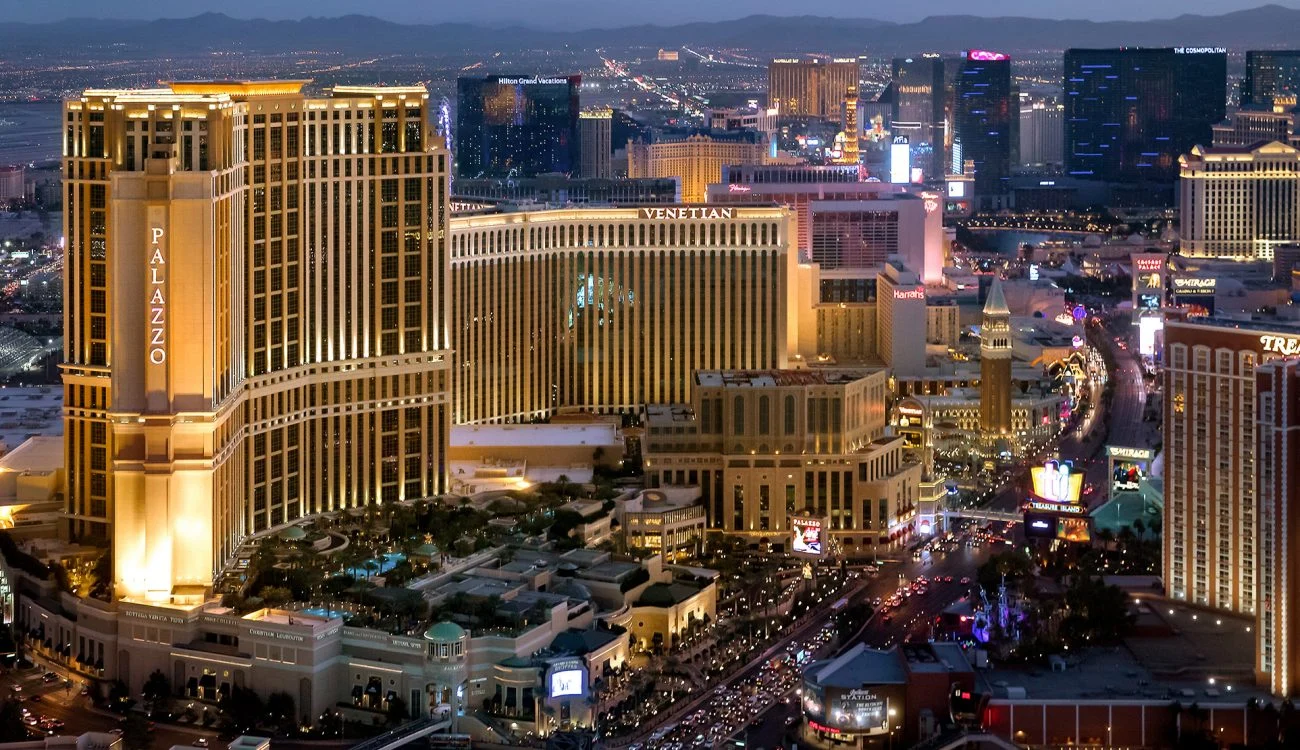
On Thursday, the Nevada Gaming Commission imposed a $7.2 million fine on the Venetian Resort Las Vegas for failures in anti-money laundering protocols. This marks the fourth penalty against a Las Vegas Strip establishment for similar shortcomings linked to Mathew Bowyer, an illegal bookmaker and prolific gambler, since the beginning of 2025.
The Venetian's case echoes the previous penalties assessed against Resorts World, MGM Resorts, and Caesars Entertainment. In each instance, these casinos were found unable to verify Bowyer's source of funds and failed to properly investigate and prohibit his entry onto their properties. Combined, the penalties from the four establishments amount to $34 million.
Every penalty reflects ongoing issues within Nevada's gambling industry, including ownership changes and potential conflicts for the regulatory body. In this scenario, two out of five commissioners—George Markantonis and Richard Schonfeld—recused themselves from the vote regarding the Venetian's fine. Apollo Global Management, the current owner of the Venetian, accepted the fine, although the investigation revealed that most violations occurred from 2019 to 2021 during Las Vegas Sands' ownership.
Markantonis previously served as president of the Venetian while Bowyer's illegal activities were being scrutinized. Meanwhile, Schonfeld disclosed his recusal was due to his representation of an “individual in a related investigation” to the Venetian case. The other three commissioners offered standard critiques of the Venetian's compliance failures during the proceedings, yet supported the unanimous approval of the settlement.
Markantonis’ connection led some to wonder if he participated in the inquiry. During the commission meeting, Mike Somps, a senior deputy from the attorney general’s office, stated the Nevada Gaming Control Board found the Venetian deserving of leniency because its misconduct was “not as egregious” as that of the other casinos linked to Bowyer. He presented five points of consideration:
– The Venetian lacked a “culture of non-compliance” or a tendency to “ignore” bookmakers.
– No federal investigation was launched against the Venetian for these violations.
– Their misconduct was attributed solely to Bowyer, with no evidence of other illegal bookmakers being involved.
– The compliance department at the Venetian had no prior knowledge of Bowyer’s illegal activities.
– There was no indication that senior executives knew about Bowyer’s actions, a point that seemingly would include Markantonis due to his role.
When contacted for comments regarding Markantonis’ involvement, a commission representative abstained from addressing the issue. Las Vegas Sands has not replied to multiple requests for insight into the investigation.
Schonfeld did not provide details regarding the individual he referenced in his recusal. His law firm has defended several clients involved in gaming crimes in Las Vegas. Among them were David “Vegas Dave” Oancea and Paul Phua, known for their links to underground betting operations. Schonfeld is also representing Damien Leforbes, another illegal bookmaker mentioned in a separate Resorts World investigation, who has pleaded guilty to money laundering and illegal gambling charges and is awaiting sentencing.
Between 2019 and 2024, when Bowyer's illegal operations peaked, he visited the Venetian frequently, losing a total of $3.6 million. The imposed fine of $7.2 million represents a substantial financial penalty, yet is less severe than others, like the $7.8 million fine levied against Caesars, which equated to a tripling of its Bowyer-related profits.
Venetian representatives expressed regret before the commission but distanced themselves from the actions of Sands. Attorney Greg Brower, who represented the Venetian, indicated that nearly all of Bowyer’s activities occurred prior to its 2022 sale to Apollo. He remarked that less than $100,000 of the $3.6 million profit tied to Bowyer was during their ownership. Brower affirmed the current management's commitment to comply fully with both state and federal legal and regulatory mandates, including anti-money laundering obligations.
With the new management, Brower stated that their AML practices have improved significantly, unlike Sands’ earlier approach. Current Venetian CEO Patrick Nichols claimed that they refuse to retain players whenever there are doubts about the origins of their funds.
NGCB Chair Mike Dreitzer stated that the fine appropriately reflects the case's severity compared to others associated with Bowyer.
Commissioner Brian Krolicki voiced his frustration during the hearing, primarily directed at Sands for the frequency of AML issues. He expressed uncertainty about the effectiveness of the penalties, hoping they would alert others on the Strip. “I suspect the folks I really want to have in front of me are not in front of me today,” he noted.
Chair Jennifer Togliatti shared her caution gained from litigation experience regarding the case. Nevada’s regulation system involves a two-tiered approach, and Dreitzer confirmed that the year-long investigation into the Venetian concluded with an additional six months of negotiations.
In total, the four cases involving Bowyer have yielded a combined vote of 15 in favor and 1 against, with former commissioner Rosa Solis-Rainey being the sole dissenting voice in the Caesars case. Following the end of her term, Solis-Rainey was replaced by Schonfeld in April. She previously expressed doubt regarding the adequacy of AML fines concerning broader casino misconduct.

