
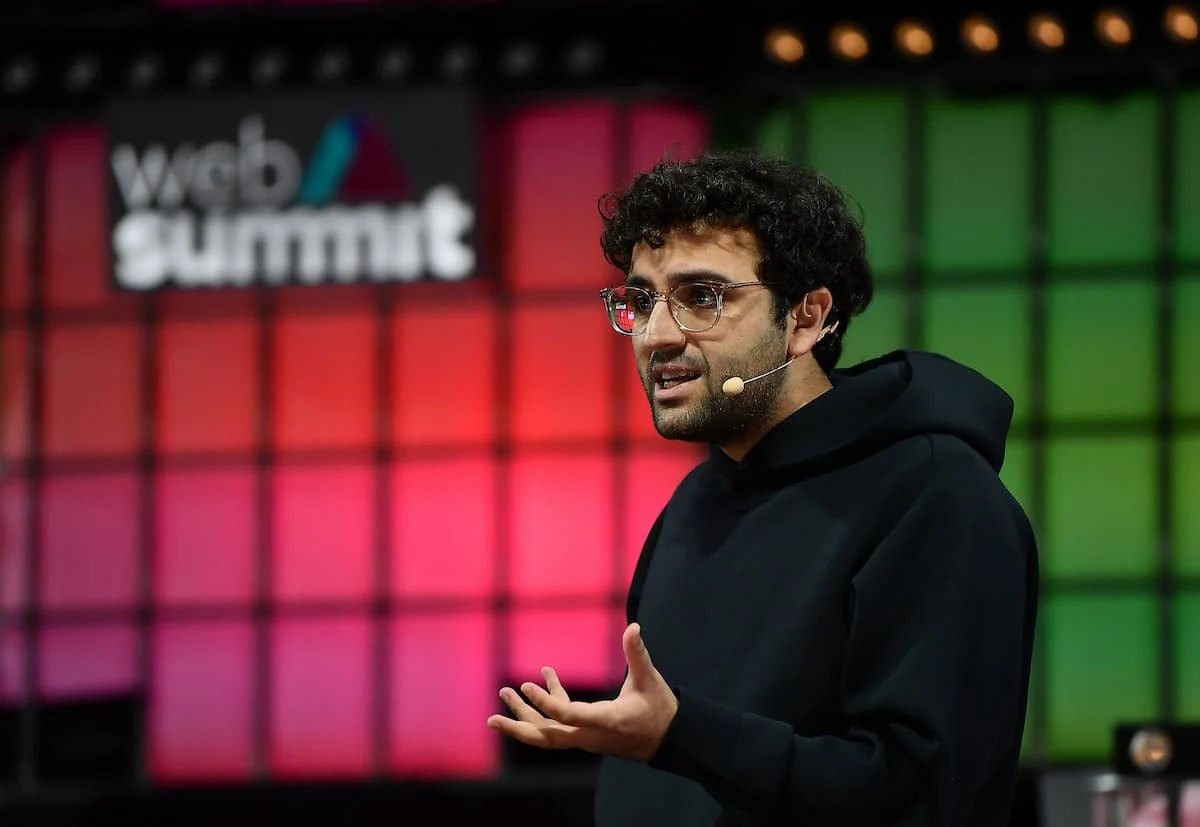
Last week, the Facial Recognition to Protect Children Act was introduced by Congressman Josh Gottheimer, featuring Kalshi CEO Tarek Mansour. This new legislation champions child protection but has drawn criticism for potentially broadening the reach of prediction markets within sports and gaming.
The proposed law mandates that prediction markets and online sportsbooks implement facial recognition technology to confirm the age of users before they can engage in betting or trading activities. A press release accompanying the introduction showcases a photograph of Gottheimer alongside Mansour and underscores the purpose of the bill: safeguarding children.
Mansour voiced strong support for the bill, stating, "Protecting kids should be a no-brainer and is a top priority at Kalshi. Beyond what’s required of us, we already self-regulate and have a suite of measures in place to keep minors off our platform. But this can’t just be one company’s responsibility — it has to be an industry standard. I am grateful to Congressman Gottheimer and Congressman Van Drew for driving it forward.”
ParentsRISE, a nonprofit dedicated to protecting children from technology-related harms, acknowledged Kalshi's proactive steps in child protection. Co-sponsors of the bill, including Congressman Jeff Van Drew, Ritchie Torres, and Congresswoman Kristen McDonald Rivet, emphasized that the legislation aims to prevent minors from gambling.
The bill also arises amidst heightened scrutiny concerning the implications of legalized gambling for minors. Citing data from Common Sense Media, it reveals that 36% of boys aged 11 to 17 have engaged in gambling over the past year, increasing to 40% among those aged 14 to 17.
However, there are concerns regarding a provision that could inadvertently pave the way for expanded contracts in gaming. Law expert Daniel Wallach pointed out that an amendment in the bill offers a potential loophole for the Commodity Futures Trading Commission (CFTC) to sanction both sports-event contracts and casino gambling event contracts, establishing a link between the phrase 'contrary to the public interest' and activities that encourage violent or unlawful behavior.
The legislation proposes modifying the Commodity Exchange Act (CEA), which supervises prediction markets. The existing law allows the CFTC to restrict markets associated with violence, unlawful activities, and gaming, while the proposed amendment would enable the Commission to individually assess whether an event contract is contrary to public interest if it relates to those categories.
Wallach noted that this change in phrase from "involving" to "based on" could be significant, stating it captures contracts specifically linked to gaming, such as the World Series of Poker. He commented on the oddness of a bill titled the "Facial Recognition to Protect Children Act" containing the word "facial" just once across its 27 pages, adding that the language in the preface of the bill appears to serve multiple purposes, hinting at concealed intentions.
In another twist, it was revealed that sponsors of the bill have received contributions from Kalshi. Tech Influence Watch reported that Mansour has donated $7,000 to Gottheimer, Rivet, and two other sponsors, Jimmy Panetta and Thomas Suozzi. Kalshi co-founder Luana Lopes Lara also contributed $7,000 to another bill sponsor, Congressman Darren Soto.
Kalshi has ramped up lobbying efforts, spending over $1 million last year, only surpassed by two other gambling entities: the American Gaming Association and the Gila River Indian Community.
Kalshi has yet to comment on Wallach's allegations regarding the bill.

