
In May, just days ahead of Memorial Day weekend, the US Senate conducted its first hearing on sports betting in over a year. Titled "No Sure Bets: Protecting Sports Integrity in America," the hearing aimed to address ongoing sports betting scandals but quickly turned into a heated discussion on prediction markets.
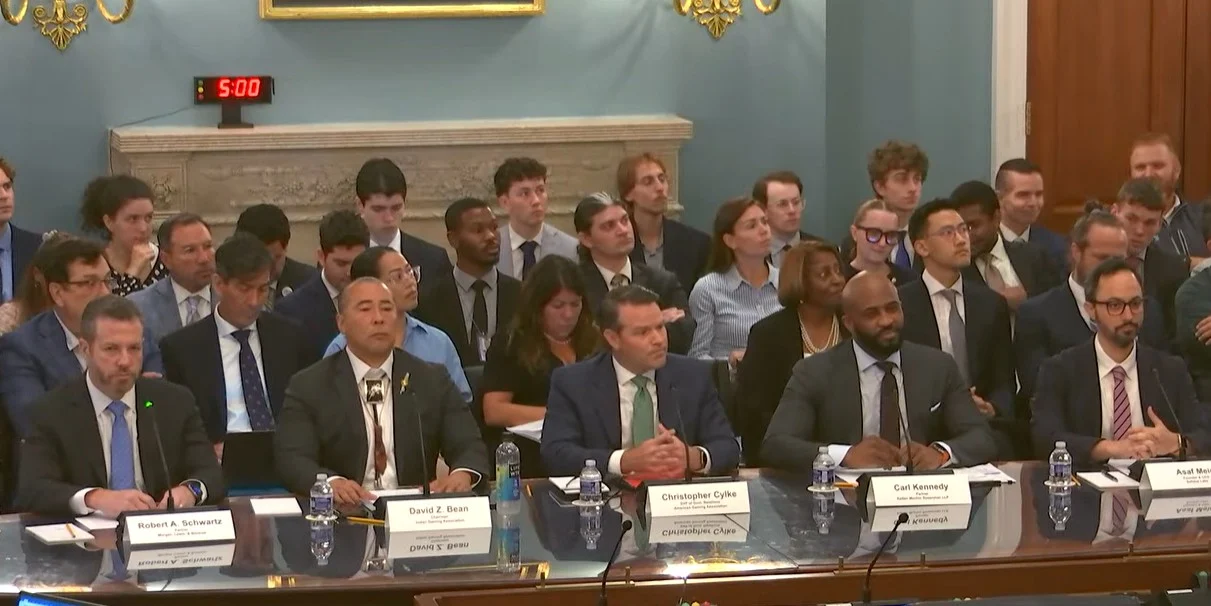
This week, the House of Representatives responded by addressing several urgent issues related to this burgeoning asset class. On Tuesday morning, a House subcommittee gathered for a hearing focused on market integrity concerning sports derivative contracts—the first dedicated discussion since Congress presented over a dozen proposed bills to implement regulations for the rapidly expanding industry.
The significant public interest in sports event contracts is evidenced by recent figures from the 2026 FIFA World Cup, which indicated that trading volumes exceeded $50 billion. Yet, the volume raises concerns about the regulation of sports event derivatives, which advocates for states' rights claim might be illegal.
Two major gaming industry trade groups, the American Gaming Association and the Indian Gaming Association, assert that states and tribal nations are losing millions in revenue due to the rise of prediction markets. Representatives from both organizations testified during the hearing, alongside two attorneys who discussed the implications from a market perspective. Asaf Meir, CEO of Solidus Labs, also provided insights into market surveillance technologies that could help identify and penalize insider trading practices.
Representative Shomari Figures from Alabama described the hearing as the most balanced he had ever attended, praising the diversity of witnesses and the intellectual debate that ensued.
The dialogue surrounding prediction markets has intensified since their mainstream acceptance in 2025, particularly this year as the US Commodity Futures Trading Commission (CFTC) has taken a leading role in defending the legality of sports event contracts against challenges from state authorities. Advocates argue that the structures of these contracts resemble those of agricultural futures, thereby placing them under the jurisdiction of the CFTC. Since taking on the role last year, CFTC Chair Michael Selig has consistently maintained that his agency holds regulatory authority over these contracts.
The House Agriculture Subcommittee on Commodity Markets, Digital Assets and Rural Development hosted Tuesday’s hearing at the Capitol, chaired by Representative GT Thompson, a Republican from Pennsylvania. In a comprehensive set of proposed regulations concerning sports event contracts published last month, the CFTC referred to a so-called public interest test numerous times. Before finalizing these regulations, the CFTC will determine if specific derivatives related to sports undermine public interest.
Thompson expressed his support for the ongoing rulemaking process, stating that he was encouraged by the thoughtfulness behind the draft and the clear public interest standards it proposed.
Currently, Selig is the only Senate-confirmed commissioner at the CFTC. David Bean, chair of the IGA, criticized the agency for being understaffed, claiming that its focus has shifted from agriculture to entertainment. The IGA sees no significant difference between sports event contracts and traditional sports wagers, such as over/unders or props.
With tensions running high between regulators and advocates, a regulatory compromise appears unlikely. While it's feasible for Congress to create a federal framework regulating prediction markets alongside state tax revenues on event contracts, state officials are wary of relinquishing control to the federal level. However, derivatives attorney Carl Kennedy believes that multiple agencies can regulate certain assets simultaneously, citing gold trading as an example.
Kennedy noted that individuals can buy gold at the state level while trading gold futures on CFTC-registered exchanges, suggesting that prediction markets could be regulated in a similar multi-agency fashion. He argued that allowing CFTC authority over event contracts does not diminish state control over the betting industry.
Bean, from the IGA, advocated for the advancement of HR 7840, known as the "Event Contract Enforcement Act," which aims to amend the Commodity Exchange Act to prohibit federally registered exchanges from offering sports event contracts. However, with political climates being tense, enacting such legislation could prove challenging, as less than 3% of standalone bills in 2025 were successfully passed.
Kennedy opposed an outright ban, favoring a more nuanced approach that would empower the CFTC to utilize the authority granted by Congress. He mentioned that Designated Contract Markets, like Kalshi, operate under core principles of oversight defined by the Commodity Exchange Act (CEA). Currently, these markets must adhere to 23 principles to maintain their CFTC designation, with Kennedy advocating for standards that ensure customer protection and market integrity.
Most industry experts suggest that the dispute regarding sports event contracts may ultimately reach the Supreme Court. Kennedy testified alongside Robert Schwartz, a former CFTC general counsel, who indicated that predicting whether the Supreme Court would take on this case is elusive. Notably, New Jersey is expected to petition the Supreme Court for a review of the Third Circuit’s ruling favoring Kalshi, although another case may potentially intervene first.
Schwartz also highlighted that the market integrity issue cuts across political lines, indicating bipartisan support that could pave the way for legislative action. Dusty Johnson, chair of the House subcommittee, reassured that this week’s hearing would not be the last on the topic of prediction markets. He emphasized Congress's obligation to seek common ground on the issue.

