
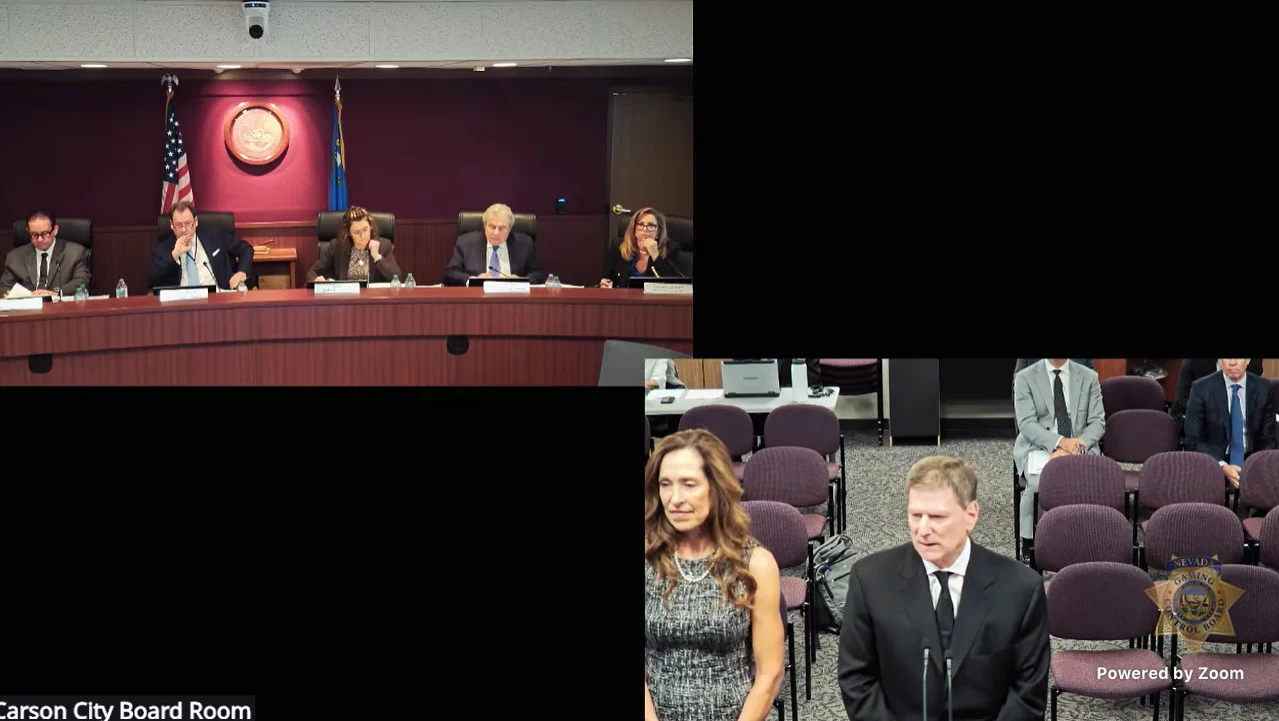
On Thursday, the Nevada Gaming Commission unanimously granted licenses to two executives from Fertitta Entertainment, signaling the company's progress in its $17.6 billion acquisition of Caesars Entertainment. Richard Liem, Fertitta's Chief Financial Officer, and Steven Scheinthal, the company's general counsel, received licensure even though both have previously been approved multiple times since Fertitta acquired Golden Nugget Casinos in 2005.
While the Caesars acquisition dominated the discussion, specific details about the deal remained sparse. Neither Fertitta nor Caesars has publicly disclosed further information beyond the initial announcement, and both companies have refrained from commenting since the approval process began.
A key milestone was reached when the go-shop period, allowing Caesars to solicit competing bids, ended on July 11. Investor Carl Icahn was reportedly working on a last-minute bid, but there has been no update since the go-shop window closed. Liem, in a terse exchange during the commission meeting, stated that Caesars, as a public company, would make necessary announcements regarding the deal.
The transaction now faces potential antitrust reviews, identified as a significant regulatory obstacle. Fertitta's Golden Nugget brand and Caesars currently compete in six markets, including three in Nevada—Lake Tahoe, Laughlin, and Las Vegas. The Nevada Gaming Control Board did not address the competitive implications during approval discussions this month. Past acquisitions, such as the 2020 deal of Caesars by Eldorado Resorts, required divestitures for approval, and the gaming board previously indicated it would await federal rulings before addressing any state-level issues.
Liem confirmed that a Hart-Scott-Rodino antitrust application has been filed with the Federal Trade Commission, a process that he noted is handled on a case-by-case basis, lacking a universal timeline. He referenced the current legal complexities surrounding the $110 billion merger between Paramount Skydance and Warner Bros. Discovery, highlighting the challenges faced in large mergers. As a public entity, Caesars is also required to submit a proxy statement and obtain shareholder approval soon.
The influence of Tilman Fertitta, the billionaire founder of Fertitta Entertainment, was another point of discussion. Serving as the U.S. ambassador to Italy, Fertitta has distanced himself from daily operations of his businesses due to ethics regulations. Liem clarified Fertitta's role, stating he provides strategic direction without engaging in gaming or hospitality functions, although he retains some authority over the NBA Houston Rockets, which Fertitta owns.
Scheinthal elaborated on other topics such as merger integration, indicating that the plan is for Golden Nugget to absorb its operations into the larger Caesars framework, especially regarding employee benefits and anti-money laundering (AML) compliance. He remarked, "They’re much larger than us… it’s easier for us to integrate our properties into their system."
Caesars is in the process of recovering from a significant $7.8 million AML fine imposed for past failures to verify the funds of gambler Mathew Bowyer, highlighting the necessity of compliance improvements following the merger. "I know that the Caesars organization has had some historical issues, but I do think it’s in the past with them," Scheinthal stated.
Additionally, Scheinthal discussed the impact of prediction markets on gaming. He noted that Golden Nugget, like Caesars, has exposure to these emerging markets due to its operations across several states, asserting that the issue could progress to the Supreme Court, with a favorable outcome for states’ rights advocates anticipated.
On the topic of potential gaming expansion in Texas, where Fertitta has many connections, Scheinthal expressed skepticism due to prevailing anti-gaming sentiments in state politics, particularly from figures like Lieutenant Governor Dan Patrick. Fertitta’s interest in a potential Houston casino remains uncertain, with Scheinthal warning that current political landscapes suggest any gaming expansion would be unlikely in the near future.

