
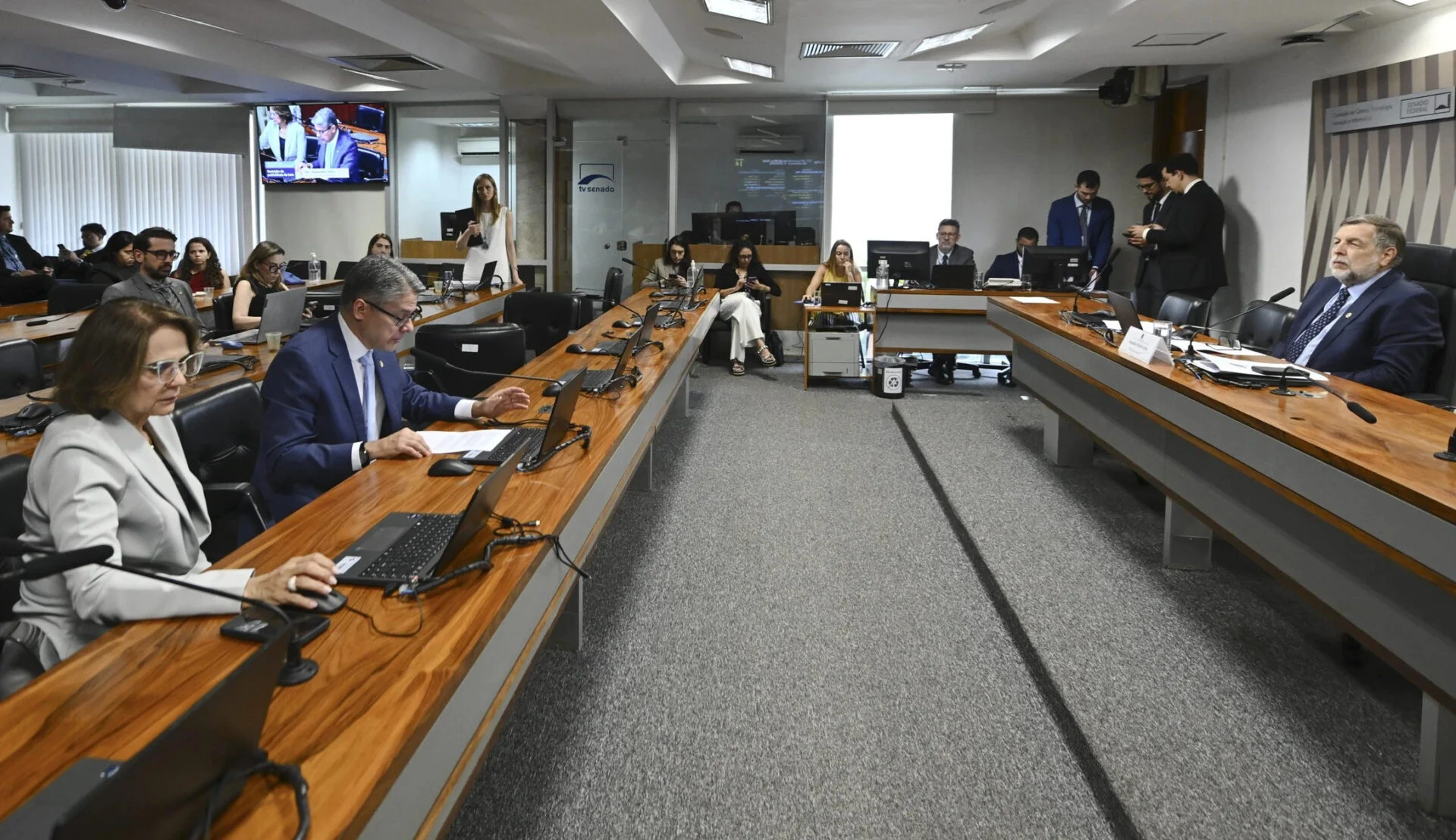
On Wednesday, the Science and Technology Committee (CCT) of Brazil approved a legislative project that imposes stricter regulations on advertising and sponsorships related to betting. This initiative seeks to classify the risks associated with betting products and clarify the obligations of operators and platforms involved in the industry. However, the new regulations may inadvertently allow the illegal betting market to continue thriving, unhindered by these rules. The committee has also fast-tracked the proposal for discussion in the Senate Plenary.
The proposal, known as Bill 2.470/2026, was introduced by Senator Damares Alves alongside six co-signers and aims to amend the existing Betting Law governing fixed-odds betting. The bill focuses on protecting mental health, consumers, and the economic welfare of families. Senator Alessandro Vieira provided a favorable opinion on the bill, offering a substitute version during deliberations.
"This is a non-partisan initiative. It stems from society's current understanding of the extent of the damage caused by so-called betting," Vieira explained as the rapporteur.
During a public hearing held on Tuesday, representatives from the government and the betting sector expressed divergent views on the proposed regulations.
The approved text delineates several advertising restrictions for online betting and gambling, including a blanket ban on direct and indirect marketing across numerous platforms such as radio, television, newspapers, magazines, streaming services, podcasts, social media, and websites. The ban also extends to advertising through instant messaging, SMS, email, telemarketing, profiling, and various electronic media, including electronic games and esports.
Furthermore, promotions aiming to attract members to betting platforms through bonuses, free bets, cashback, and loyalty schemes are prohibited. Any messaging that portrays betting as a risk-free activity or a sure source of income is also banned.
The regulations permit institutional communications through operators' official channels but restrict content to company identification, access rules, self-exclusion, and mandatory warnings. Notably, operators will be accountable for the actions of any affiliates or third-party promoters.
In terms of sponsorship, the legislation prohibits betting companies from sponsoring sports clubs, federations, cultural events, and numerous other organizations, including politicians and influencers. It also mandates a 24-month period for these entities to adjust or terminate existing sponsorships.
The regulations further ban sponsorship of campaigns targeting children and youth, and prevent betting brands from associating with mental health or social assistance projects.
Operators are prohibited from using data from individuals who have chosen to self-exclude or block marketing communications, as well as targeting users exhibiting signs of gambling-related harm with repeated offers. The legislation aims to avert exploitative practices that take advantage of individuals in vulnerable situations, such as those facing economic hardships.
Mandatory mechanisms for age verification and self-exclusion must be sustained by operators, who must also refrain from utilizing credit cards for betting and developing platform features that inhibit responsible gambling.
The bill stipulates criteria for assessing the risk levels of different betting products, focusing on aspects such as instant feedback and persistent repetition, alongside the necessity for prior evaluation of products by a designated Federal Executive Branch authority. High-risk products can be subjected to additional harm reduction strategies, and extremely risky offerings, including slot machines, will not be permitted.
In oversight, the CCT has mandated that application providers and media intermediaries must swiftly remove any advertising deemed irregular after notification. Operators linked to irregularities face severe penalties up to BRL2 billion (approximately $392.8 million).
One significant amendment introduced by Vieira is a new criminal offense related to the promotion of unauthorized betting operators, carrying imprisonment sentences ranging from one to five years. The penalty increases when the promotion is conducted by individuals with substantial public influence.
Additionally, to mitigate conflicts of interest, a cooling-off period of 24 months is proposed for professionals transitioning between regulatory roles and the betting industry, ensuring a separation between regulatory oversight and market activity.

