
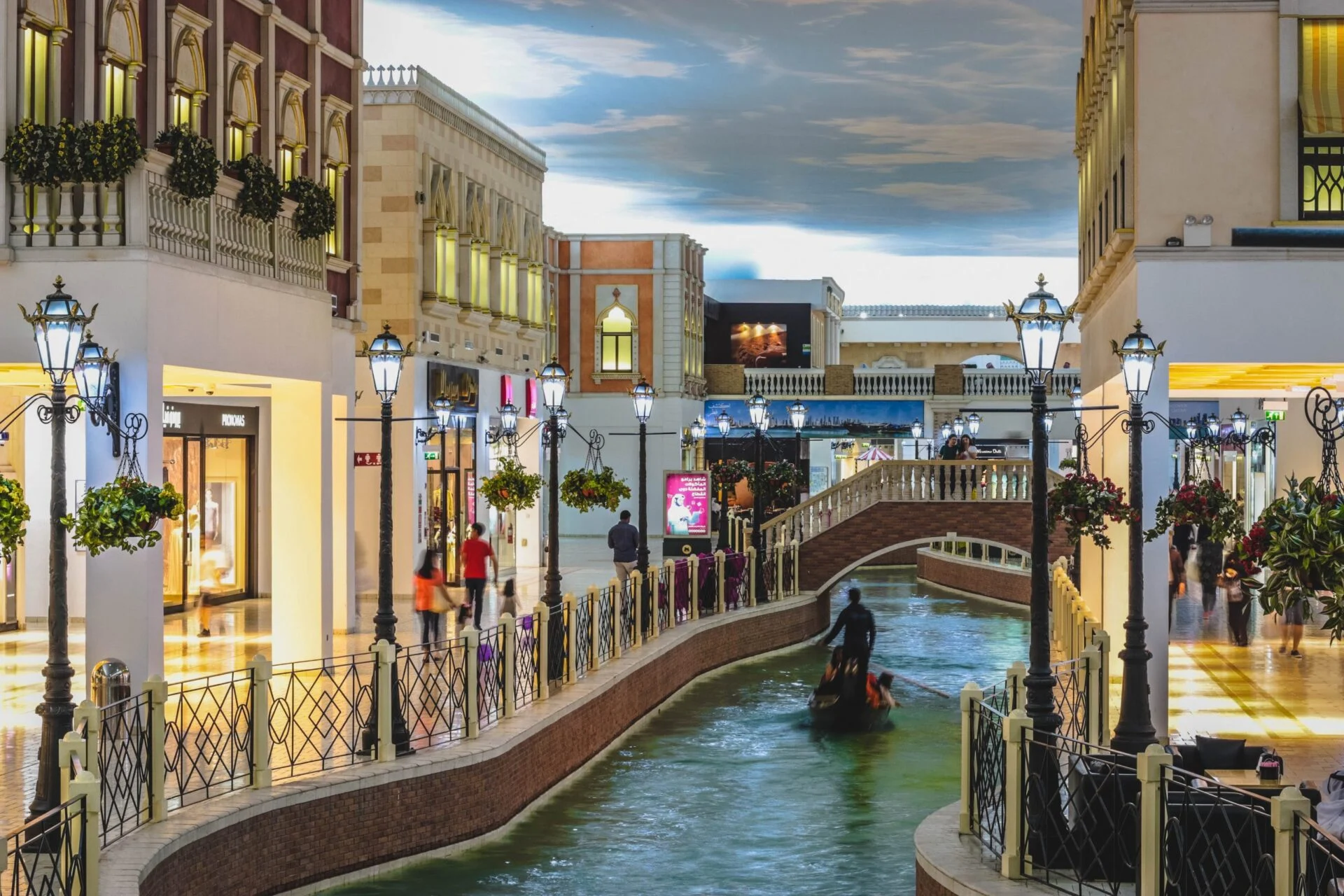
Last week, the Venetian confirmed it has settled a $7.2 million fine related to anti-money laundering (AML) violations with the Nevada Gaming Control Board (NGCB). This issue stems from the casino's dealings with illegal bookmaker Mathew Bowyer, impacting both the current owner Apollo Global Management and the original owner, Las Vegas Sands. The Bowyer scandal marks the conclusion of a challenging final decade for the world's largest casino operator in Las Vegas.
Las Vegas Sands sold the Venetian to Apollo in 2021, officially marking its exit from the Las Vegas market. The company is now concentrating solely on its operations in Macau and Singapore, having abandoned ambitions for expansion in Texas and New York. While Sands is still headquartered in Las Vegas, it has divested its casinos and shuttered its digital operations in the city last year.
Bowyer, who has faced $34 million in combined AML fines from four different Las Vegas operators, has been a patron of the Venetian since its opening in 1999. The primary violations regarding AML occurred between 2019 and 2021 when Sands still owned the Venetian.
The casino failed to confirm the legitimacy of Bowyer's funds starting in 2019 and didn’t impose a formal ban on him until 2024, long after Apollo had acquired the property. Between 2019 and 2021, Bowyer made thirty trips to the Venetian, depositing $22.3 million and losing $3.6 million, according to the NGCB's findings. These revelations add to a series of negative incidents for Sands leading up to the sale of the Venetian.
The NGCB has refrained from commenting on this situation until it is reviewed by the Nevada Gaming Commission. Sands did not respond to a request for comment for this report.
By the time Bowyer returned to the Venetian in 2019, he had risen to prominence as one of the largest illegal bookmakers in the United States, notably associated with Ippei Mizuhara, the former interpreter for MLB star Shohei Ohtani, who misappropriated millions to gamble with Bowyer. An initial report from a Sands host raised concerns about Bowyer’s return, but a subsequent internal review dismissed these worries, allowing Bowyer to continue gambling.
Further investigation revealed that a third-party enhanced due diligence report from 2021 expressed similar concerns, which were overlooked. At that time, Bowyer's Sands host was aware of his bookmaking activities but failed to report them.
This situation is reminiscent of a 2013 case involving Zhenli Ye Gon, a suspected drug trafficker. Gon, extradited to Mexico in 2016, was noted as the largest all-cash gambler at the Venetian-Palazzo during the early 2000s, according to prosecutors. Like Bowyer, Sands did not adequately investigate Gon or his financial resources, neglecting to file sufficient suspicious activity reports (SARs) when he transferred around $45 million and deposited $13 million in cashier's checks at the Venetian between 2005 and 2007. All SARs were submitted only in April 2007, after the fact.
In 2013, Sands forfeited $47.4 million to the U.S. government connected to the Gon case to avoid criminal prosecution. Prosecutors remarked that Sands had made considerable efforts to improve its internal compliance programs, which played a role in the decision not to pursue criminal charges.
In a statement regarding the Gon forfeiture, U.S. Attorney André Birotte Jr. indicated that Sands was facing a genuine risk of federal criminal charges before the firm secured the non-prosecution agreement. Years later, it appears that Sands and its late founder Sheldon Adelson leveraged connections to influence the situation.
Former Nevada Senator Harry Reid reportedly assisted Sands during the Gon case resolution. Emails from journalist Jon Ralston illustrate Reid’s comments, wherein he claimed that the outcome would not have materialized without his involvement. On the day of the forfeiture announcement, Reid's deputy relayed the news to him, to which Reid responded, "Wouldn’t have happened without my help. We will see [if] it was appreciated."
Both Reid and Adelson passed away in 2021.
Another controversy involving Sands and Nevada politics emerged between the Gon and Bowyer scandals. In 2010, former Sands China CEO Steven Jacobs filed a wrongful termination lawsuit against the company, alleging that Adelson had pressured him to exert "leverage" over Chinese government officials.
In 2015, Sands sought the NGCB's support to file an amicus brief in Jacobs' lawsuit. After the NGCB declined, Adam Laxalt, then-attorney general of Nevada, personally approached NGCB chair AG Burnett to advocate for the brief's filing. Burnett secretly recorded the encounter and reported it to federal authorities, triggering a significant political ethics investigation.
Burnett testified in a licensing hearing that pressure was applied on Laxalt concerning the amicus brief, and despite the request, he refused to comply, expressing pride in his decision.
2016 proved to be a costly year for Sands, with significant financial setbacks. During a two-month span, the company:
– Settled the Jacobs lawsuit for over $75 million.
– Paid a $2 million fine to Nevada regulators over issues linked to the Gon case and accounting errors involving a Chinese consultant.
– Submitted an additional $9 million fine to the SEC for errors in its accounting practices, detailing $62 million paid to obfuscate Sands' role in specific business transactions.
Following the SEC fine, Adelson emphasized Sands' commitment to a top-tier compliance program, asserting the company was building on its existing policies.

