
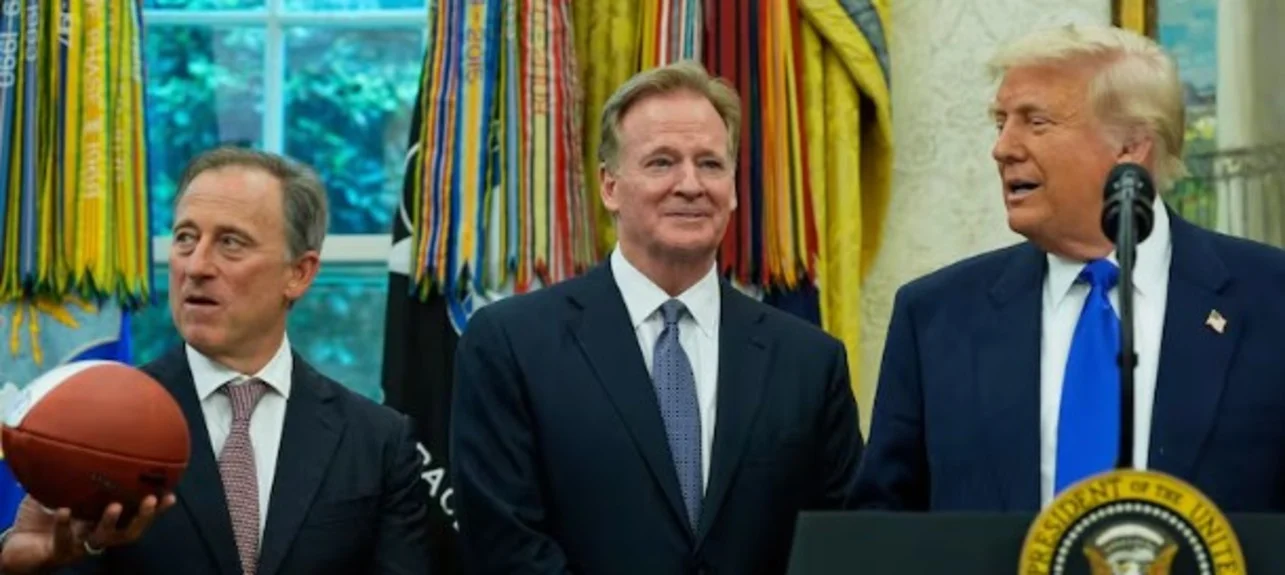
As Super Bowl 60 approaches in February, the NFL's Executive Vice President Jeff Miller has shown some openness toward the increasing use of sports event contracts. In an interview with Front Office Sports, he labeled the asset class as "innovative," but emphasized the need for clearer regulatory guidelines before moving forward. Previously, in December, Miller expressed concerns to the US House Committee on Agriculture, indicating that the league was "particularly troubled" by certain contracts that operated outside the oversight of state regulatory bodies.
Recently, the NFL submitted feedback to the Commodity Futures Trading Commission (CFTC) before the public comment period on proposed regulations regarding sports-event contracts ended on July 27. The CFTC’s draft proposal, which spans 267 pages and was issued in June, seeks to outline clear rules to determine if these contracts might involve illegal activities or contravene public interest.
While the NFL acknowledged some beneficial aspects of the CFTC's proposed guidelines, it asserted that the draft did not do enough to safeguard the integrity of sports and the interests of fans engaging in these markets. The league is calling for bans on micro-bets, player props, and award markets due to their vulnerability to manipulation by individual players. Additionally, it urged the CFTC to implement stronger regulations against insider trading and to create a registry for banned bettors specific to the league.
Surprisingly, the NFL noted its disappointment that previous suggestions regarding integrity and consumer protection measures were not included in the latest document.
In collaboration with the NBA and NCAA, the NFL is also advocating for a minimum age of 21 for participating in trading on these contracts, especially in light of insider trading scandals that all three organizations have faced in recent months.
On another front, the New York Mets achieved a significant milestone by forming a commercial partnership with prediction market operator Novig. The agreement marks the first collaboration between a Major League Baseball (MLB) team and a prediction market exchange. This development follows a unique Memorandum of Understanding (MOU) established between the CFTC and MLB in April, aimed at ensuring the integrity of sports prediction markets.
CFTC Chairman Michael Selig described the MOU as a joint effort to protect baseball-related markets from fraud and manipulation and commended MLB Commissioner Rob Manfred for his proactive stance in maintaining market integrity.
American University professor Matt Bakowicz remarked on this surge in interest toward prediction markets, noting they lie at an intersection of finance, gaming, and fan engagement. This intersectionality makes them appealing to sports franchises, while also attracting the scrutiny of regulators.
The Mets announced their partnership with Novig just a day before New York Governor Kathy Hochul and Attorney General Letitia James filed a significant lawsuit against Kalshi, seeking $36 billion in damages. This lawsuit is part of the state's ongoing battle against prediction markets.
Metropolitan Park, a joint venture involving Mets owner Steve Cohen and Hard Rock International, has faced scrutiny after delays with its $8.1 billion casino project, which will feature an expansive gaming space alongside a retail sportsbook. Observers are questioning whether Cohen's decision to partner with Novig was a strategic move amid these ongoing legal issues.
Bakowicz described Cohen's strategy as pursuing multiple long-term business plans that operate under different regulatory conditions. Despite a challenging season, with the Mets sitting at 47-63 and the second-lowest winning percentage in the National League, the team’s win total projected by Novig stands at 69.5 victories.
Kalshi's situation has sparked a larger conversation about the regulatory landscape. The ongoing feud between James and former President Donald Trump highlights the contentious nature of these developments, particularly given that Trump Jr. is affiliated with Kalshi. CFTC Chairman Selig has defended the integrity of the prediction markets against allegations of conflicts of interest, criticizing the lawsuit as an undesirable action that threatens a burgeoning industry.
The lawsuit claims that Kalshi's sports markets legally constitute gambling due to their uncertain outcomes and lack of control by participants. By not acquiring a New York license, Kalshi allegedly evaded tax requirements imposed on licensed gambling operations, which fund essential public initiatives, including education and gambling treatment programs.
Since launching mobile sports betting in 2022, New York has generated approximately $3.5 billion in tax revenue. In 2022, it led the nation with a sports betting handle of $26.3 billion, a substantial figure compared to Illinois, which had the next highest handle. The rise in sports-event contracts has reportedly cost US states over $1.2 billion in tax revenue.
In related developments, a federal judge in Minnesota issued a preliminary injunction that prevents the state from implementing a nationwide ban on prediction markets, a ruling that supports Kalshi and Polymarket's operational status in the state. However, just days later, Wisconsin courts ruled that state gambling laws could be enforced against Kalshi and other platforms, indicating a mixed regulatory climate across states.

