
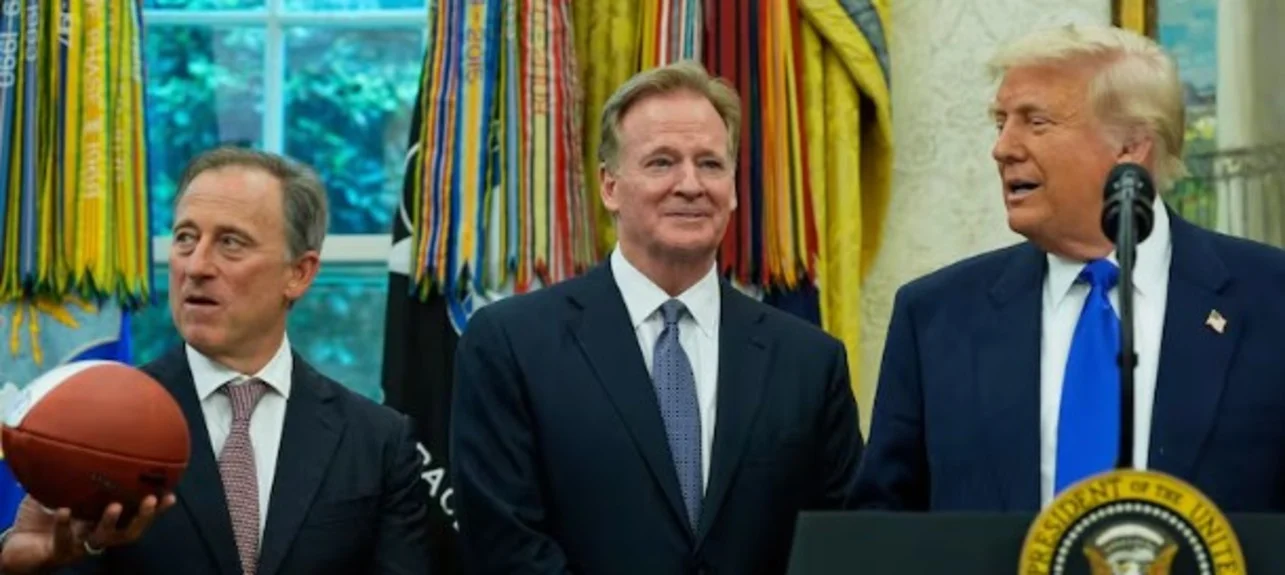
As Super Bowl 60 approaches in February, NFL Executive Vice President Jeff Miller has expressed a cautious optimism regarding the potential of sports event contracts, though he has stopped short of offering a full endorsement. In a recent interview with Front Office Sports, Miller referred to these contracts as "innovative" but emphasized the necessity for clearer regulatory frameworks before the NFL can establish an official stance. In written testimony to the US House Committee on Agriculture last December, Miller articulated the league's concerns, stating they were "particularly troubled" by the fact that certain contracts operated outside the oversight of state regulatory bodies and the protective measures they provide for the industry.
This week, the NFL submitted feedback to the Commodity Futures Trading Commission (CFTC) just ahead of the July 27 deadline for public comments on proposed regulations concerning sports-event contracts. The CFTC's draft rule, released in June, spans 267 pages and outlines guidelines for determining whether these contracts may involve illegal activities or contradict the public interest.
While the NFL acknowledged some constructive elements within the proposed rules, it critiqued them for falling "significantly short" of ensuring the integrity of sports and protecting fans engaged in these markets. The league is advocating for outright prohibitions on micro-bets, player props, and award markets, which they believe are vulnerable to manipulation by individual players. Additionally, the NFL has urged the CFTC to implement stronger regulations to prevent insider trading and to create a registry for bettors prohibited by the league.
“It is surprising that further common-sense integrity and consumer protection measures provided in the prior league comment letter were not adopted,” the NFL noted in its correspondence.
In a unified stance, the NFL, NBA, and NCAA have pushed the CFTC to establish a minimum trading age of 21 for engagement in these contracts, highlighting that all three organizations have encountered insider trading issues in the past year.
In a historic move, the New York Mets announced a collaboration with prediction market operator Novig, marking the first partnership between a Major League Baseball team and a prediction market exchange. This multi-year arrangement comes on the heels of a groundbreaking Memorandum of Understanding (MOU) signed in April between the CFTC and MLB, aimed at protecting the integrity of sports prediction markets. CFTC Chairman Michael Selig remarked that this MOU reflects a cooperative effort to guard against fraud and manipulation in baseball-related markets, praising MLB Commissioner Rob Manfred for his proactive role in these efforts.
American University professor Matt Bakowicz commented on the growing attention toward prediction markets, noting that they lie at the intersection of finance, gaming, and fan engagement. He explained that this attractiveness to teams is matched by the scrutiny they face from regulators, as the sports industry increasingly expands its revenue streams through diverse avenues.
The Mets' announcement coincided with a significant legal development as New York Governor Kathy Hochul and Attorney General Letitia James revealed a sweeping lawsuit against Kalshi, seeking $36 billion in compensatory damages. This lawsuit represents the state’s robust stance against prediction markets.
Despite having recently obtained a casino license for Metropolitan Park, a $8.1 billion venture between Mets owner Steve Cohen and Hard Rock International, the project has encountered construction delays. With a planned gaming area of approximately 286,000 square feet and an 18,000 square-foot sportsbook, questions arise about Cohen's strategic moves, particularly in light of his friendship with Hochul.
Bakowicz refrained from viewing Cohen's actions as contradictory, seeing them instead as part of an owner’s pursuit of diverse long-term business strategies operating within different regulatory frameworks.
Currently, the Mets hold a 47-63 record, boasting one of the worst winning percentages in the National League. Their projected season total at Novig stands at 69.5 victories, a target the team has historically met, only failing to breach 70 wins twice since 1996.
James has had a contentious tenure as attorney general, frequently clashing with former President Donald Trump. Her office conducted a multi-year inquiry into allegations of asset inflation by the Trump Organization, leading to over $400 million in fines. Though a New York appellate court substantiated Trump's liability, it later voided the penalties, deeming them excessive.
Trump's son, Donald Trump Jr., is affiliated with Kalshi and Polymarket. Following the release of a Netflix documentary on prediction markets, Selig dismissed concerns regarding potential conflicts of interest tied to Trump’s family. He recently criticized James and New York in a post on social media, asserting, “Rather than seek reasoned answers from the courts, James and New York seek to force an unprecedented sudden shutdown of prediction markets nationwide.”
Hochul and James's lawsuit claims that Kalshi's sports markets qualify as gambling since their outcomes are uncertain and beyond the control of participants. By not acquiring a New York license, it is alleged that Kalshi has evaded tax obligations that apply to licensed gaming operators. Revenue from such regulation supports public schools and youth sports programs, as highlighted by the attorney general.
Since launching mobile sports betting in 2022, New York has earned approximately $3.5 billion in tax revenue, with last year seeing a total sports betting handle of $26.3 billion, according to the American Gaming Association. Evidence suggests that the rise of sports-event contracts has cost U.S. states over $1.2 billion in tax revenues.
In other developments, a judge in Minnesota granted a preliminary injunction against the state's attempt to impose the first outright ban on prediction markets. This ruling came just days before a new law was set to take effect, allowing Kalshi and Polymarket to continue operations. The decision emphasized that federal law prevails over state statutes concerning specific event contracts.
Meanwhile, in Wisconsin, a judge denied an injunction aimed at halting state enforcement of gambling laws against Kalshi and four other prediction market platforms, forcing them to comply with state regulations. Attorney General Josh Kaul had previously indicated that Wisconsin preferred to halt such platforms rather than pursue financial penalties at this time.

