
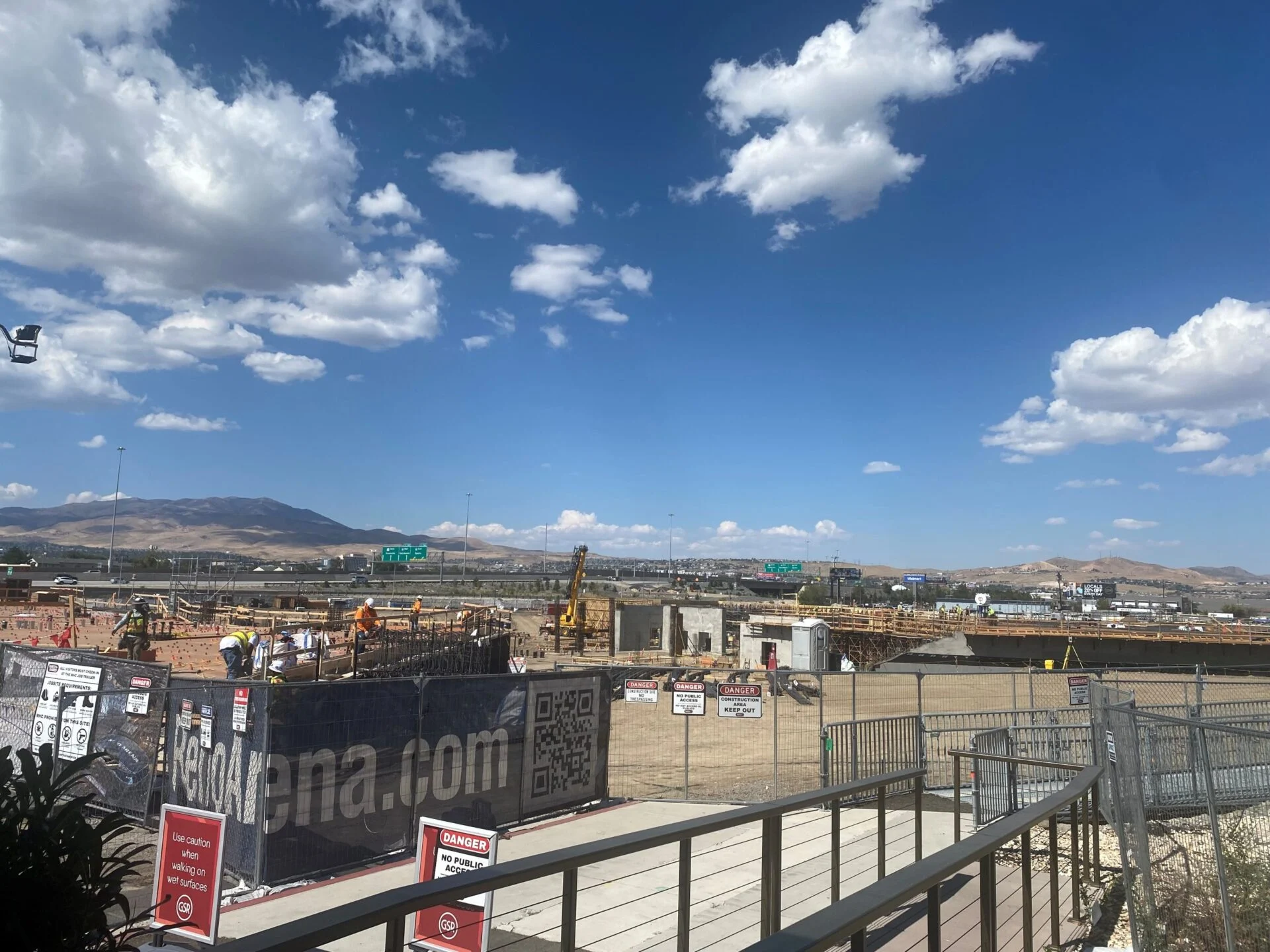
In Reno, about 450 miles north of the bustling Las Vegas Strip, work is steadily advancing on an ambitious project that promises to reshape Nevada's gaming and tourism sectors. The Grand Sierra Resort (GSR), under the ownership of billionaire Alex Meruelo, is in the midst of developing a new 10,000-seat arena—an endeavor that is becoming a reality at a pivotal time for the area.
Three years after the arena's initial announcement, foundation and infrastructure work is underway as the winter season approaches, potentially impacting project timelines. The arena is part of a larger $1 billion expansion plan, which, if completed, will mark the most significant private investment in Reno’s history.
Chris Abraham, GSR’s Chief Marketing Officer, recently shared updates during a site tour with iGB. "There’s a great deal of progress being made, a great deal of work happening, and the garage has just begun," he said. He added, "We’re out of the ground, we have walls, we have foundations; all the underground work is basically done, so now it’s the fun time when we can actually start building up and everyone gets to see."
Originally estimated to cost between $350 and $375 million, the current projection for the arena stands at around $450 to $500 million. Abraham emphasized that Meruelo is "sparing no expense" on the venue, which will host University of Nevada men's basketball games and a variety of other sports and entertainment events. "For a 10,000-seat-plus arena, it’s going to be the very best one of those, maybe in the world," he stated.
The GSR team is drawing inspiration from modern arenas worldwide, such as the Intuit Dome in California and the Moody Center at the University of Texas, while also looking to the Mohegan Sun Arena in Connecticut for operational insights due to its similar capacity and association with a casino.
Professional hockey, a rarity in Reno, is also on the horizon with this new arena. The Reno Aces, the Triple-A affiliate of the Arizona Diamondbacks, have thrived at Greater Nevada Field, but other local professional teams have faced challenges due to venue limitations.
Meruelo previously owned the NHL's Arizona Coyotes, a franchise that struggled and was ultimately sold and rebranded as the Utah Mammoth in 2024 after the NHL lost patience with his search for a long-term arena solution in Arizona. Even though he no longer owns the Coyotes, he retains ownership of their American Hockey League affiliate, the Tucson Roadrunners, whose lease has been extended through the 2027-28 season—timing that may align with the GSR arena's anticipated opening in 2028. Abraham noted that the specifics surrounding the Roadrunners' potential relocation to Reno are still under consideration.
"We expect to have hockey as part of the future of the arena; it’s just a determination right now of what kind of hockey and how does that look," Abraham explained. "We’re probably another six months or so from really getting into the details of that. But I know Mr. Meruelo is looking at a few options and will make a decision soon."
Collaboration with the University of Nevada has been vital to the project from its inception. The partnership emerged from discussions between Meruelo and university President Brian Sandoval, a former governor of Nevada who has a deep connection to the state's gaming landscape, having previously served as chair of the Nevada Gaming Commission. Sandoval’s corporate experience includes a role at MGM Resorts, and he currently chairs the Resorts World Las Vegas board.
Historically, successful Nevada athletic programs have drawn significant attention, particularly during standout seasons such as the 2010 football season with Colin Kaepernick, or the 2018 basketball season with Caleb and Cody Martin. Yet, periods of struggle are common, particularly in the current competitive environment shaped by name, image, and likeness (NIL) dynamics.
The university sees the new arena as an essential tool for recruitment, but Athletic Director Stephanie Rempe emphasized that investing in quality players is the priority. "We’re investing in our basketball program because everybody wants them to be successful now, and also it’s important to the Meruelos, when we go into that venue that we’re winning and attracting people," Rempe stated.
The collaboration between GSR and the university represents a unique scenario, as few college teams play at off-campus facilities. Rempe acknowledged that discussions with other schools about managing off-campus operations have taken place, but she recognizes that this setup may be unprecedented, especially on a privately-owned casino property.
The interaction between sports betting and college athletics has been complex, with college athletes facing negative attention from bettors, prompting the NCAA to call for stringent regulations. Sports event contracts on prediction markets are prohibited in Nevada, but wagering on in-state collegiate teams has been legal since 2001, meaning the university will soon compete in proximity to betting venues.
"You’re always concerned about it, and you need to make sure you put things in place and educate your student-athletes," Rempe remarked. "So you have to be conscious of that and be responsible."
Abraham highlighted that GSR has long welcomed visitors of all ages. Hosting University of Nevada athletics is a natural extension of their ongoing community engagement. "We’ll do whatever the university requests to ensure we’re providing a really welcoming environment to everybody," he said.
Meruelo’s significant investment is proving timely for Reno, which reported $825 million in gross gaming revenue for the fiscal year ending in July, marking a notable 7% year-over-year increase. Reno has continued to build upon this momentum, with August’s gross gaming revenue hitting $79 million—an impressive 15% rise compared to last year. The city has set monthly hotel room revenue records for every month from January to June this year, with August also achieving a historic high for any month.
"We’re proud of these results, but our work is focused on what comes next," remarked Mike Larragueta, president and CEO of Visit Reno Tahoe, highlighting the organization's intention to sustain Reno's appeal throughout the year and to engage new audiences.
Abraham, who has witnessed the city's revival since returning in 2014, remarked about the exciting developments at the construction site. "As you can clearly see, it is happening. It is definitely happening," he stated, gesturing to the activity around him. "There are a couple hundred people right now as we speak out there building what is going to be just a wonderful experience for the entire city. So we couldn’t be more excited about that.

