
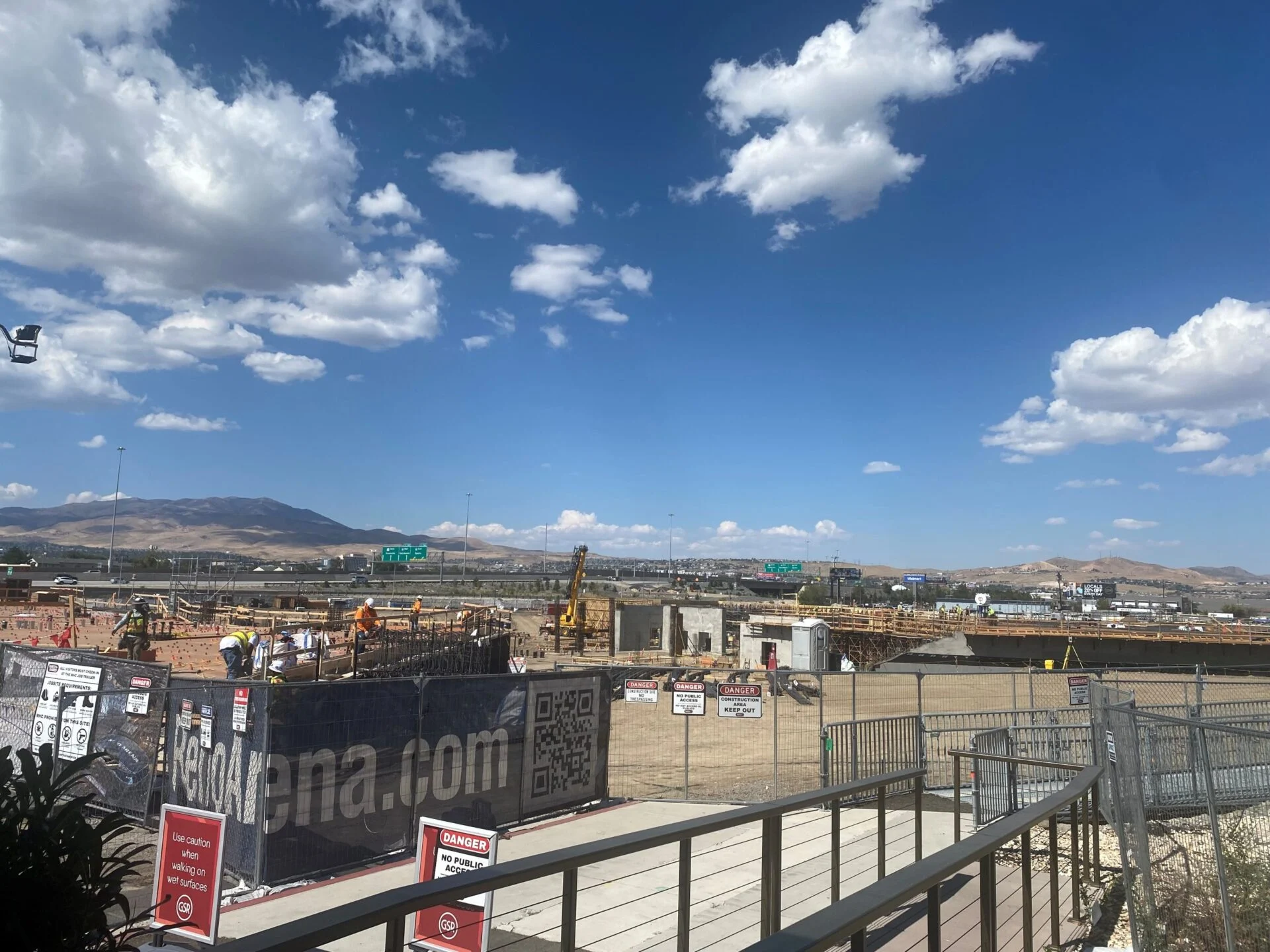
In Reno, about 450 miles north of the vibrant Las Vegas Strip, construction is advancing on a potentially transformative project for Nevada's gaming and tourism sectors. The Grand Sierra Resort (GSR) is developing a 10,000-seat arena under the ownership of billionaire Alex Meruelo, who has a history of ambitious plans for the site. This arena project comes at a crucial moment for the region, promising significant changes to the local market.
Since the announcement of the project three years ago, foundation work is ongoing as the winter season approaches, which may impede progress depending on conditions. This arena is part of a comprehensive $1 billion multi-phase expansion plan that, if fully realized, represents the largest private investment in Reno's history.
Chris Abraham, GSR's Chief Marketing Officer, expressed optimism during a recent site tour, stating, "There’s a great deal of progress being made… the arena, we’re out of the ground, we have walls, we have foundations, all the underground work is basically done, so now it’s the fun time when we can actually start building up and everyone gets to see."
Initial cost estimates for the arena hovered around $350 to $375 million, but Abraham revealed that the figure may instead be between $450 and $500 million, as Meruelo prioritizes high-quality construction. "For a 10,000-seat-plus arena, it’s going to be the very best one of those, maybe in the world," Abraham stated.
The design plans draw inspiration from various state-of-the-art venues, including California's Intuit Dome and the Moody Center in Texas. Additionally, the Mohegan Sun Arena in Connecticut is shaping operational strategies due to its similar capacity and casino connection, despite being over 20 years old.
The arena's potential to host professional hockey is significant, especially given that Reno has seen limited hockey activity in its past. The GSR has associated local successes, particularly with the Reno Aces, the Triple-A affiliate of the Arizona Diamondbacks, while other professional sports entities have struggled locally.
Meruelo's past ownership of the NHL's Arizona Coyotes, which he sold and rebranded as the Utah Mammoth in 2024 after being unable to secure a long-term arena solution in Arizona, is noteworthy. Although he kept the Coyotes' AHL affiliate, the Tucson Roadrunners, which just extended its lease through the 2027-28 season, neither the timeline for the GSR arena's opening nor the Roadrunners' future location has been finalized.
Abraham commented on the future of hockey at the arena, indicating ongoing discussions on its format. "We expect to have hockey as part of the future of the arena; it’s just a determination right now… Mr. Meruelo is looking at a few options and will make a decision soon."
Collaboration with the University of Nevada has played a vital role in the project's development. Meruelo formed a partnership with university president Brian Sandoval, whose gaming industry experience includes previous roles as chair of the Nevada Gaming Commission and a corporate position at MGM Resorts.
The university anticipates that the new arena will assist in recruitment efforts, a necessity in the competitive name, image, and likeness (NIL) landscape. Nevada Athletic Director Stephanie Rempe explained, "We’re investing in our basketball program because everybody wants them to be successful now, and also it’s important to the Meruelos… when we go into that venue that we’re winning and attracting people and people are buying tickets and it’s a great experience."
The unique nature of this partnership—the university's teams playing off-campus at a privately owned casino property—has raised eyebrows. Examples of off-campus arrangements are rare, with UNLV football being an exception. Rempe acknowledges the potential challenges in managing such a setup.
The interplay between sports betting and college athletics also presents concerns. While wagering on in-state colleges has been legalized since 2001, contracts involving sports events on prediction markets remain banned in Nevada. The university intends to educate student athletes about the complexities of gambling connected to their games. Rempe stated, "You’re always concerned about it… we need to make sure we put things in place and educate your student athletes."
From GSR's perspective, Abraham highlights the local community's ongoing engagement with the property since its inception, viewing the hosting of university athletics as an extension of their long-standing practices. "Hosting Nevada athletics is really nothing different than what we’ve been doing al along," he said.
Meruelo's investment comes at a time when Reno is experiencing significant growth. According to the Nevada Gaming Control Board, the city reported $825 million in gross gaming revenue for the last fiscal year, marking a 7% increase year-over-year. This positive trend has continued, with August 2023 showing a 15% increase in GGR compared to the previous year.
Records for hotel room revenues were broken each month from January to June this year, and visitor numbers surged 14%, setting new monthly highs in January, April, and May. Mike Larragueta, president and CEO of Visit Reno Tahoe, expressed ambitions for sustained growth. "We want to continue creating demand for Reno Tahoe throughout the year, reaching new audiences… strengthening the destination in ways that create lasting value for our community."
Abraham, who has witnessed Reno's revitalization firsthand since returning in 2014, affirmed the arena's progress. "As you can clearly see, it is happening. It is definitely happening," he remarked while showing the construction site, pleased with the current workforce of hundreds. "We couldn’t be more excited about that."

