
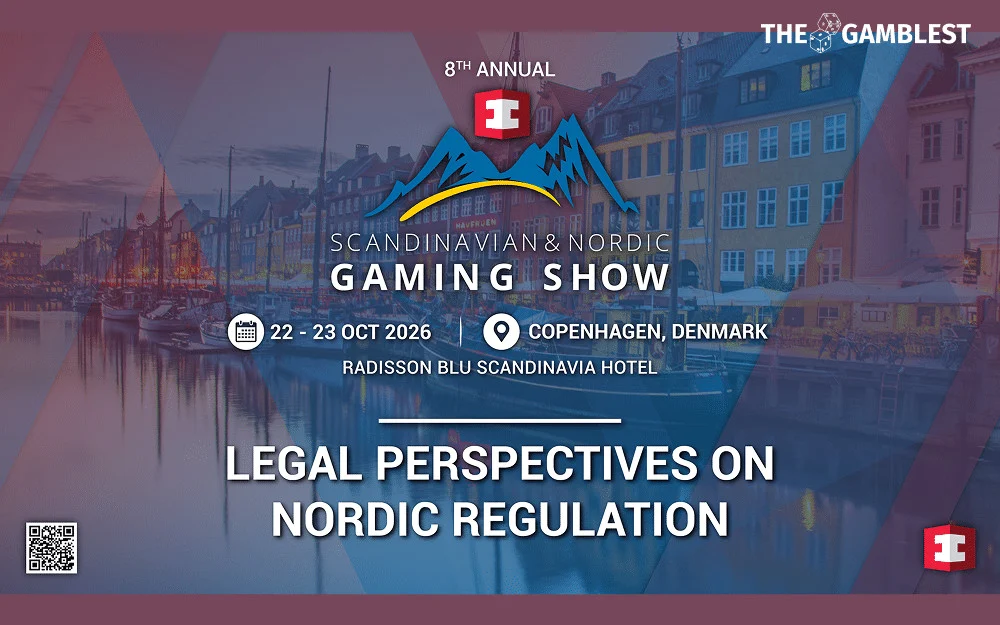
Only two weeks are left until the 8th annual Scandinavian & Nordic Gaming Show (SNGS) 2026, set to take place on October 22-23 at the Radisson Blu Scandinavia Hotel in Copenhagen, Denmark. This year's event occurs amidst significant changes in regulatory frameworks and enforcement strategies throughout the Nordic gaming market, sparking a number of crucial discussions among operators, suppliers, and businesses in the region.
Finland is transitioning to a new licensing structure, while Sweden is adopting a stricter regulatory approach and Norway is enhancing its enforcement measures. The SNGS 2026 provides a platform for dialogue among regulators, operators, technology providers, and investors to explore how these regulatory changes impact market access, commercial strategies, and daily operations.
### Key Discussion Topics
Industry leaders will cover important regulatory and commercial topics affecting Denmark, Sweden, Norway, Finland, and Iceland during the event.
**Day 1 | Thursday, October 22**
– Gambling in Denmark from a Regulatory Perspective
– Europe’s Gaming Leaders: Who Is Really on Top?
– Sweden and Denmark: Two Neighbours, Two Regulatory Paths
**Day 2 | Friday, October 23**
– The Lottery Landscape and the Monopoly Debate
– Winning Early in Finland’s New Regime
– The Nordic Vision: From Channelisation Gaps to Global Leadership
### Insights from Legal Experts
Ahead of SNGS 2026, various legal experts have shared their insights on the regulatory landscape in the region.
**Gabriel Danyeli**, a lawyer from Taylor Wessing, emphasized the factors that make a European gaming market appealing to operators. He noted that a market is particularly attractive when it offers clear licensing requirements, fair tax conditions, and effective supervision. Though the Nordic countries differ in their regulatory approaches, he acknowledged that Denmark and Sweden have relatively clear, license-based frameworks, whereas Norway and Finland have historically maintained more restrictive systems. Gabriel pointed out that while strong enforcement against unlicensed operators can boost channelisation, overly restrictive systems might push players to the black market. A balanced approach combining effective enforcement and competitive regulation is vital.
**Pia Ek**, an attorney at Bird & Bird, elaborated on how different market structures have influenced player-flow and channelisation in the Nordic region. She argued that historical decisions regarding competitive licensing, with Sweden and Denmark embracing it while Finland and Norway upheld state monopolies, have led to disparities. Pia noted that Finland's reform documents indicated an erosion of the relevance of its exclusive system due to the rise of online gambling. She recommended that both player protection and channelisation should be prioritized, suggesting that regulatory measures should be flexible enough to meet commercial needs without compromising player safety.
**Morten Ronde**, managing partner at Nordic Legal, discussed the evolution of responsible gaming, identifying a shift towards proactive measures. He highlighted the significance of using behavioural data effectively and fostering collaboration among operators to enhance responsible gaming outcomes. Morten emphasized that maintaining an attractive regulated market is crucial for deterring players from the black market. He advocated for regulations that balance consumer protection with competitive offerings to ensure channelisation becomes a cornerstone of strategy.
Platforms like SNGS are pivotal for the industry, according to Morten, as they enable stakeholders to tackle complex regulatory and commercial challenges through open dialogue. The interconnectedness of the Nordic region makes such discussions critically important.
### SNGS Eventus Awards 2026
The SNGS Eventus Awards 2026 will take place on the evening of October 22, honoring significant contributions to the Nordic gaming industry. Nominations are open until Friday, October 9, 2026, with nominees announced on October 14, 2026.

