
In July, Spain captain Rodri raised the FIFA World Cup trophy at MetLife Stadium in New Jersey, marking a glorious victory for the team, which defeated its toughest competitors to reclaim the title. The tournament spanned five weeks and featured eight matches, culminating in Spain’s second World Cup triumph.
As Spain celebrated, Kambi also had reason to reflect on a notable accomplishment. The sports betting technology provider achieved a landmark by conducting its first World Cup entirely powered by AI.
Over the course of 104 matches and more than 100 million bets, Kambi’s AI system managed every part of the pricing process—from data collection and market creation to liability management and bet settlement. Throughout the tournament, the platform reported zero downtime, delivered an operator trading margin of 18%, and processed over one million unique bet combinations during the final alone.
Kambi ambitiously aimed to run the entire tournament utilizing AI. Once Spain secured the trophy, the company demonstrated that automated trading could handle the scale and intensity of the world’s largest betting event while enhancing the service to operators and their customers.
“The FIFA World Cup attracts global attention in a way that no other sporting event can, and it was the best stress test of the technology we could have asked for,” said Oliver Lamb, Kambi’s Senior Vice President of Trading.
Kambi transitioned from machine-assisted trading to fully AI-driven operations following its initial investment in AI in 2021. The technology was employed on a large scale during the Qatar 2022 tournament and fully integrated into trading operations by 2024. By the upcoming 2026 tournament, this technology had already been tested in several high-profile competitions, including the Premier League and Champions League, with AI managing over 70% of bets across Kambi’s network, particularly in football and tennis.
“The development we’ve undergone represents a shift from machine-assisted human trading to human-assisted machine trading,” Lamb stated.
With this shift, traders can focus their expertise on areas that require human judgment, such as product development, rather than on pricing established markets. AI alleviates the limitations on offerings and complexity, leading to improved efficiency for Kambi and a better service for partners and customers alike.
“Until now, sportsbook product creation has primarily depended on a trading department’s ability to effectively price and manage risks,” Lamb noted. “AI trading eliminates those constraints, allowing existing human expertise to be utilized more effectively.”
The 2026 World Cup illustrated Kambi’s conviction regarding the need for comprehensive AI integration. Sportsbooks are evolving beyond traditional match results and pre-match markets. Bettors increasingly want to create wagers surrounding specific players and game moments.
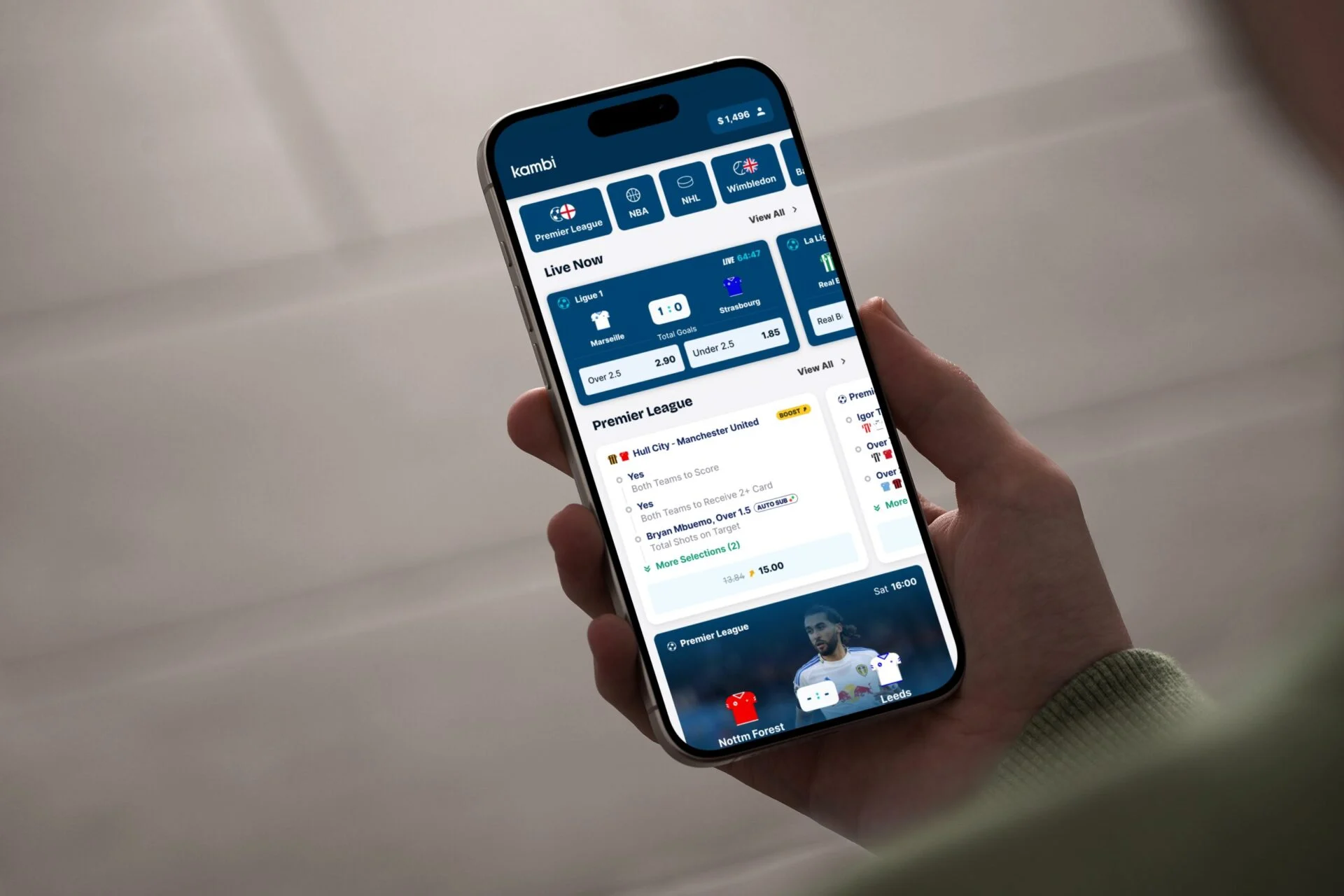
Compared to the 2022 tournament, the number of Bet Builder bets for the 2026 World Cup doubled, with a significant rise in in-play bets, which saw a sevenfold increase. Bet Builders comprised 22% of all live bets, a stark improvement over the mere 3% seen four years earlier.
Player propositions featured in 65% of Bet Builders, up from 25% in 2022. Kambi also saw player shots on target become its second-largest pre-match betting category by turnover, alongside popular choices such as players to score or assist.
“Customers are looking for personalized experiences, including extensive player proposition bets and the ability to create highly tailored wagers in real time,” stated Lamb. “Meeting these modern expectations through manual trading is no longer feasible at scale.”
AI has also enabled Kambi to minimize delays when customers select in-play bets. Its dynamic live delay technology customizes live delays at the individual bet level, which enhances user experience and minimizes friction. Between August 2025 and July 2026, Kambi reduced live betting delay by over 40% during both the Premier League and World Cup.
These advancements brought customers more choices, shorter suspension periods, and quicker bet acceptance. For operators, these improvements support customer retention and profitability.
Despite preparatory simulations, Kambi could not fully predict how its performance would stack up against competitors once the World Cup commenced. Independent analysis by Bettormetrics indicated that Kambi partners led or matched competitors in metrics like time to market, live uptime, and bet delay, outperforming rivals in World Cup markets including totals on goals.
“All the testing in the world cannot guarantee where you stand against the competition on crucial product aspects,” said Lamb. “It was encouraging to see Kambi emerge as a leader in these essential metrics.”
Bets placed outside the match-winner market constituted 63% of pre-match turnover, up from 57% in 2022, highlighting the growing importance of diversification in betting options.
Post-tournament, Kambi aims to introduce more shots-on-target options before games and additional automated intervals in-play, generating further opportunities as matches progress.
“Allowing bettors to personalize their wagers around the players and moments that matter most is a significant takeaway from the tournament, informing Kambi’s development of advanced sports betting products,” Lamb explained.
Looking ahead, Kambi plans to extend AI trading to additional sports, including basketball, ice hockey, and American football. The long-term vision focuses not just on automating current processes but on using technology to develop previously unattainable products at scale.
The objective is to establish an on-demand sportsbook that delivers the right bet to the right customer at the right time. According to Lamb, Kambi’s network of over 70 partners contributes to this goal, leveraging more than €17 billion in annual liquidity alongside billions of bets each year to enhance pricing, risk management, and product creation.
“The term AI is ubiquitous in technology, with its influence palpable in the betting and gaming industry as well,” noted Lamb. “Transforming AI from a buzzword into a fully operational system that maximizes its potential and produces positive outcomes is a challenge across all industries.”
For Kambi, effectively combining data with the insight of skilled traders is crucial in directing technology, evaluating its performance, and pinpointing future value-adding opportunities.
“You won’t struggle to find companies in this industry touting the benefits of AI,” Lamb concluded. “Capitalizing on those benefits requires a blend of extensive data and human expertise that not every entity possesses, with no shortcuts to acquisition.”
The World Cup affirmed Kambi’s AI capabilities under extreme conditions, and the next step is to convert that successful performance into innovative, demand-driven experiences for partners and their clients.

