
In July, when Spain's captain Rodri lifted the FIFA World Cup trophy at MetLife Stadium in New Jersey, the nation celebrated the team's remarkable journey back to the pinnacle of football. Over five weeks and eight matches, Spain emerged victorious, defeating formidable opponents to secure the trophy for a second time.
As Spain reveled in its triumph, Kambi reflected on a notable accomplishment of its own during the tournament: it marked the company's first World Cup completely managed by artificial intelligence.
Throughout the competition, which included 104 matches and over 100 million bets placed, AI was responsible for every aspect of the pricing lifecycle—from data ingestion and offering creation to liability management and bet settlement. Kambi reported zero downtime and achieved an operator trading margin of 18%. During the final match alone, over one million unique betting combinations were processed.
Kambi aimed to implement AI throughout the entire tournament, and by the end, the company had compelling evidence of the technology's ability to handle the demands of sports' largest betting event while enhancing the experience for operators and their clients.
Oliver Lamb, Kambi's SVP of Trading, stated, "The FIFA World Cup draws global attention in a way that no other sporting event can, and it was the best stress test of the technology we could have asked for. We also delivered a nearly limitless range of bet combinations, offered more rapidly and seamlessly than ever before."
Kambi's journey towards the 2026 World Cup started with its investment in AI trading technology in 2021, with significant advancements made during Qatar 2022. By 2024, this technology was fully integrated into Kambi's trading operations.
By the time of the 2026 tournament, AI had been tested across multiple high-profile competitions, such as the Premier League and Champions League. Now, it accounts for over 70% of Kambi's betting activities, especially across football and tennis.
Lamb clarified, "In simple terms, what we have undertaken is a shift from machine-assisted human trading to human-assisted machine trading." This transformation allows traders to leverage their expertise for high-value tasks instead of focusing on pricing established markets, resulting in increased efficiency for Kambi and better service for its partners and their customers.
As Kambi observed the tournament unfold, it recognized an essential shift in betting demands: bettors now prefer to create wagers based on individual player performances and specific moments in games rather than just traditional match outcomes.
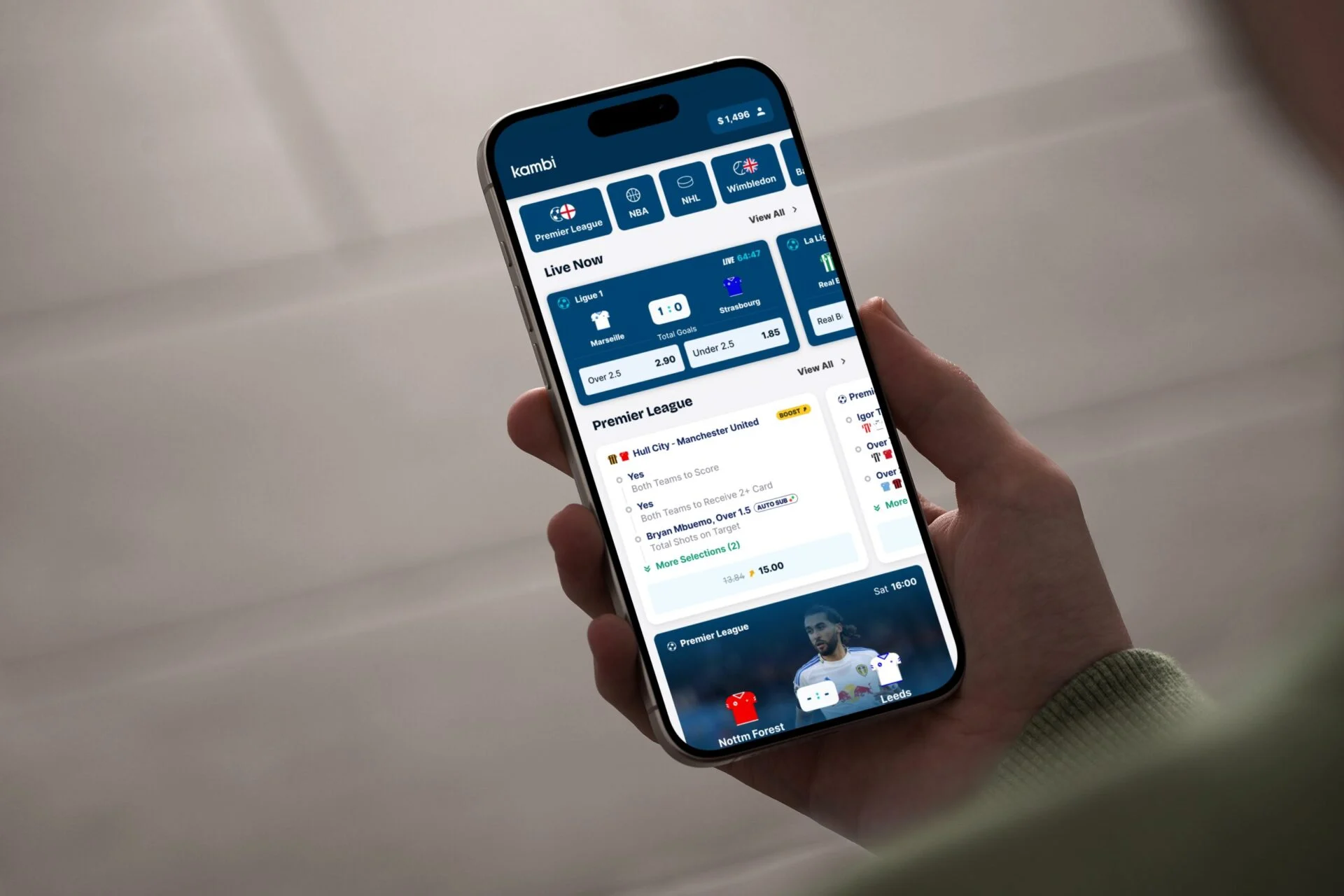
The 2026 World Cup saw a twofold increase in Bet Builder bets compared to the previous tournament, with a particular surge in in-play wagering, where live Bet Builders increased sevenfold. These accounted for 22% of all live bets, a substantial jump from just 3% in 2022.
Player propositions made up 65% of Bet Builders, climbing from 25% in 2022. Notably, player shots on target emerged as Kambi's second-largest pre-match betting option by turnover, alongside other popular selections like predicting a player to score or assist.
"Customers seek personalized experiences, extensive player proposition bets, and the ability to build highly customized wagers in real-time," Lamb noted. He added that meeting these modern expectations through manual trading is no longer feasible at scale.
AI also mitigated delays between when a customer selected an in-play bet and when it could be placed. Kambi's dynamic live delay technology allows for customized live delays for individual bets, optimizing user experience and reducing friction. Between August 2025 and July 2026, live betting delays were cut by more than 40% in both the Premier League and World Cup.
These enhancements resulted in more options for customers, shorter betting suspension periods, and faster bet acceptance rates. For operators, these improvements are pivotal for both customer retention and profitability.
After the World Cup, Kambi is now focused on expanding its offerings to include more shots-on-target bets ahead of matches and introducing additional automated betting intervals during games, further enriching betting opportunities.
Lamb shared that a significant takeaway from the tournament was the need to provide bettors with more ways to customize their wagers around the players and moments that matter to them. This insight continues to guide Kambi's development of innovative sports betting products.
Looking ahead, Kambi is implementing AI trading across other sports, including basketball, ice hockey, and American football. The goal extends beyond automating current processes to leveraging technology to create products that could previously not be delivered on such a scale.
Kambi aims to cultivate an on-demand sportsbook capable of delivering the right bet to the right customer at the right moment, and Lamb believes the company's extensive network of over 70 partners offers a significant edge in achieving this goal. With more than €17 billion in annual liquidity and billions of bets annually, Kambi's data-driven approach enhances pricing, risk management, and product development.
Lamb pointed out, "The term AI is everywhere across the world of technology, and the betting and gaming industry is just one where its impact is becoming evident. Realizing its benefits requires a blend of deep data and human expertise."
The FIFA World Cup illustrated Kambi's AI capabilities under significant pressure, paving the way for new on-demand experiences for its partners and their customers.

