
When Spain's captain Rodri raised the FIFA World Cup trophy at MetLife Stadium in New Jersey last July, it marked a moment of national pride as Spain celebrated its return to the pinnacle of global football. Over five weeks and eight matches, Spain demonstrated its superiority by defeating formidable rivals to secure the trophy for a second time.
As Spain reveled in its victory, the sports betting technology company Kambi reflected on an achievement of its own: the successful execution of its first fully AI-powered World Cup. During the tournament, AI managed the entire pricing lifecycle for 104 matches, processing over 100 million bets. This included everything from data ingestion to managing liabilities and settling bets. Remarkably, the platform experienced no downtime and achieved an operator trading margin of 18%, processing over one million unique bet combinations during the final alone.
Kambi had established the ambitious goal of running the tournament entirely through AI, and by the time Spain lifted the trophy, it had demonstrated that automated trading could effectively handle the demanding scope of the world’s largest betting event, enhancing the experience for both operators and their customers.
Oliver Lamb, Kambi’s Senior Vice President of Trading, stated, "The FIFA World Cup draws global attention in a way that no other sporting event can, and it was the best stress test of the technology we could have asked for. We also delivered a nigh-on limitless range of bet combinations, delivered in a more rapid and seamless manner than we have been able to before."
Kambi's journey to the 2026 World Cup began with its investment in AI trading technology back in 2021. The system was utilized extensively during the Qatar 2022 tournament and fully integrated into trading operations by 2024. By the time of the 2026 World Cup, the technology had already been trialed across numerous high-level competitions, with AI handling more than 70% of bets in Kambi's network, covering all football and tennis.
Lamb described the shift as moving from machine-assisted human trading to human-assisted machine trading. This transition allows traders to focus on leveraging human expertise where it matters most, such as in product development and testing, rather than simply pricing and managing established markets. AI alleviates practical limitations on offerings and pricing, leading to increased efficiency for Kambi and improved services for its partners and their customers.
Lamb explained, "To this point, sportsbook product creation has largely been guided by a trading department's ability to profitably price and risk-manage certain bet offers. AI trading lifts those limitations, while also enabling that existing human expertise to be leveraged more effectively."
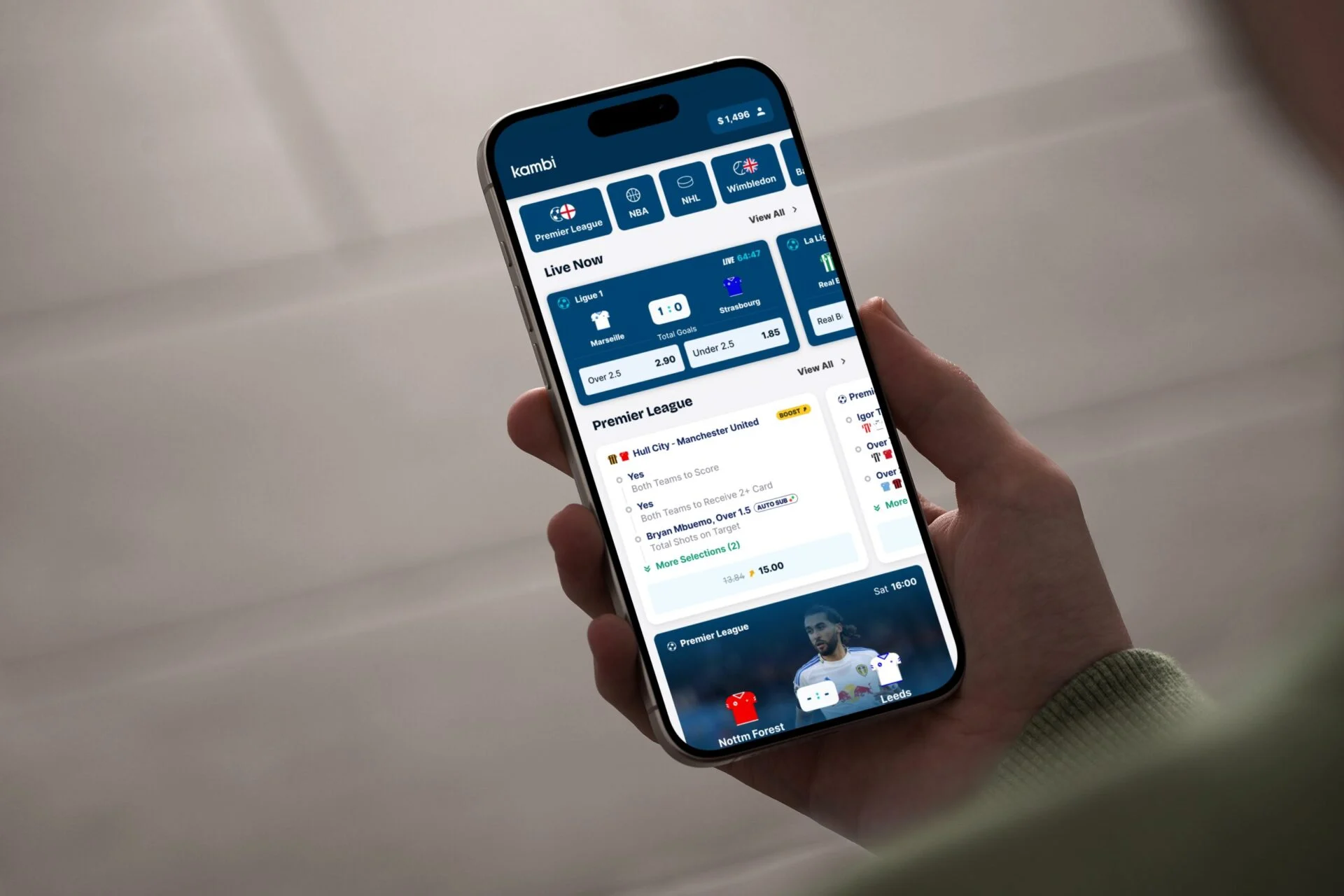
The 2026 tournament illustrated Kambi's belief in the necessity of complete AI integration. Modern sportsbooks are evolving beyond traditional match results, with bettors increasingly looking to construct wagers around individual players and specific moments in games. Bet Builder bets during the 2026 World Cup doubled compared to 2022, with a notable surge in in-play betting, as live Bet Builders surged sevenfold compared to four years earlier. These bets represented 22% of all live bets, compared to just 3% in 2022.
Player propositions comprised 65% of Bet Builders, up from 25% in 2022. Notably, bets on player shots on target became Kambi's second-largest pre-match betting offer by turnover, alongside other popular options like selecting a player to score or assist.
Lamb noted, "Customers seek personalised experiences, extensive player proposition bets and the ability to build highly customised wagers in real time. Meeting these modern expectations through manual trading is no longer realistic at scale."
AI technology also helped Kambi reduce the delay for customers between selecting an in-play bet and being able to place it. The company’s dynamic live delay technology allows for custom live delays on an individual bet level, improving user experience and reducing friction. Kambi successfully cut live betting delays by more than 40% across the Premier League and World Cup between August 2025 and July 2026, resulting in more options, shorter suspension periods, and faster bet acceptance for customers. For operators, these enhancements support both customer retention and profitability.
Although Kambi prepared through simulations and validation exercises for the operational demands of the 2026 World Cup, actual performance against the wider market during the matches was still uncertain. An independent analysis by Bettormetrics found that Kambi’s partners either led or shared the lead in critical areas including time to market, live uptime, and bet delay. Kambi outperformed both B2C and B2B competitors on live uptime for World Cup markets, particularly in over/under total goals.
Lamb remarked, "All the testing in the world cannot tell you precisely where you stand against the rest of the market on key aspects of the product. It was very positive to see Kambi as a leader in these key metrics."
The way customers interacted with the offerings provided further insights. Bets outside of the match-winner market constituted 63% of pre-match turnover, compared to 57% in 2022, underscoring the growing demand for depth beyond conventional markets.
Post-tournament, Kambi aims to enhance options for shots-on-target before matches and add automated in-play intervals to create more betting opportunities as games progress. "Giving bettors more ways to personalise their wagers around the players and moments they care about was a big takeaway from the tournament and one which continues to inform Kambi’s development of cutting-edge sports betting products," Lamb added.
Kambi is now extending AI trading to other sports such as basketball, ice hockey, and American football. Their long-term vision exceeds merely automating existing processes; it involves using technology to develop products that were previously impossible to deliver at scale. The goal is an on-demand sportsbook designed to offer the right bet to the right customer at the right time.
Lamb believes that Kambi’s network of over 70 partners offers a strategic advantage in achieving this ambition. The platform processes more than €17 billion in annual liquidity and billions of bets each year, providing valuable data that can enhance pricing, risk management, and product development.
"The term AI is everywhere across the world of technology, and the betting and gaming industry is just one where its impact is being felt," Lamb stated. "The challenge lies in taking AI beyond being a buzzword, building, and deploying the systems needed to maximize its potential and deliver the intended results."
For Kambi, the synergy between data and human expertise is crucial. Experienced traders are essential for guiding the technology, evaluating its outcomes, and determining its next areas for improvement.
“The benefits of AI are often discussed in the industry,” Lamb concluded. “However, realizing them requires a combination of extensive data and human expertise that not everyone possesses, and there are no shortcuts to obtaining it.”
The World Cup demonstrated that Kambi’s AI can thrive under extreme pressure. The next challenge is transforming this tournament success into innovative, on-demand experiences for partners and their customers.

