
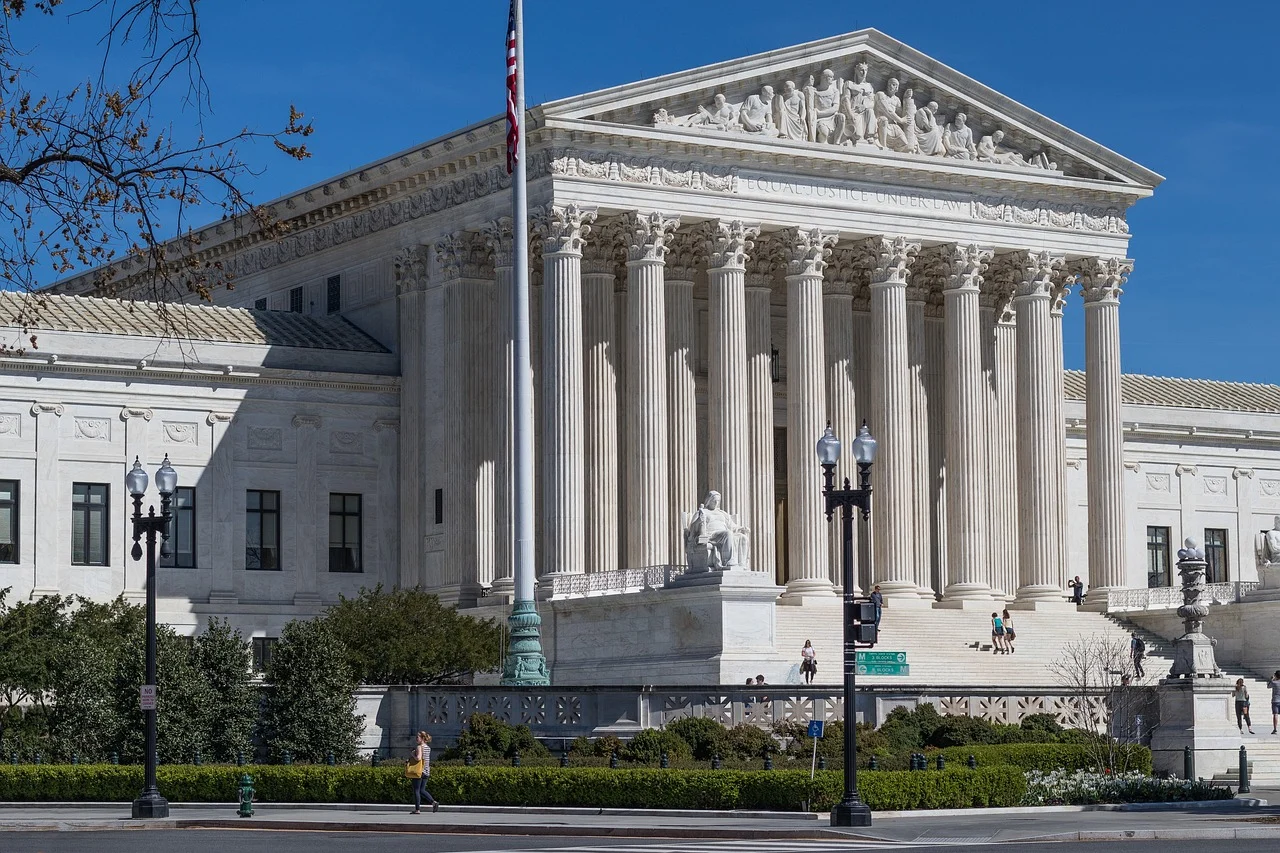
In the wake of the sudden death of Supreme Court Chief Justice Antonin Scalia in 2016, the dynamics of federal judicial appointments took a sharp turn. This pivotal event resulted in an intense political standoff, particularly evident when then-Senate Majority Leader Mitch McConnell blocked the nomination of Merrick Garland to fill Scalia's seat. Garland, an appellate judge, saw his nomination linger for 293 days, marking the longest delay in U.S. history, which ultimately allowed President Donald Trump to appoint Neil Gorsuch the following January.
Following the Democratic victories in both chambers of Congress during Tuesday's elections, Senate Democrats seem hesitant to move past the controversial Garland episode. Currently, fierce political battles concerning potential replacements for Justices Samuel Alito and Clarence Thomas could significantly impact the future of sports event contracts in the United States.
On Election Night, prediction market traders estimated a 90% chance of Democratic success. In response, Florida Governor Ron DeSantis tweeted ominously, stating that the prospects of confirming a suitable successor to Justices Alito and Thomas during Trump's presidency were virtually nonexistent.
Justice Clarence Thomas, nominated by former President George H.W. Bush just before the Professional and Amateur Sports Protection Act (PASPA) was enacted in 1992, has served on the Supreme Court for over three decades. A major case concerning federal jurisdiction over sports event contracts might be presented to the Court as soon as next year, making any potential gridlock in appointing a new Justice particularly consequential for the case’s proceedings.
Discussing the potential for future Court appointments, Alito was appointed by George W. Bush in 2005, filling Sandra Day O’Connor's seat. Alito and Thomas have received acclaim from Trump for their rulings in several significant cases, including those related to tariffs.
Under Trump's administration, prediction markets have surged this year, achieving notional volumes surpassing $185 billion in the third quarter alone. Election-related market activity reached at least $1.4 billion, significantly outperforming non-presidential election volumes anticipated for 2024. Trump nominated Michael Selig as chairman of the U.S. Commodity Futures Trading Commission (CFTC), which oversees derivatives.
Despite facing scrutiny from regulators concerning states' rights, Selig has consistently maintained that the CFTC holds exclusive regulatory authority over sports derivatives. Critics have also raised concerns regarding perceived nepotism related to Trump’s family connections, particularly as Donald Trump Jr. sits on the boards of Kalshi and Polymarket. Selig has denied any accusations that family business interests influence CFTC regulations.
As the fallout from the midterm elections continues, the future makeup of the Supreme Court prior to the 2028 presidential election remains uncertain. One possible scenario involves pressure from the White House on Justices Alito and Thomas to retire before the next election. If this occurs, it presents a chance for Trump to nominate a successor sharing the same conservative ideology, though DeSantis emphasizes that such a move might encounter strong resistance from Congressional Democrats, creating uncertainty around judicial outcomes.
Former New Jersey Governor Chris Christie expressed satisfaction with the Court's stance on states' rights during an interview in February, well before the elections.
On Polymarket’s platform, a contract allows for speculation on whether the Court will choose to hear a case concerning the legality of sports-event contracts by the end of this year. The Supreme Court grants a petition for a writ of certiorari to agree to hear a case, typically favoring issues of substantial significance, especially when there’s a circuit split on appellate rulings. The recent legal landscape includes differing decisions on sports-event contracts that have led to this split.
Just recently, the U.S. Court of Appeals for the Ninth Circuit denied Kalshi’s request to revisit its decision on sports-event contracts, which are categorized as “swaps.” Kalshi now has 90 days to request a review from the Supreme Court. Since listing, the odds that the Supreme Court will grant certiorari for this issue had initially reached a peak of 82% in February, gaining confidence between the Super Bowl and March Madness. As of Wednesday, those odds fell to 21%, having dipped as low as 14% around Halloween. In the past day, modest buy orders were placed for the “No” option by two Polymarket traders, neither exceeding $16.

